Tag Archives: Lorene Edwards Forkner

Win-win

I don’t have too much to offer you this week. My head has been buried in website-related nuts and bolts and piecing together the first stabs of a barely-begun project that’s nowhere near ready for prime time. Oh – and I’ve been happily making messes in my sketchbooks while just as excitedly cleaning up in preparation for a much-anticipated houseful of family.
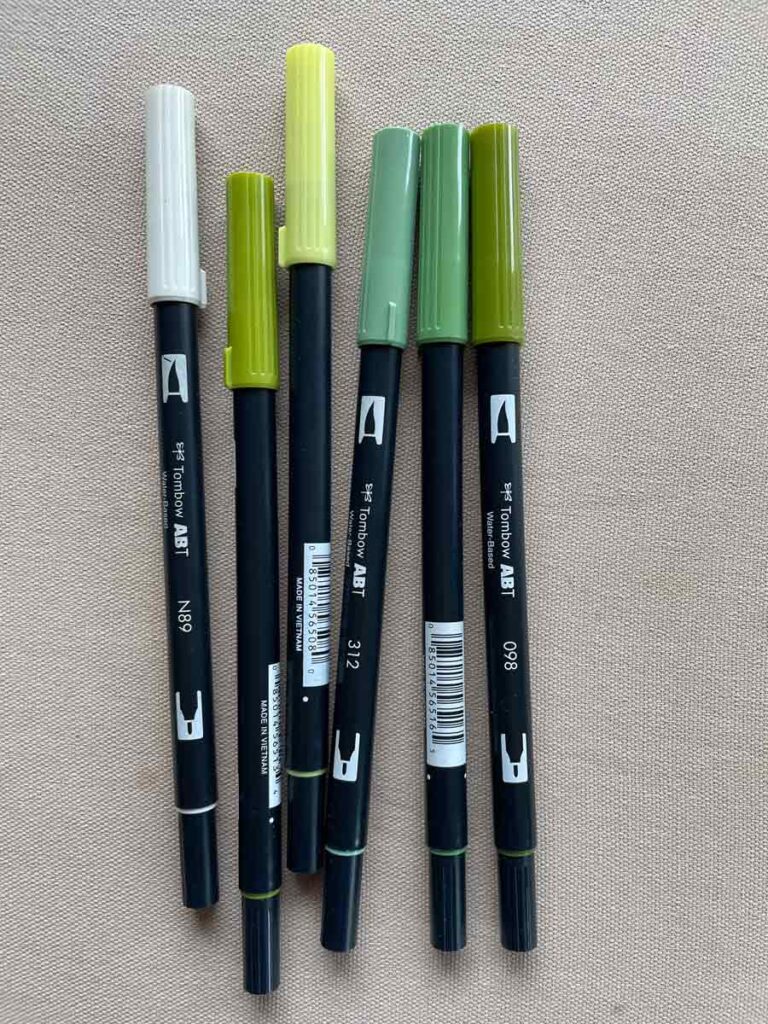
Tombow Pens

Tombow dual brush pens have been my go-to supply lately. Easy to transport and pull out in the moment, they have a flexible brush tip and a fine liner at either end. Plus, they’re water-based, so no smell and their color can be pushed around and muted with a wet brush (something I rarely do, but it’s an option). They’re acid-free but aren’t archival or light-fast, so best for sketchbook work which rarely sees the light of day.

That said, I don’t want to leave you without something to think about.
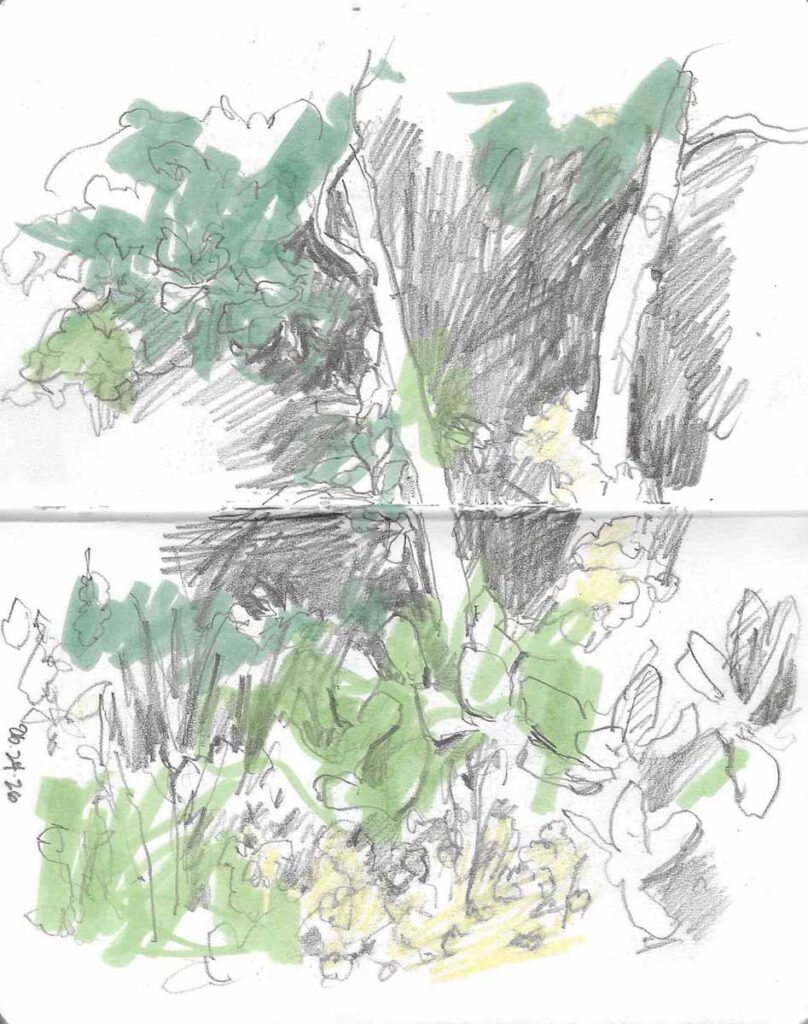
Backyard

Back Garden Sketch  I have been trying to train myself to work more quickly, which means narrowing down my supplies. The Tombows allow me to lay down color quickly and to then fine-tune with a pencil or pen.

We had a very rainy and cool Spring here in the Green Mountain state this year. However trying it was in the moment, it is paying off in spades now. Gardens everywhere, both natural and cultivated, are lush and bountiful — so color is king.
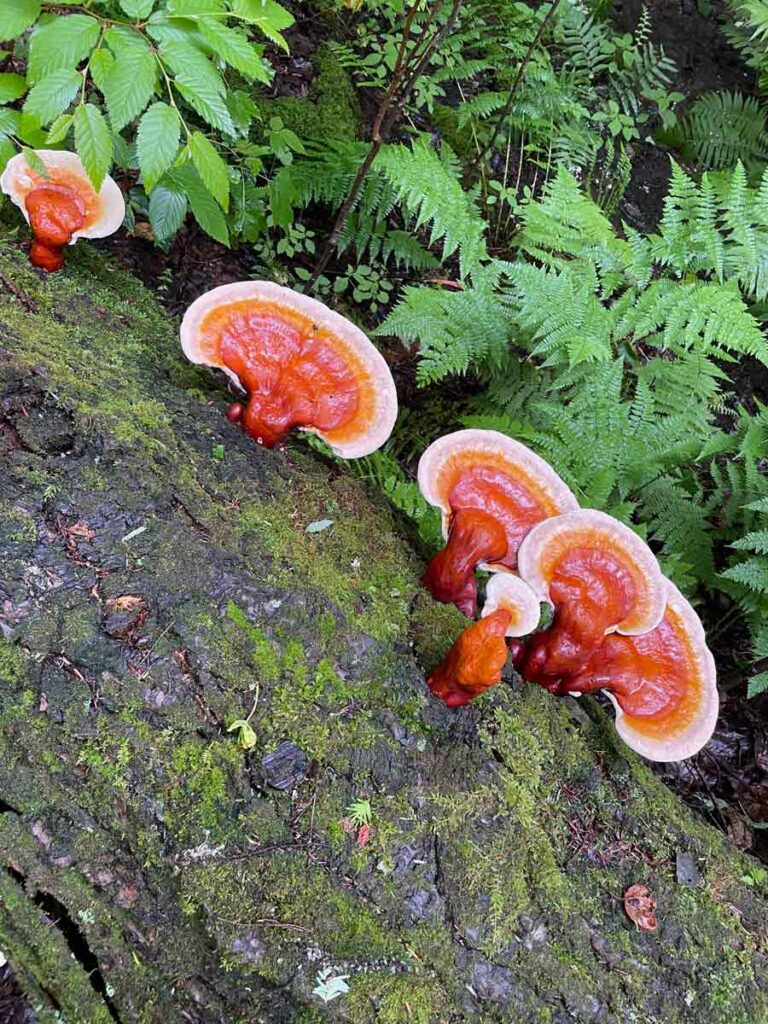
Ganoderma mushrooms

The eye popping orange of these Ganodermas, surrounded by all the green of our woods, is just as stunning as the peonies that are in full bloom in our house garden.

With that in mind, Lorene Edwards Forkner wrote a couple of months ago on her Substack about the joy of “collecting” colors. I love her idea – especially for those of us who live where summers are particularly brief. Who wouldn’t be grateful for a visual boost when the dead of winter rolls around again?
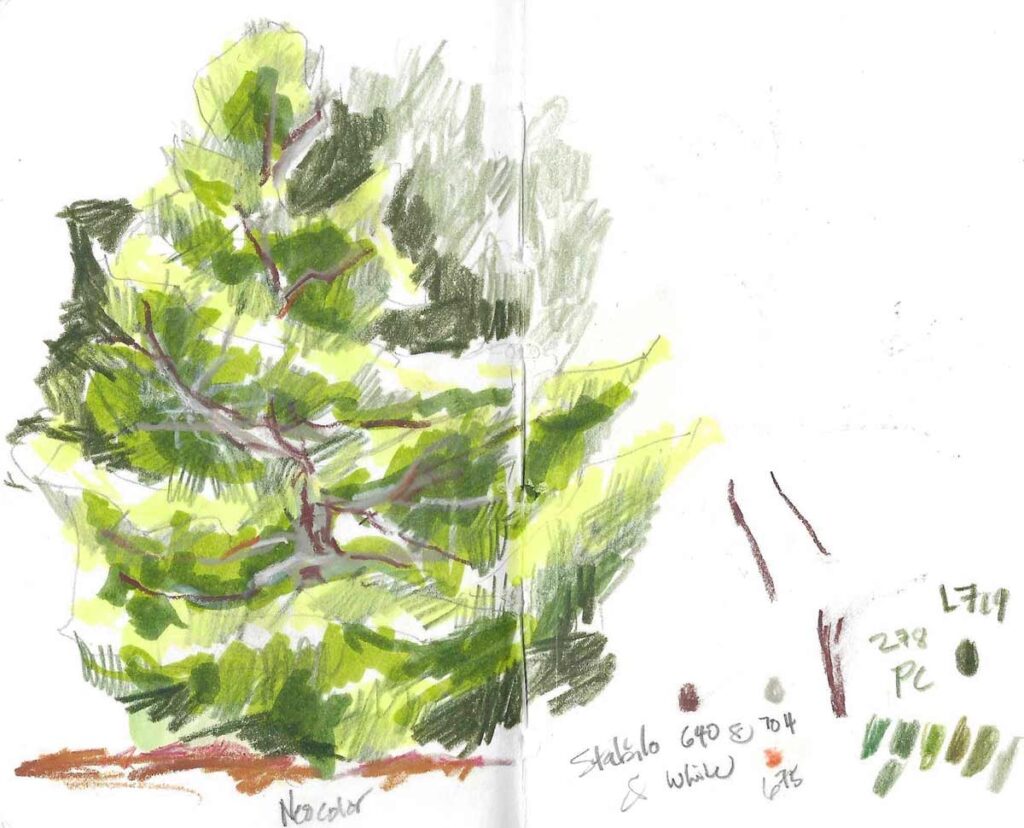
Korean Fir

We have a Korean fir with a lovely shape. I first laid down its structure with Tombows, and then used colored and pastel pencils to fine-tune with textural marks that give the drawing life & energy.

It’s easy enough to snap some quick photos as you move through your day. The upside is that thinking about color in this way is an easy opportunity to connect with your practice, whenever or wherever — whether in the most boring of moments (like waiting in the grocery line) or when life is too busy to carve out time to get into the studio. It’s a total win-win.

And I’m sure, with a bit of thought, there are ways to organize your own color collection that will make it unique and useful for your specific practice.
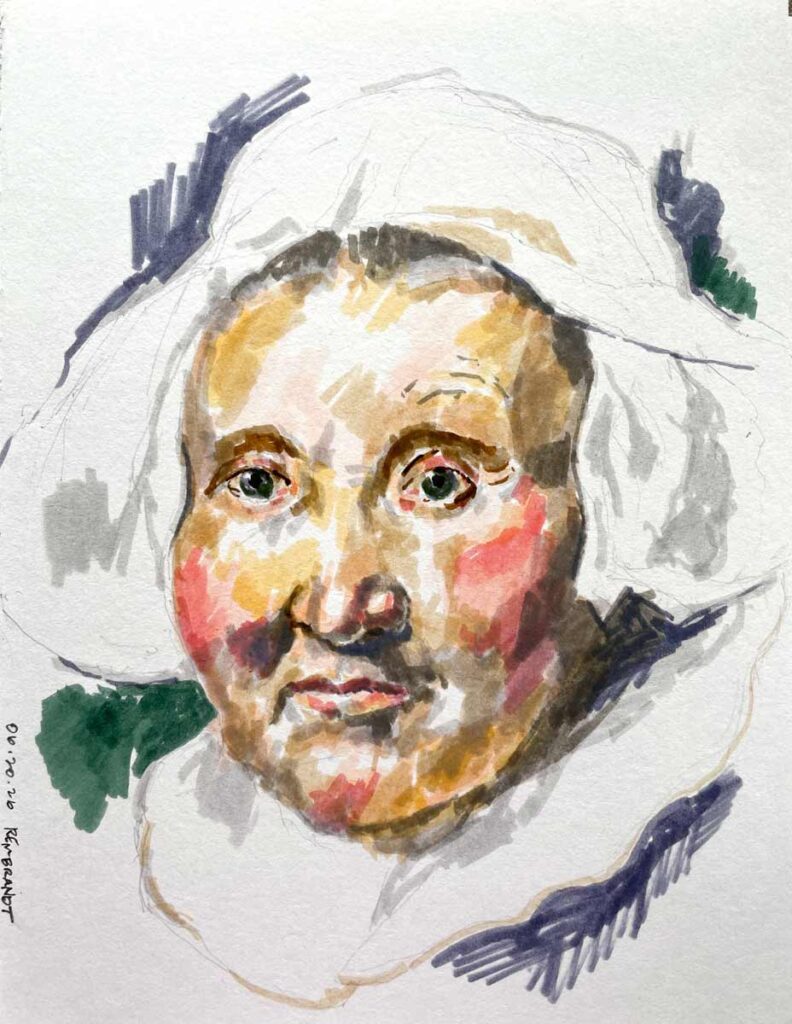
Rembrandt

My copy of Rembrandt’s “Portrait of Aeltje Uylenburgh” (1632) illustrates Tombows layered over each other. With watercolors or gouache, one can just mix whatever color is needed. But because Tombow pens have a comparably limited color range, using them is a great exercise for practicing getting the right color and tone by combining the colors at hand.

 

The Art of Noticing

This doesn’t happen all that often, but I’ve been wracking my brain trying to figure out what to write this week. And then it occurred to me, perhaps that conundrum in itself is worth a few paragraphs.

The Alchemist, first pass

The first pass of color literally sets the tone for what is to come

The challenge of finding something to share with you every other week, beyond just “I made this and then I made that” is a big part of what has sustained me in posting regularly for – can it really be? – nine years. Invariably, if I keep an eye open, something unexpected will spark an idea and from there it’s a matter of connecting the dots. My goal, of course, is that whatever that particular something is will be of interest to you as well.

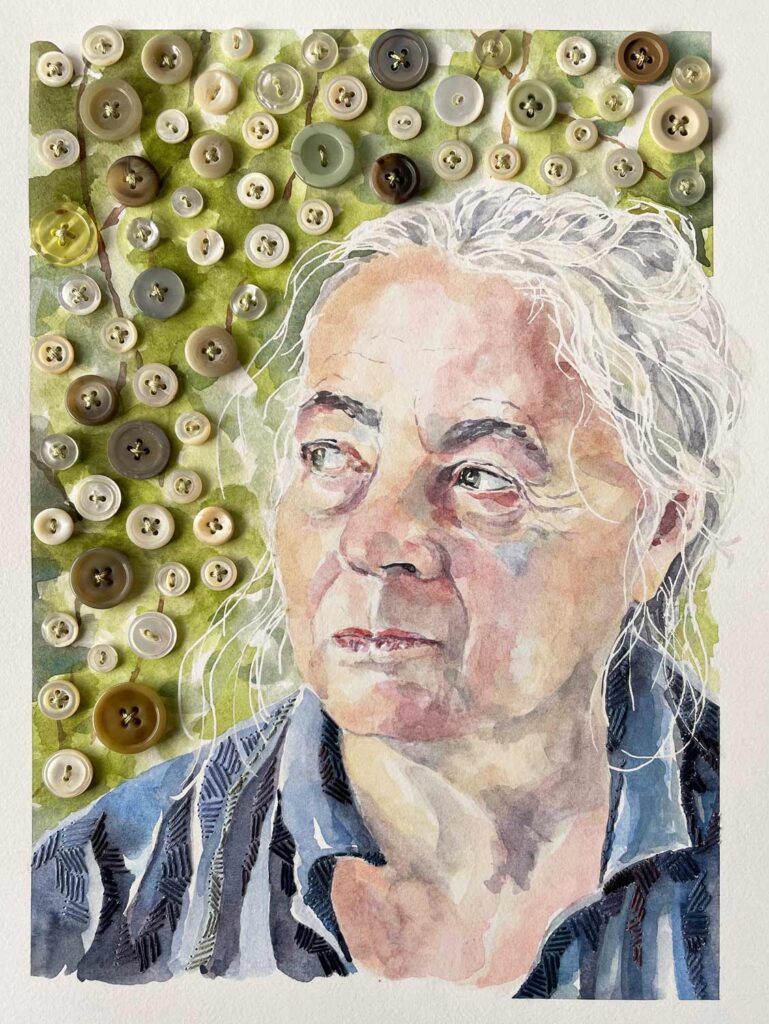
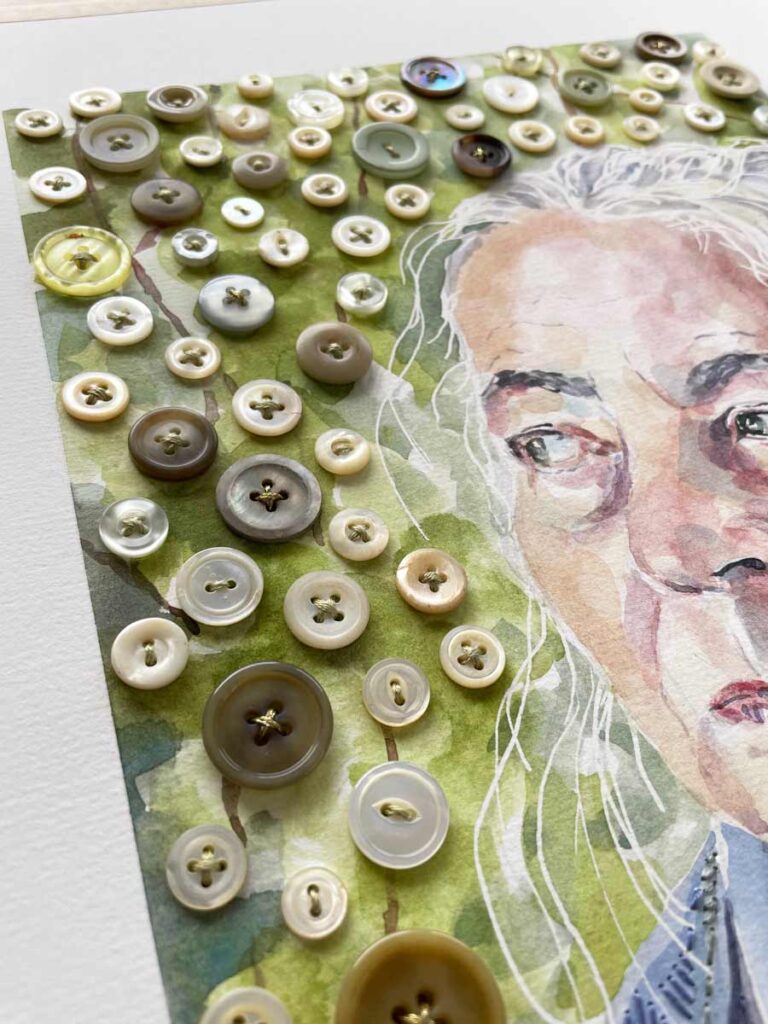
The Alchemist Buttons

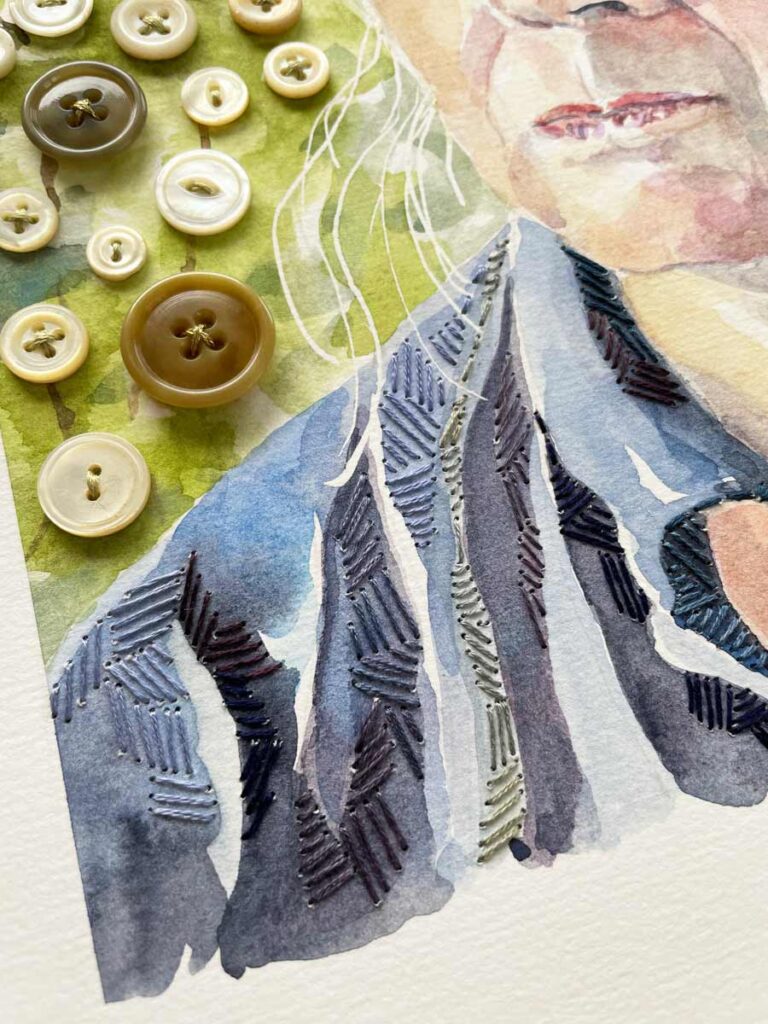
Inspired by my sitter, drawing from my button stash was a no-brainer

So as I was driving to the grocery store several days ago, mulling over what I’ve seen, read, talked about with folks, and yes, been working on in the studio over the past couple of weeks, I was still coming up dry. But then it dawned on me: having nothing to write about is something to write about. In other words, running into walls is a given and finding a way around them is just as much a part of my (or any) practice as threading a needle and putting brush to paper.

The Alchemist Stitching

The embroidery on this piece is relatively minimal. Not only does it encourage a viewer to slow down in her looking, but also to more closely considering the unique qualities of watercolor as the stitches and the washes work together. The hard and fluid edges throughout the work are another nod to the medium.

There’s no gliding through this game; every single detail is worthy of consideration. As Lorene Edwards Forkner of A Handmade Garden has written: “Noticing reveals the invisible”. So if I had to distill into a single element what it is that most feeds every part of my practice, both in and out of the studio, it comes down to two words: pay attention.

The Alchemist

The Alchemist   ©2023 Elizabeth Fram, Watercolor, graphite, buttons and embroidery on paper, 11.5 x 8.5 inches

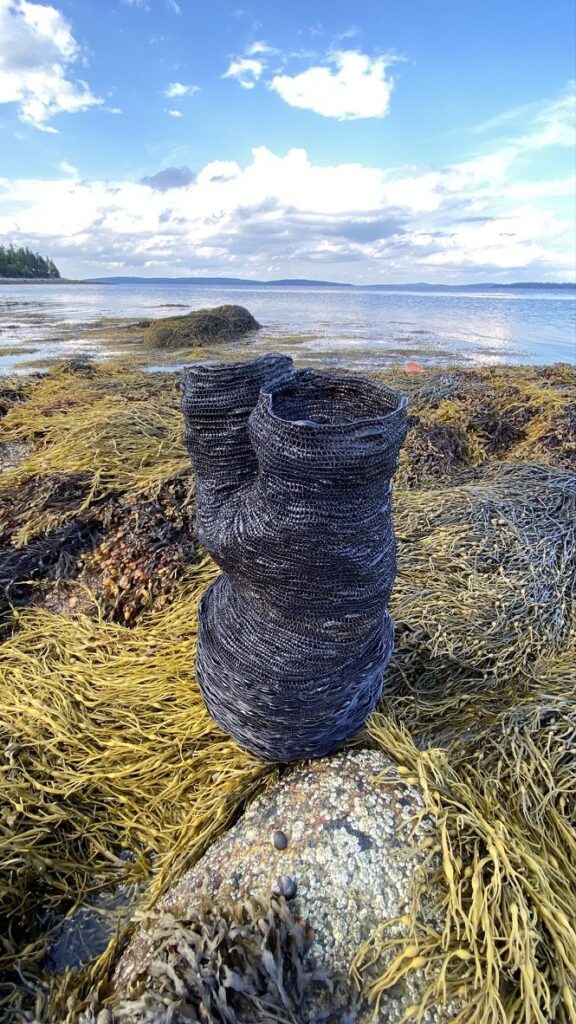
While sewing the buttons on The Alchemist yesterday, I listened to a recording of Jeannet Leendertse talking about her work on Zoom. Leendertse forages seaweed (specifically Rockweed), that she sews into remarkable vessels and sculptural forms. As a native Mainer, I am intrigued by her use of this material that, as I grew up, was as common to me as grass.

Jeannet Leendertse Sculpted Seaweed

© Jeannet Leendertse, Photo by Veronique Hoegger

Noting that she is highly aware of the materials she uses and the lasting impact of her creative process, Leendertse shared a link to Future Materials Bank, a resource that highlights sustainable materials gleaned from the waste stream and artists who incorporate them into their work. Check it out – you will be amazed and inspired.