Category Archives: Process

Mining with a Needle

When I took a drawing course at North Country Studio Workshops several years ago the instructor, Gerald Auten, made a comment as he was pacing the room that has stayed with me since.  I can’t quote him exactly, but the overall gist of what he said was to work deeper and deeper into a drawing, being careful not to call it “finished” too quickly. He was encouraging us to keep digging in order to see what discoveries would arise. It’s a point that has remained in the back of my mind, and it’s been with me all this week in my exploration of the ways that texture and color can work together to influence each other.

DigDeeper copy

In Process     ©2015 Elizabeth Fram

It’s wonderful how sometimes the simplest of remarks can make such a huge difference. I would love to hear about any shared insights that have had a strong impact on your practice. Or, to turn it around, is there something that you have discovered in your work which you’d be willing to pass on to the rest of us?


A Sense of Belonging

I’m always intrigued by the way artists navigate their world, and find reinforcement in the knowledge that even the most celebrated put one foot in front of the other, slogging away in the studio to define their path, just like the rest of us. Living in the digital age, we have a bevy of available resources that allow us to better understand how others approach their work, while simultaneously uncovering similarities between those practices and our own.

1 copy

©2015 Elizabeth Fram

This week I have been reading selected archives from the Penland Sketchbook (blog of the Penland School of Crafts), which led me to the websites of several young artists who have been part of the Penland Core Fellowship program. I was captivated by the work and thought process of Angela Eastman and recommend you treat yourself to some time at her website to see what she is making and to read her well-considered ideas. Bearing in mind the amount of time I devote to placing thousands of hand stitches, I was particularly taken with this quote: “In a society where so much focus is placed on personal gain, I find beauty in the collective efforts of individual marks, and inspiration in the lessons in humility that they teach”.

8 copy

©2015 Elizabeth Fram

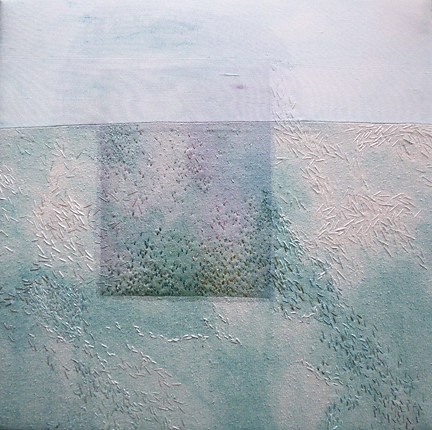
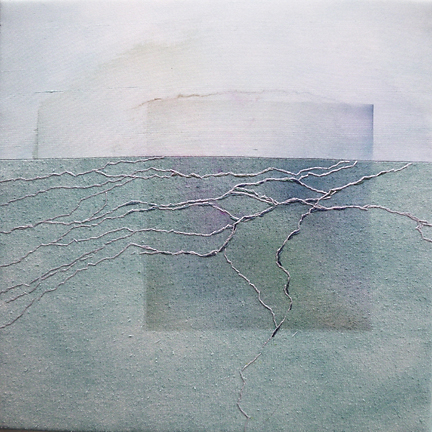
I have also begun Richard Shiff’s book Ellsworth Kelly New York Drawings 1954-1962 and am fascinated by his discussion of Kelly’s “…use of drawing by chance…”  In the ensuing essay, Shiff quotes Kelly:  “I realized I didn’t want to compose pictures, I wanted to find them”.  What an engaging thought; it makes total sense to me. I am often struck by the unplanned compositions that appear as I randomly place my larger work within a smaller frame to stretch for stitching. Those unexpected configurations can be surprisingly successful and several times I have discarded more than 50% of a piece in favor of the more effective alternative.

3 copy

©2015 Elizabeth Fram

Finally, I have been binge-listening to Antrese Wood’s podcast Savvy Painter, recently  recommended by my friend and extraordinary painter/draughtsperson Csilla Sadlock, (if you follow only one link here today, make it Csilla’s). Each of Wood’s podcast episodes is filled with down-to-earth nuggets offered by the interviewed artist, who honestly spills the beans about both the high and low points of her/his practice, underlining that hard work and challenges are part of the deal for everyone.

5 copy

©2015 Elizabeth Fram

Not ready to show the full piece yet, the images today are detail shots of what I have been working on this week (basting stitches and all). I am finding that all the elements mentioned above (humility learned through a myriad of stitches, being open to chance, and finding solace in the fact that even the most successful artists toss a certain percentage of finished work) enhance my sense of connection and inspire me as I work, comfortable in the knowledge that I belong to a sort of tribe. I’ll bet you can relate.

Slow and Steady

This week has been full of experimentation, building on what I’ve learned so far. The process is similar to the progressive states of print-making, with each step producing unexpected discoveries that bring me a little bit closer to where I’m hoping to go.

Sketch1

Following last week’s layered drawings, I began by painting both a positive and a negative image on a piece of raw silk.


Sketch2

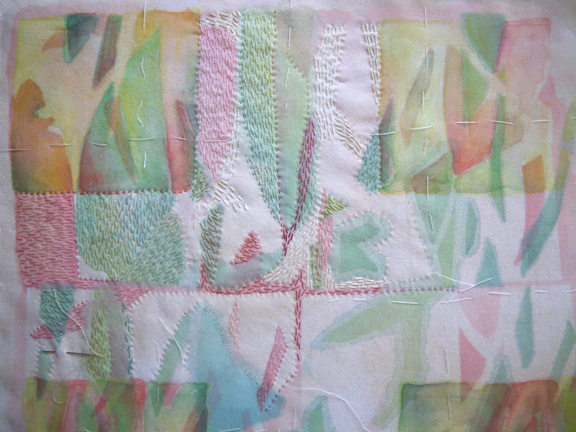
Using watercolor pencils and silk organza, a second layer creates the “X”. The idea to use complementary colors wasn’t so successful.


Sketch3

Staying within an analogous color zone was a smarter move.

I’ve had stitching much on my mind, trying to figure out how to integrate it so as to enhance the idea of a positive/negative dichotomy without overwhelming the under-layers and the piece as a whole.

XFinal copy

I have been envisioning a much more intensive layering of stitching rather than these simple  lines of running stitches. But for this particular rendition/sketch, the simpler lines seemed right. Although hard to see in this photo, a subtle variation of thread color leads the eye in and out of the shapes of both the plants and the “X”, beginning to touch on my goal of an uneasy sense of fluidity between fore- and backgrounds.

It’s time to sit with this for a while so I can figure out how to give stitch a more assertive voice. This example is only about 6″ square. I think working larger will help me figure it out.

Speaking of “X’s”:  before I let you go I want to share this TED Talk by Jamie ‘Mr. X Stitch’ Chalmers with you. I’m sure that those of you who also work with needle and thread will nod your head, appreciating his good humored articulation of truths we all understand so well. And for those of you who may not quite get the attraction to working in this medium, this short talk  may make a believer of you.  If you’re interested in learning more, here’s his website.

Back to the Drawing Board

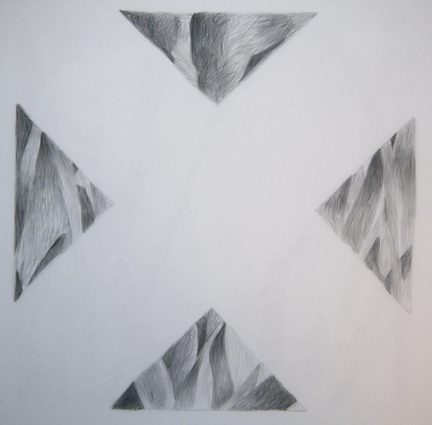
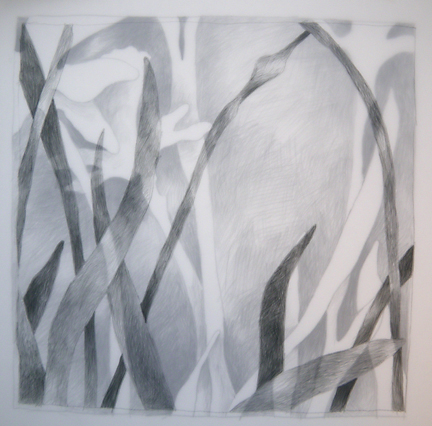
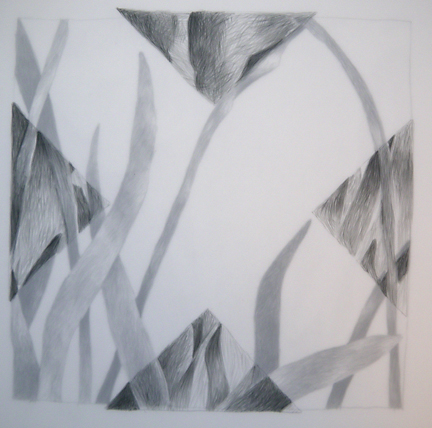
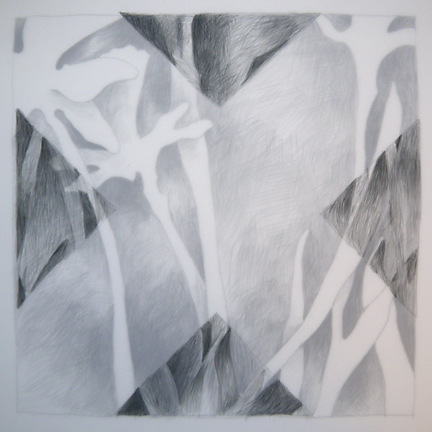
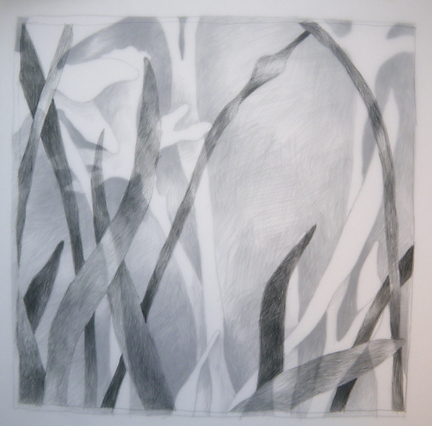
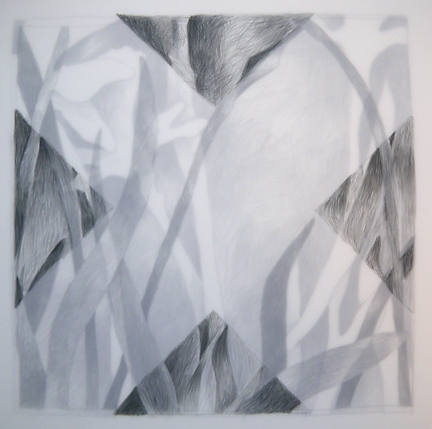
Not much for you to read this busy week — instead I’m relying mostly on images to share my thoughts and progression.

1

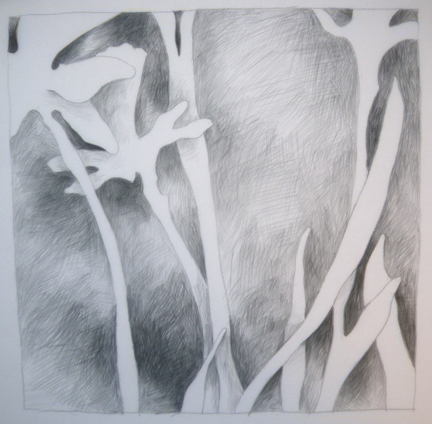
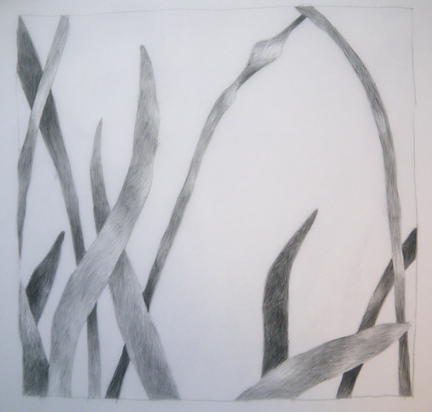
I’ve continued to explore along the theme of positive and negative, but have stepped briefly away from painting on silk, reverting instead to pencil on Dura-Lar.

2

3

I felt like I needed to move back a bit, trusting that it would ultimately help to push me forward.

4

In doing so, the complexity of color is removed in favor of value alone.

5

7

I like the way the translucency of the Dura-Lar facilitates the idea of positive vs negative in terms of depth, but by using layers that are so obviously flat.

4

It’s another way to elicit the visual shift between image and surface that I find so fascinating.

6

In Praise of Intensity

I have always been attracted to artists who have a singular vision and the strength of drive to push unrelentingly toward their goals. How could one not be fascinated by an individual who is so exceptionally focused that s/he is able to make huge strides in a chosen discipline? Being far too prone to distraction to sacrifice breadth for depth, (and frankly opting to let family trump everything), I spend my given hours juggling multiple interests at once, finding a different kind of depth and satisfaction in the overlap that often occurs between them. As an analogy, think ‘liberal arts’ versus ‘applied professional program’.

ImpaledVeggies

Impaled Vegetables; Blue Hill at Stone Barns                                            Dan Barber

Our daughter recently recommended Chef’s Table, a documentary series by Netflix. Let me first say that when either of our kids makes an endorsement, I pay close attention. They are both indefatigable information-seekers and I find their choices and judgments refreshingly astute. Check YouTube for full episodes if you don’t have Netflix.

Marrow; Blue Hill at Stone Barns

Marrow; Blue Hill at Stone Barns                                                                                           Dan Barber

This is definitely not The Food Network. I have only watched two episodes so far, but I have been swept away by them both. Completely enthralled by chefs Massimo Bottura’s and Dan Barber’s demonstrated artistry and devotion to the craft of producing and presenting food, I realize that they provide examples of mindfulness at its most extreme, and that the lessons shared can benefit and inspire any and all studio work. Heck, they’re an inspiration for any type of work. But what I find most enjoyable is that the overlap between food and art is undeniable.

Oops

Oops, I Dropped the Lemon Tart; Osteria Francescana                                                Massimo Bottura      “this dessert pokes fun at our daily striving for perfection and pristine beauty”.

Perhaps it is because I have been so thoroughly enjoying what I have been doing in the studio these past couple of weeks (digging deeper and deeper into an exchange between positive and negative space with paint, while saving the stitching for later) that I am sensitive to the idea of being more tightly focused. It’s not that one approach is better than another, but there are different lessons to be learned and I am appreciating the opportunity to switch gears in this way.

Garden Space 5 copy

Garden Space 5, In process                                                                   ©2015 Elizabeth Fram

Garden Space 6 copy

Garden Space 6, In process                                            ©2015 Elizabeth Fram

I’d like to learn more from Bottura and Barber, so I will be adding both chefs’ books to my reading list: Massimo Bottura: Never Trust a Skinny Italian Chef and The Third Plate: Field Notes on the Future of Food by Dan Barber. Can’t wait to see what the next episodes and other chefs have in store.

Working in Multiples

Picking up from where I left off last week, I am pushing ahead with the idea of creating an interchange between positive and negative space. It’s not a realistic image that I want, but rather an abstracted language for playing with depth of field. I’m not entirely sure how all this will shake out, but the idea is intriguing.

Garden 3 copy

Garden Space 3,  In process                                                ©2015 Elizabeth Fram

As I’ve been plugging away, I’m beginning to realize the benefit of investigating one area and then releasing it in order to focus on another section, playing all the various parts with and against each other so that they are essentially borrowing from one another in a visual “ending-each-other’s-sentences” kind of way.

Garden 4 copy

Garden Space 4,  In process                                                ©2015 Elizabeth Fram

At this point I don’t want to be too concerned about the end product, but instead aim to relax any sense of preciousness by concentrating on several pieces at once. I think there is a subconscious advantage in considering each piece as just one in a line-up of several, rather than as a sole effort.   I’m finding that by working these pieces in tandem instead of sequentially, they inform each other and, as I work between them, I can follow and act upon any conceptual detours that crop up mid-process.

Garden Space 1

Garden Space 1,  In process                                             ©2015 Elizabeth Fram

The challenge of integrating stitch will come later; for now I’m just thinking about the base layers of color in paint.

For a bit of visual fun with positive and negative space, take a look at Tang Yau Hoong’s website. He’s a masterful visual punster.


Relaxed Presence

This week I came across a very enlightening short interview between James Fallows of The Atlantic and longtime tech executive, Linda Stone. I think you might enjoy it:  “The Art of Staying Focused in a Distracting World”.

Desk Cup

Desk Cup     ©2015 Elizabeth Fram

It resonated with me as I am forever trying to navigate my way through constant distractions. I fully own that I rely increasingly on technology to achieve my goals, but I’m not necessarily happy about it. Reading this piece drilled home yet another reason that I am so grateful to be able to spend a portion of each day thinking about and making art.

Lola Nap

Lola Nap     ©2015 Elizabeth Fram

Even though Stone doesn’t specifically refer to art-making in her theory, I think the process of creation falls within the same framework as the other skills she does mention. It too allows and encourages one to be fully engaged, while at the same time promoting a deep sense of relaxation.

April Woods

April Woods     ©2015 Elizabeth Fram

I made a promise to myself last January that I would try to draw every day. As the weeks have turned into months, I’ve come to realize that this daily practice, usually anywhere from 10 to 45 minutes, not only gives me a chance to work on and improve my capabilities, but quite unexpectedly has turned out to be what one might term something akin to a form of yoga.

Hands

Hands: blind contour drawing     ©2015 Elizabeth Fram

By approaching this exercise as a “practice”, there is no pressure to come out with a polished finished product. The reward is in merely showing up. While paying close attention to the physical details of whatever I’m drawing (in yoga terms, being “mindful”), an interesting by-product is that the process is incredibly restful and restorative. I’m reaping benefits on a number of levels.  For instance, I am making new discoveries in the reciprocity of mark-making between my drawings and my textile work. I am seeing improvement and gaining confidence in my draughtsmanship; unsuccessful attempts don’t discourage me because I know I’ll be back at it the next day. I get a true sense of accomplishment in knowing that I am following through on my New Year’s promise.  And finally, my time spent drawing is an oasis that has no bearing on how the rest of my day turned out — in the studio or otherwise… it just is.

Pepper

Pepper     ©2015 Elizabeth Fram

That’s a pretty satisfactory return on a very modest investment. I encourage you to try it.

Moving Right Along

The “ice pieces” are finished and stretched; I’m still deciding about framing.

Ice1Sharp

Crystallized     12″ x 12″    ©2015 Elizabeth Fram

It somehow seems fitting to get these two sewn up for good (pun intended) in tandem with the disappearance of the last patches of snow and ice that I see on my daily walks with Lola in our woods. I’m more than ready to leave the restraint of February behind, and to dive into the color of Spring and the coming months.

Ice 2Sharp

Floe     12″ x 12″    ©2015 Elizabeth Fram

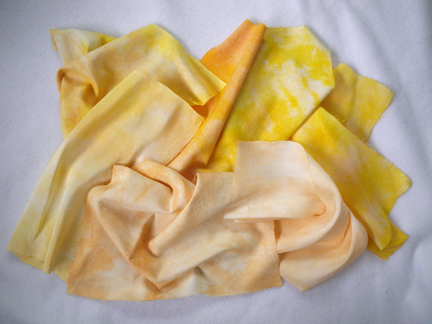
But looking out my studio window, you can see we’ve still got a way to go. In fact, it’s been very soggy & gray this week, so it seemed like the perfect time to make an exercise out of my craving for color.

Grey Day2

It can be quite a challenge (or perhaps foolhardy) to forge ahead without much forethought, and you can see that I am doing just that — with a vengeance.  I mixed a dye-bath of Goldenrod and Pumpkin, with the finished result coming pretty close to Naples Yellow, Cadmium Yellow Deep and Cadmium Orange.

Color copy

That was the easy part. So much yellow…where do I go from here?  I have to figure out a way to balance color and the various means of applying it (paint, thread, & more dye) to offset and harmonize with this rather bold beginning. Oh, and also to pull it all together within a cohesive image/composition.

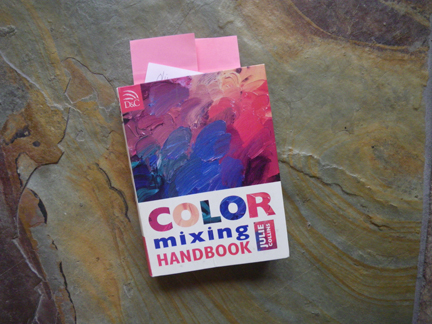
Color Mixing Handbook

I have some ideas, but the first step is to consult this wonderful little book, The Colour Mixing Handbook which I have come to consider one of my most trusty guides. It suggests in its introduction that you use it “as a handy reference when you want to know how to mix a specific colour, or as a catalogue of inspiration when seeking ideas to try in your work”.

I’ll be doing just that.

PS: I’ll also be keeping two of my favorite quotes in mind:

“Don’t wait for inspiration. It comes while one is working.”    – Henri Matisse

“Inspiration is for amateurs–the rest of us just show up and get to work.”    – Chuck Close

Field Trip: David Stearns’ Studio

Visiting the space where an artist lives and works has the potential to provide wonderful insight into the art created there, offering an opportunity to draw connections between both the artwork and the environment from which it springs.

StormCloud.20x18

Storm Cloud     20″ x 18″     ©David Stearns

Last summer I had the privilege of visiting David Stearns at his home studio in Bridgewater, VT. I feel quite fortunate to have been the recipient of this warm and generous man’s time, and to have been allowed a glimpse into the beauty of his creativity – both inside and outside his studio.

Wide

©David Stearns

David’s knotted tapestries are engagingly lyrical; smart pieces that are sophisticated in color and intriguing in their complexity.

P1010005

Fade to White     25″ x 15″    ©David Stearns

They possess a depth and intelligence that are more fully revealed upon close study, impressing the viewer with his scrupulous attention to the subtleties of detail.

P1010003

Fade to White, detail    ©David Stearns

Within each work, there are elements that seem to develop an independent personality, breaking away from the main fabric of the piece, twisting and relocating to another section of the whole.

P8310006_1

Capricho    28″ x 14″    ©David Stearns

Disparate and unexpected items such as bamboo sticks and metal beads are also incorporated, contrasting with the knotted, waxed linen, accentuating the rhythm of thousands of half-hitches while simultaneously conjuring an air of unpredictability. As a result, the pieces are quite musical.

P8310004_1

Capricho, detail ©David Stearns

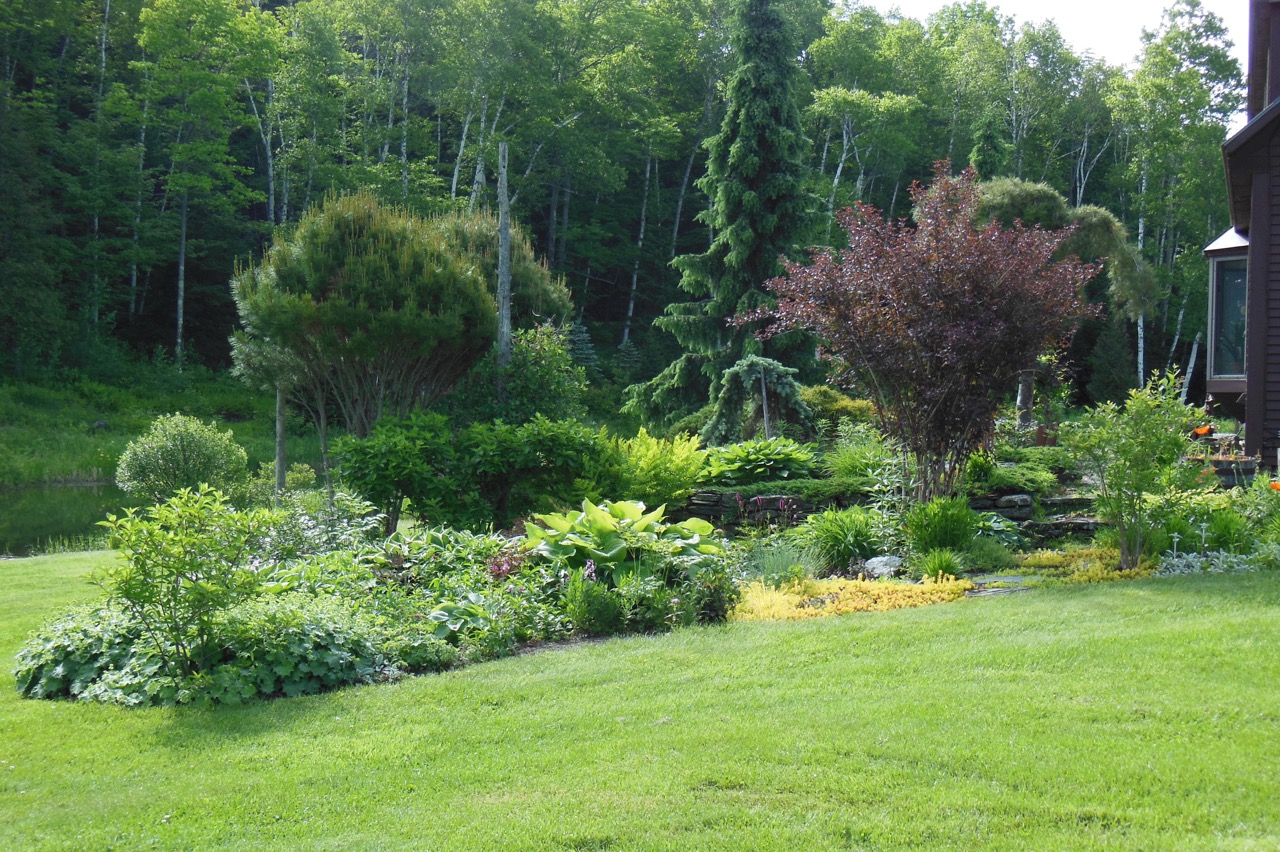
The weather on the day of my visit was lovely and it was impossible to ignore the setting surrounding David’s studio. I was swept away by the beauty of his garden — a masterwork of color and texture that manifests the depth that comes with years of care and evolution. One can’t help but notice the thoughtful placement of plants, such that they appear to be in concert with each other, first one carrying the melody, then another picking up the tune in its own voice.

Greens

©David Stearns

Layers of light, dark and texture are revealed through the prism of a neighboring plant, bringing to mind the offshoots that spring from the fabric of his tapestries, twisting and turning against the backdrop of the “mother”.

P1010001_1

Meandering, detail ©David Stearns

Water-worn stones of interesting shape and color punctuate the vegetation with the presence of sculpture, and when considered with trees that have been pruned to reveal their intertwining trunks beneath the wig of their leaves, create a counterpoint of structure within and beside the flowing garden beds.

Stones and bonsai

©David Stearns

Although the realms of knotted linen and a cultivated plot of land operate on different planes, it is apparent that David has discovered a way to bring together these seemingly separate labors of love so that each informs his work with the other. As a viewer, greater understanding of each comes via the experiencing of both. The mark of the same deft hand remains in both his tapestries and his garden beds, and one begins to realize that each is a different vehicle for answering the same questions.

Stones and Moss

©David Stearns

P1010010

Meandering    21″ x 15″    ©David Stearns

Upon reflection, it drills home the strength and reward that is gleaned from finding a way to marry two separate disciplines so that they work together symbiotically, such that each raises the execution of the other to a higher level.

Flowers

©David Stearns

If you would like to see more of David’s work and environment, and to hear him describing his his art, please watch this lovely short video created by his nephew, Jay Stearns of Handcrafted Video. You won’t be sorry, I promise.

2Stones

©David Stearns

(Com)Mission Accomplished

This week I am feeling a satisfactory sense of accomplishment having completed, delivered, and installed a commission that has been in the works since July. I am now enjoying the luxury of being able to reflect on the process.

Drifting Solace, 24" x 46" ©2015 Elizabeth Fram

Drifting Solace, 24″ x 46″    ©2015 Elizabeth Fram

It has been a bit of a challenge to figure out how to weave this endeavor in with everything else that the past 6 months has encompassed, but the stretch was worth it.

Drifting Solace, Detail ©2015 Elizabeth Fram

Drifting Solace, detail     ©2015 Elizabeth Fram

First and foremost, I count myself tremendously lucky to have been able to work with a delightful and interesting client. My long-ago days in free-lance advertising and illustration taught me that is not always the case — to such an extent that I have since shied away from commissions. But when approached this time, I was so interested in trying to capture what she was looking for, that it seemed the time had come to step up to see where things might lead.

Watercolor Sketch

Watercolor Sketch   ©2014 Elizabeth Fram

It has been a wonderful learning experience that has kept my feet humbly on the ground while also providing a fertile environment for growth. The following list includes several take-aways that come to mind immediately; I’m sure more will surface with time.

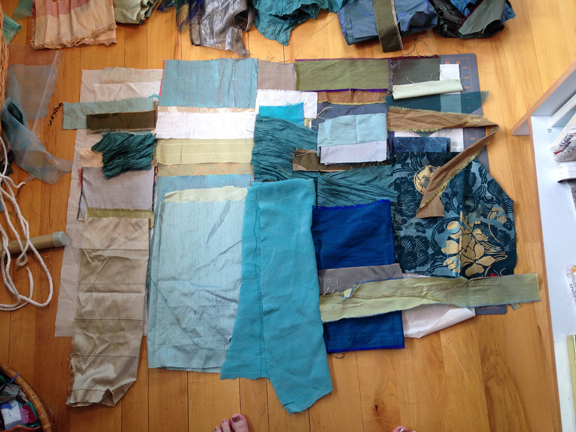
1. The importance of listening attentively, always with an ear for clues in client feedback for ways that the piece she is ultimately hoping for can dovetail with my working methods and means of bringing an idea to life. The optimal goal being that we both enjoy the process, as well as the end result.
Fabric Palette

Fabric Palette

2. Learning to plan ahead and to log my time. (And coming to the realization that every- thing always seems to take half again as long as I had originally thought).

Daily Work Log

Daily Work Log

3. The importance of “deep work” (as Cal Newport defines it) in making concrete strides.

Initial Fabric Placement

Initial Fabric Placement

4. How to organize my days so that I can move forward steadily while honoring other commitments that were already in place and certainly weren’t going to disappear.


Strip pieces

Organizing pieces for vertical strips

5. Appreciation for the boundaries that someone else’s vision puts in place – and in turn, the freedom that comes from that narrowing of overall approach. Structure can be a good thing.

Strips with piping

Strips with piping inserted

6. To be fearless in experimentation.

Left Side

Left Side

KGJoining sides.6

Right side dyed and painted; two sides brought together for first time

Embroidery in progress

Embroidery in progress

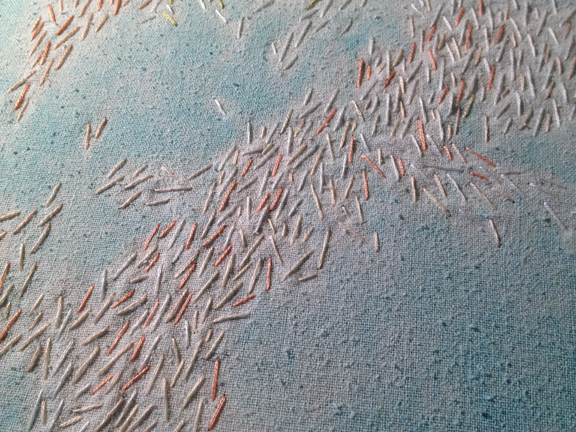
Embroidery detail

Embroidery detail

I have gotten a lot out of this experience and the many ways it has helped me to stretch, bolstered by the freedom that my client allowed me along the way. But ultimately, two things stand out as highlights in the culmination of the project. The first was seeing her face, absorbed in her own thoughts as she looked at the finished piece on her wall, finally there ‘in the flesh’ after months of patiently waiting.

In Situ

In Situ

And the second being the feeling, as I walked away from her apartment, that I had played my part in connecting ideas that hold significance for her with a tangible expression of those important thoughts and memories. As mentioned in quoting Salman Rushie in last week’s post, it felt like the universe had opened just a bit more.