Category Archives: Books

Cloth Lullaby

Whenever we travel, sooner or later we usually end up in a local bookshop. Just as with small storefronts that sell fabric, book stores are one of the few strongholds of regional retail that have held onto their individuality in an environment of homogeneous big-box stores and online shopping. As a result, browsing unfamiliar shelves has become another form of travel adventure for me.
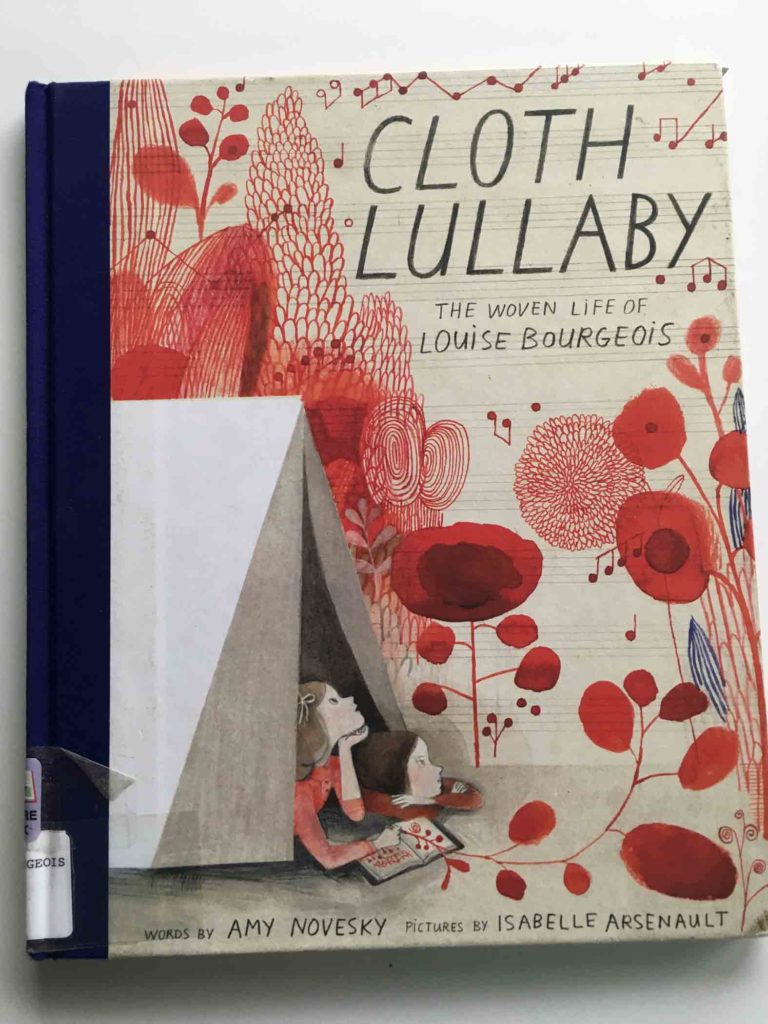
Cloth Lullaby Cover

With that in mind, visiting Book Passage in San Francisco’s Ferry Building a year and a half ago didn’t disappoint. If you can get there, they have a really interesting selection of art-related books, which is an attraction that holds true for their children’s section as well. Children’s book illustrations always pull me in and, I’ll admit it, I do judge a book by its cover. And it’s such a bonus that, if the spirit moves, I can read one cover-to-cover on the spot.
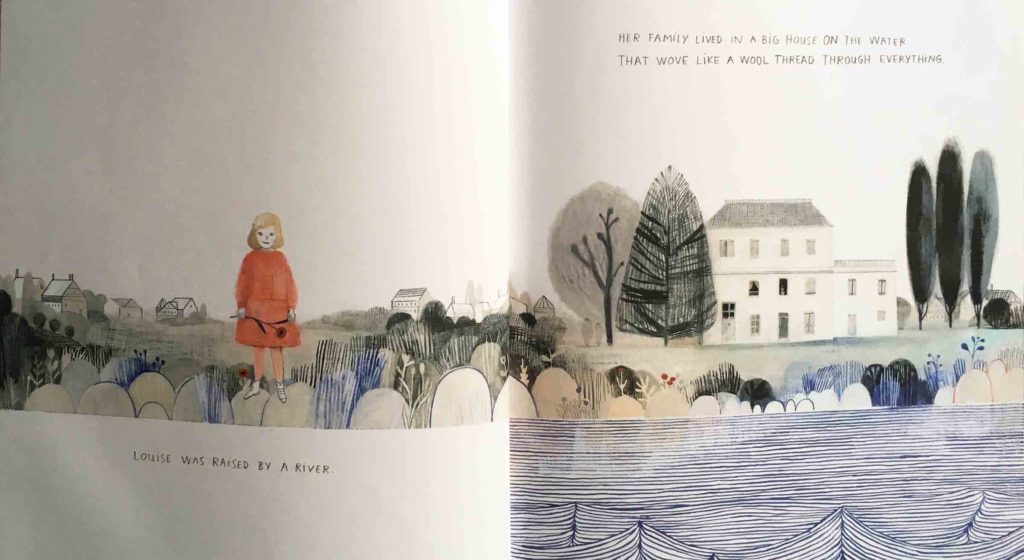
River

“Louise was raised by a river. Her family lived in a big house on the water that wove like a wool thread through everything.”

My favorite discovery at Book Passage was Cloth Lullaby – The Woven Life of Louise Bourgeois, written by Amy Novesky and with lovely illustrations by Isabelle Arsenault. It is a gem meant for the younger set that holds plenty of spark for adults as well. It was a great day when I found I could borrow a copy via our inter-library loan.
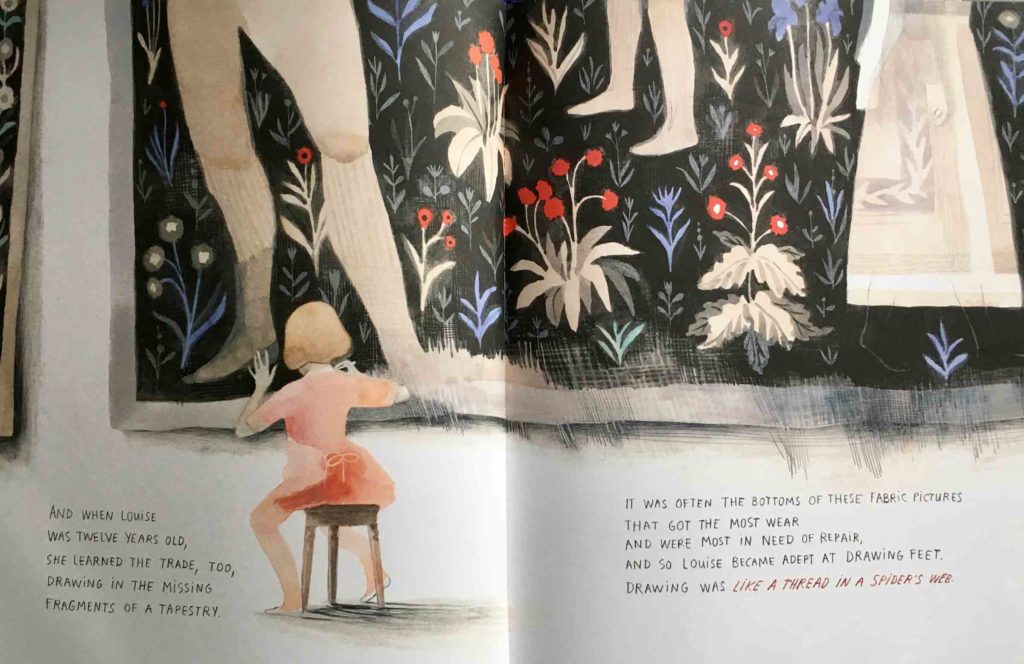
Tapestry

“And when Louise was twelve years old, she learned the trade, too, drawing in the missing fragments of a tapestry. It was often the bottoms of these fabric pictures that got the most wear and were most in need of repair, and so Louise became adept at drawing feet. Drawing was like a thread in a spider’s web.”

I won’t bother with a full recap*. Rather, what I’d most like to share with you is the capacity this book has to inspire budding artists. There are so many ways that it might capture a young imagination…it surely inspired this not-so-young one! The pictures are magical while the text is brief but equally as illustrative. It is a lyrical biography that demonstrates the power of art, stressing the strength which textile-related metaphors held over Bourgeois’ art throughout her long life.
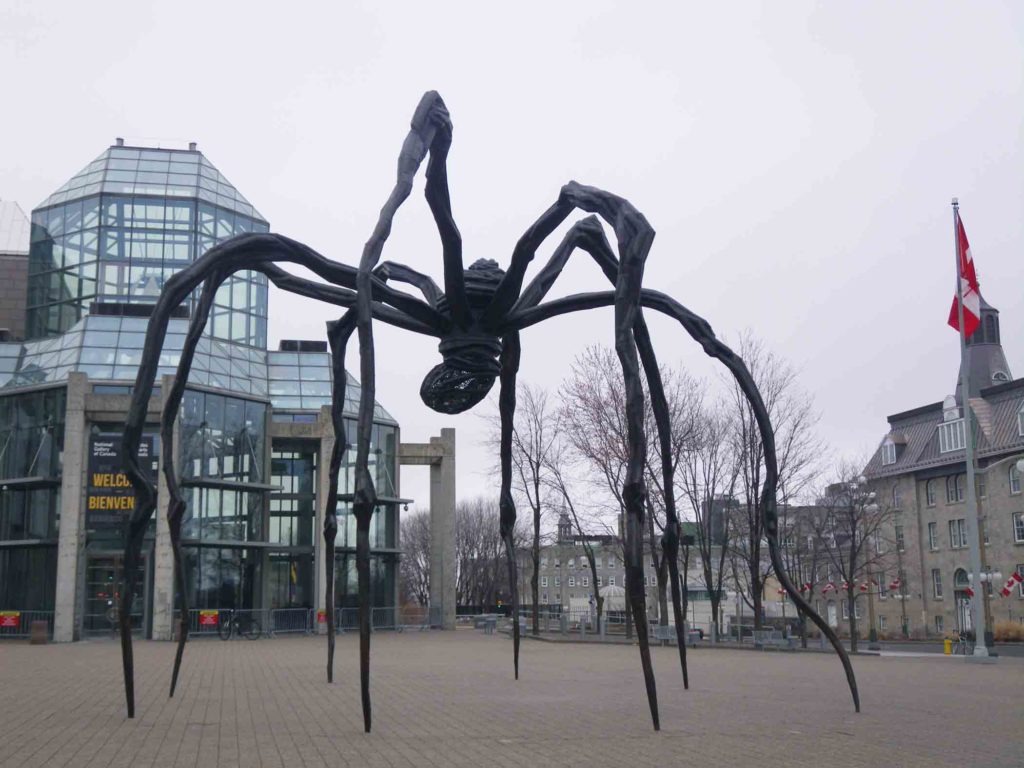
Maman

Maman     ©1999 Louise Bourgeois, 30.5 x 29.25 x 33.5 feet, Stainless steel, bronze, and marble. National Gallery of Canada, Ottawa         As you will read in Cloth Lullaby, Bourgeois often returned to the theme of spiders as a representation of her mother – a repairer of broken things.  “The Spider is an ode to my mother. She was my best friend. Like a spider, my mother was a weaver. My family was in the business of tapestry restoration, and my mother was in charge of the workshop. Like spiders, my mother was very clever. Spiders are friendly presences that eat mosquitoes. We know that mosquitoes spread diseases and are therefore unwanted. So, spiders are helpful and protective, just like my mother.” – Louise Bourgeois

Novesky’s biographical notes at the end of the book answer many of the questions about Bourgeois that are bound to crop up for young and older readers alike. They also provide a stepping stone toward grasping the importance of exploration when making art, serving as an important acknowledgement of the fluid possibilities an art practice might take by demonstrating the variety of forms it could conceivably evolve into or through as a career develops.

That’s a lot of potential packed between the covers of these 40 beautiful pages!

More:
This 10 minute video: Louise Bourgeois | HOW TO SEE the artist with MoMA Chief Curator Emerita Deborah Wye is a wonderful overview of Bourgeois’ work. Wye talks specifically about Bourgeois’ textile works at about the halfway point of the video.

*Read Brain Pickings’ review of Cloth Lullaby for a more in-depth exploration of the book and its illustrations.
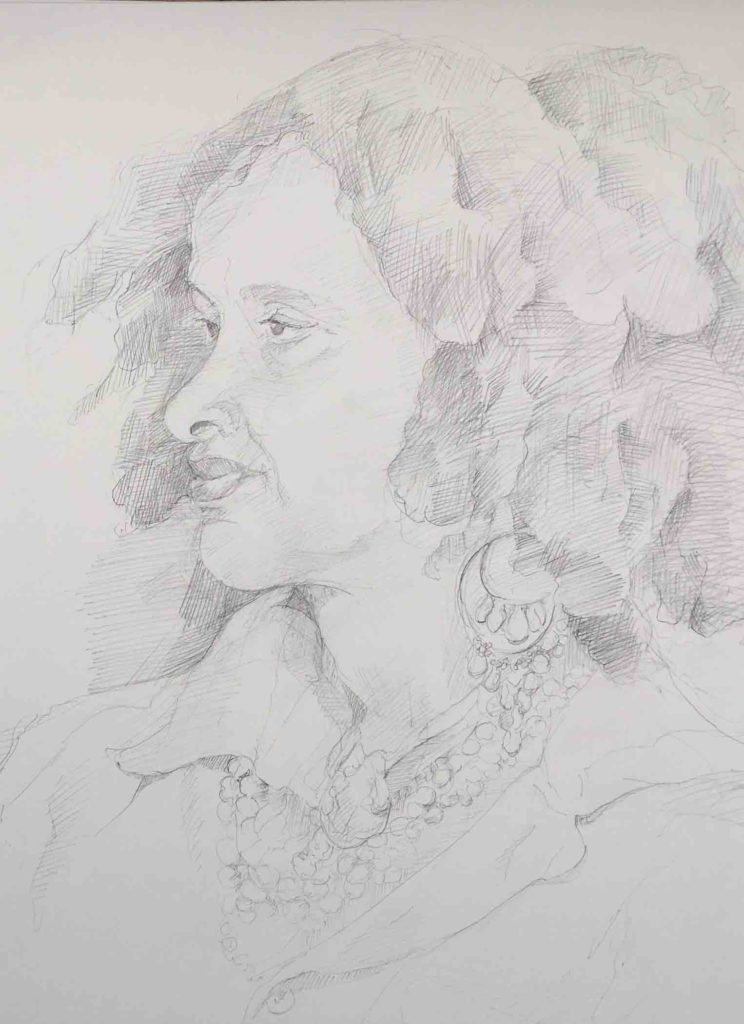
Lisette

Lisette ©2018 Elizabeth Fram, 24 x 18 inches, Graphite on paper                  With only graphite, I couldn’t begin to do justice to the vibrant colors and jewelry our model wore this week. At least I have the memory.

Update
Happily, Salley Mavor’s show, which I mentioned a couple of weeks ago, will not go unseen. The New England Quilt Museum in Lowell, MA will be hosting the exhibition, entitled Liberty and Justice: The Satirical Art of Salley Mavor. It will be on display at the museum September 26 – December 30, 2018 and at the Cotuit Center for the Arts in Cotuit, MA March 2 – April 20, 2019. Good news all around!
Leap of Faith

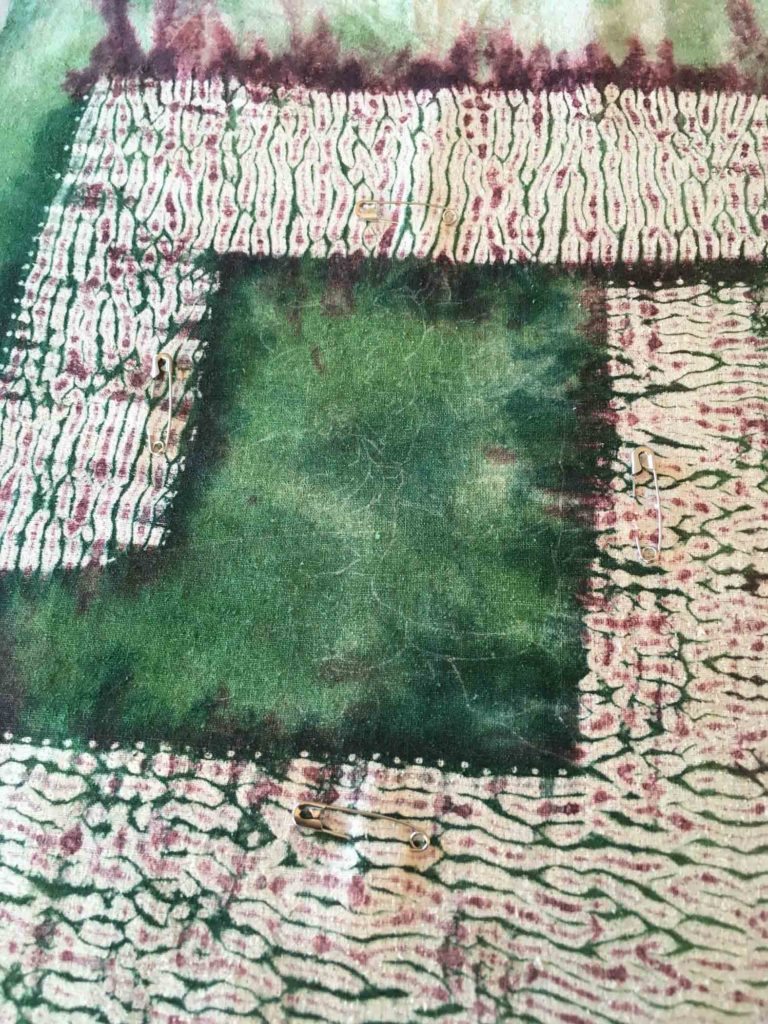
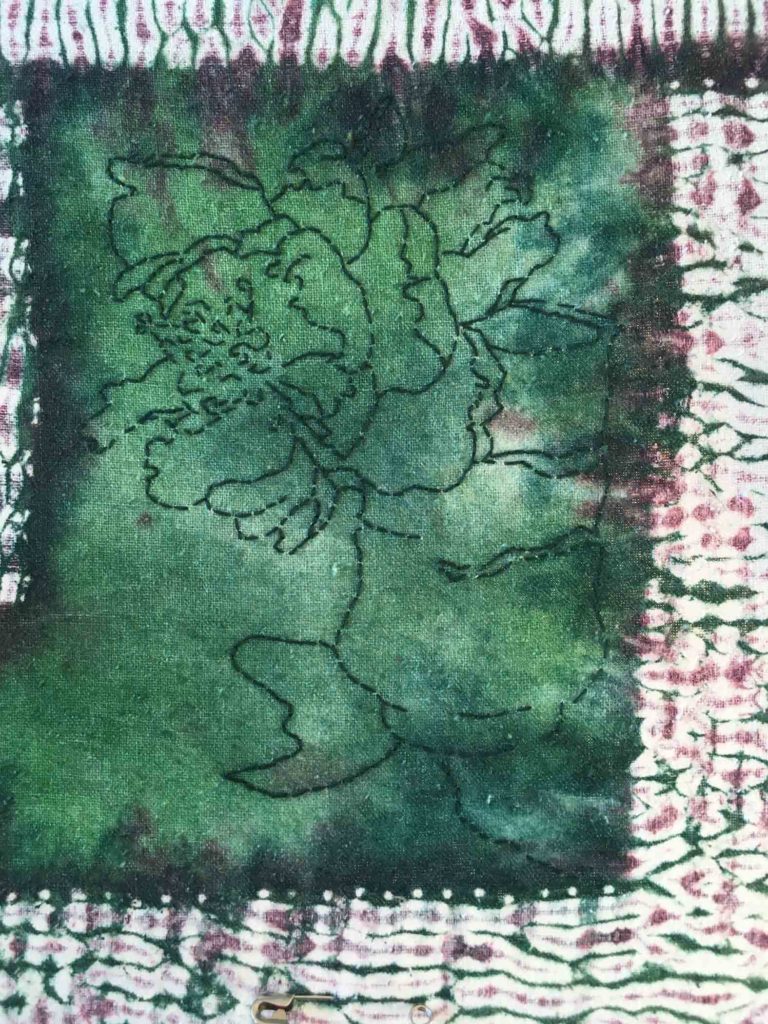
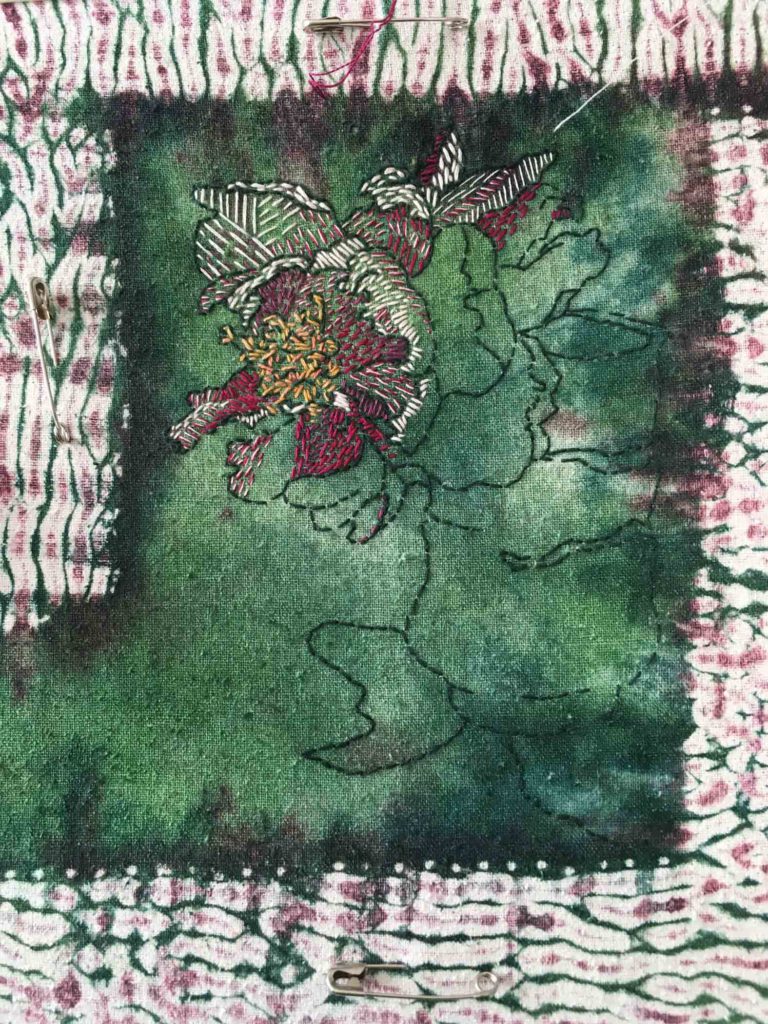
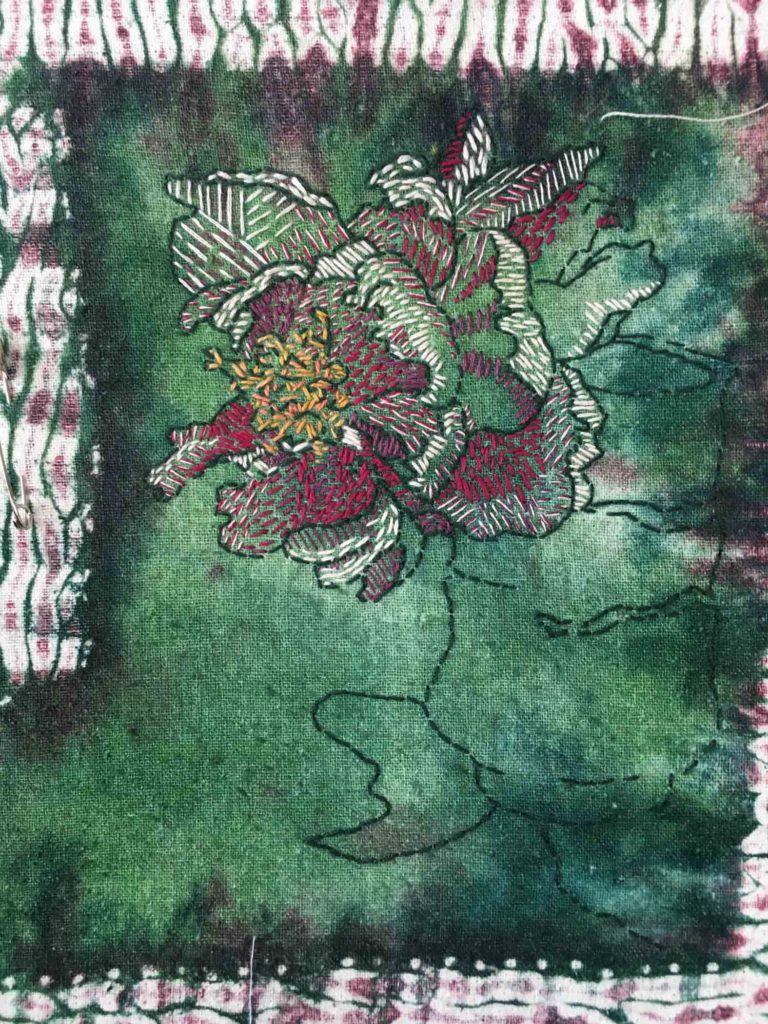
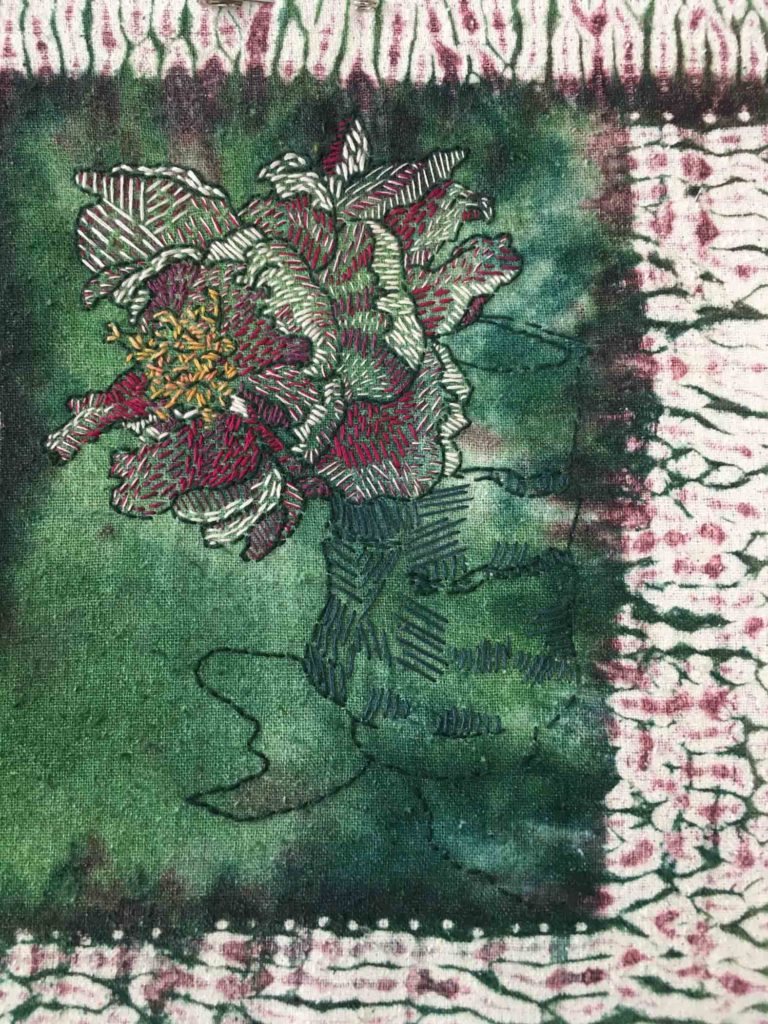
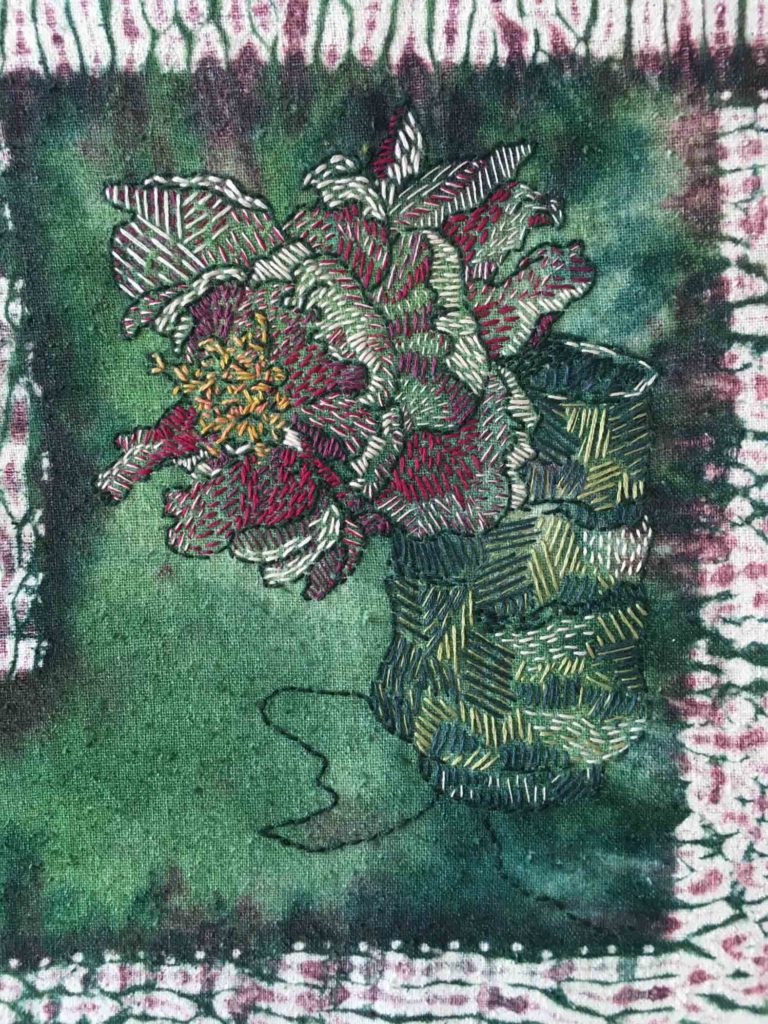
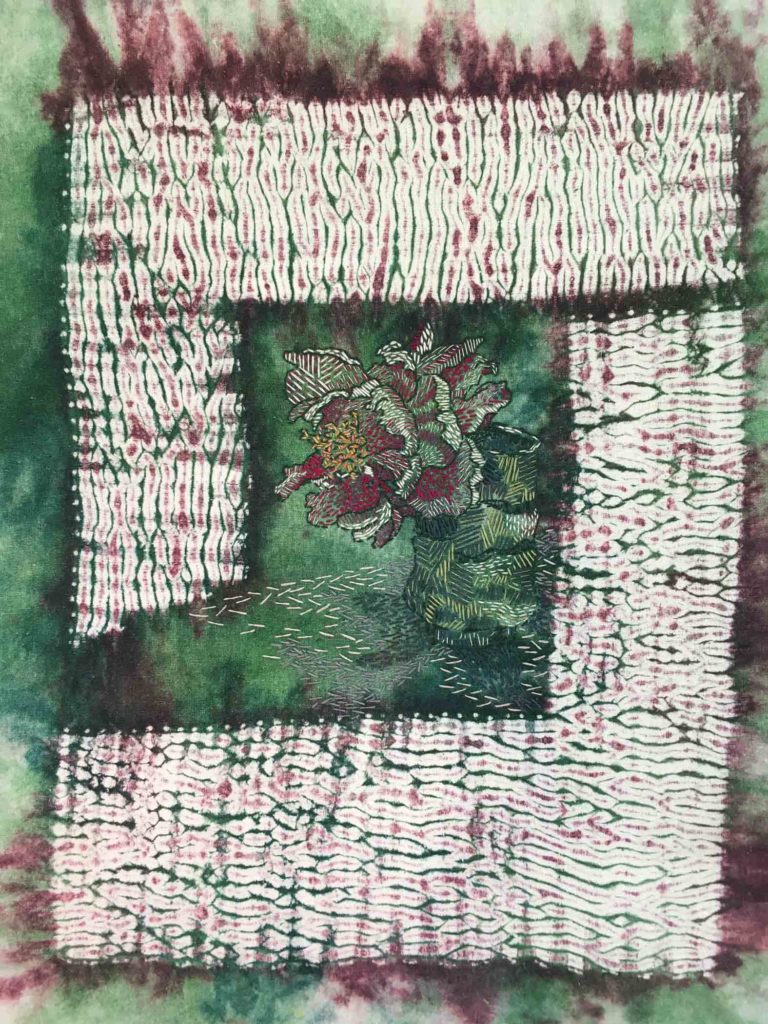
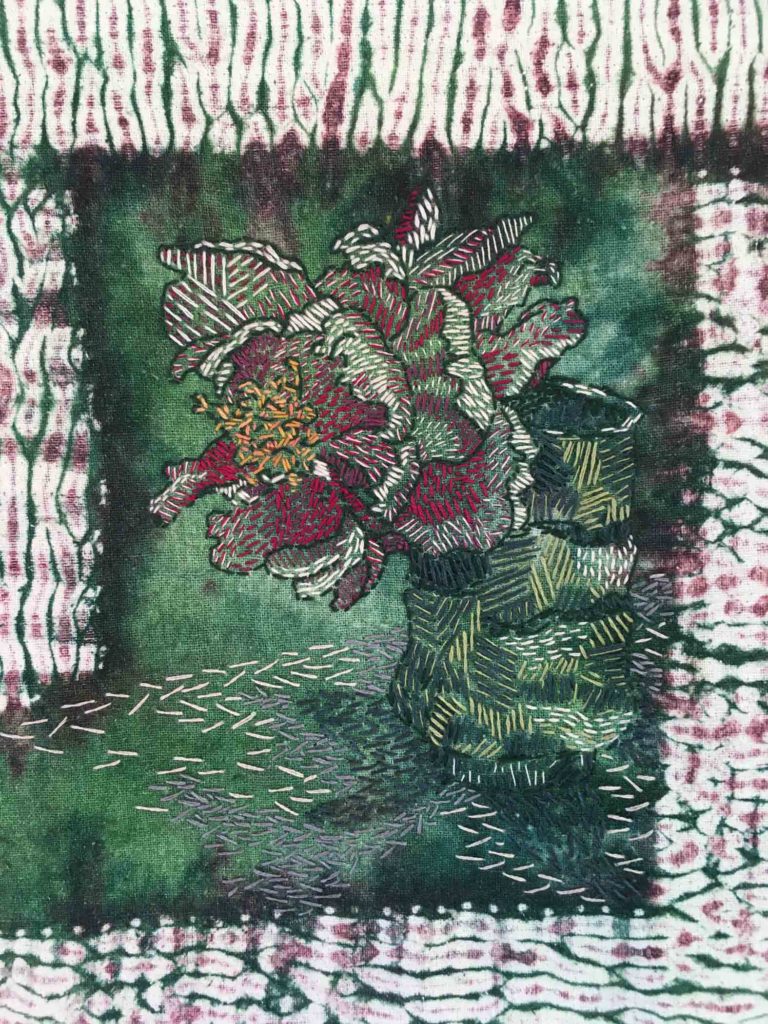
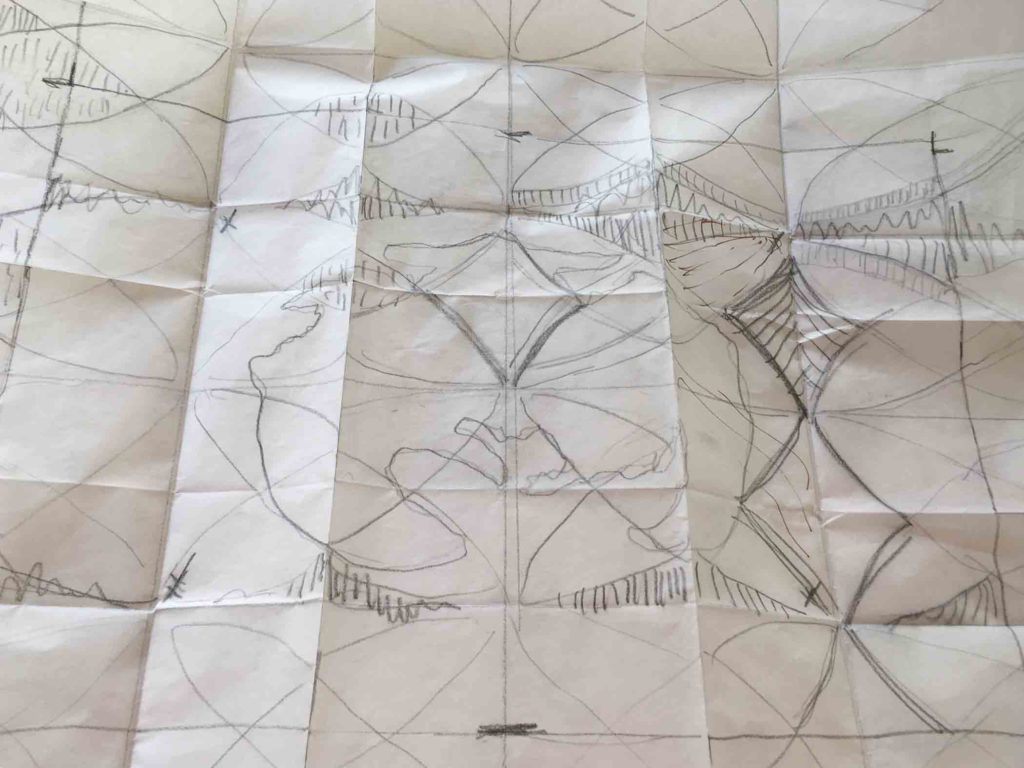
Do you remember this piece from several weeks ago? I am taking what I learned from it and trying again with the goal of figuring out how to portray something “hidden in plain sight” — a stitched image that is camouflaged within shibori patterning while remaining visible.

Pattern draft

Another challenge is deciding what the shibori pattern will be so that it works together with the shape of the image, not against it.

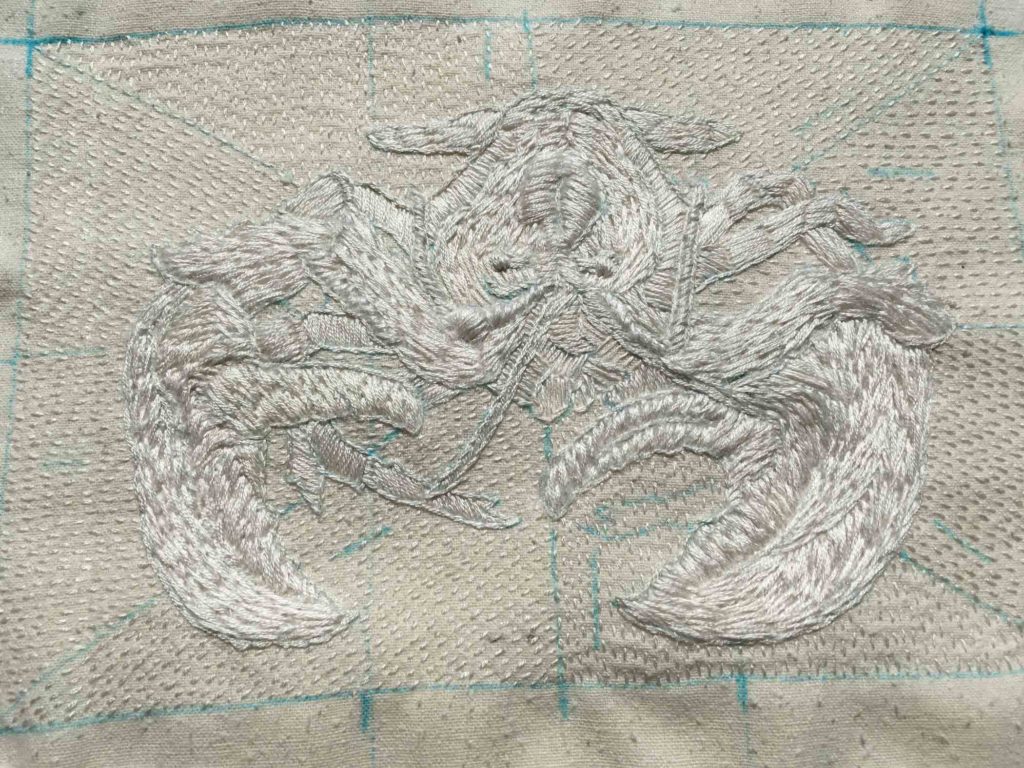
This time I’m using my lobster drawing from a couple of weeks ago as a jumping-off point. I sewed the stitches as densely as I could, trusting their solidity would make it possible for the image to hold its own in relation to the visual strength of the dyed pattern that is yet to come.

Stitched lobster

The rectangular stitched area is 6 x 9 inches. The background stitches were added to set the image apart from the rest of the cloth, hopefully helping the lobster to stand out once the shibori pattern is in place.

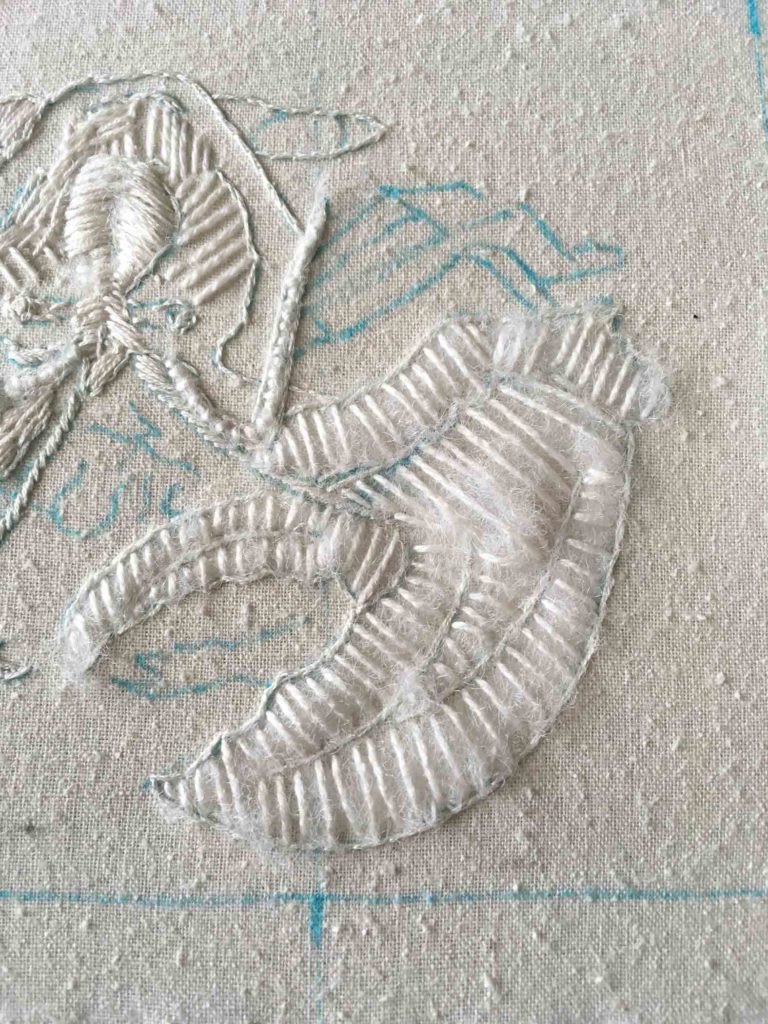
In reading Young Yang Chung’s Painting with a Needle, I’ve learned that Asian embroiderers commonly placed various kinds of padding underneath areas to be embroidered in order to achieve a three-dimensional effect. Perhaps creating a relief-like form will give this lobster the oomph it needs to mingle and co-exist with the dyed pattern, each with its own voice, but neither overpowering the other.

Padding

I used both batting and heavy silk thread to pad the lobster, some areas more heavily than others. I think it adds something of a sculptural effect. The process is very reminiscent of trapunto.

The middle image in this post shows the completed embroidery. The next step will be a huge leap of faith as I move forward with the dye process. I hope what I have to show you next week will be a happy outcome, or at least a step in the right direction. For now I am cautiously optimistic.

Stephen King’s On Writing: A Memoir of the Craft and Anne Lamott’s Bird by Bird: Some Instructions on Writing and Life both hold a place on my “favorites shelf”. I return to them from time to time for inspiration, encouragement, and solace. Writers may write about writing, but for the most part the wisdom they share can be directly translated to any form of creative work. It’s just that they’re, well, writers, so they have a knack for making the information both inspirational and accessible.

I will be pushing the above two books closer together to make room for Ann Patchett’s The Getaway Car: A Practical Memoir About Writing and Life, which I read this past week. It has earned its spot next to the others. At 45 pages, it’s short, to the point, and so very worth your time if you’re interested in such things.

Seasonal Adjustments

Even though practically every entity I know is coming out with their own tantalizing list of books to read this summer, my reading habits are in flux.
I find I don’t read anywhere near as much, or as fast, at this time of year as during winter.  So I’m stowing away most of the suggestions that are rolling in and will return to them in the colder, darker months.

John Full

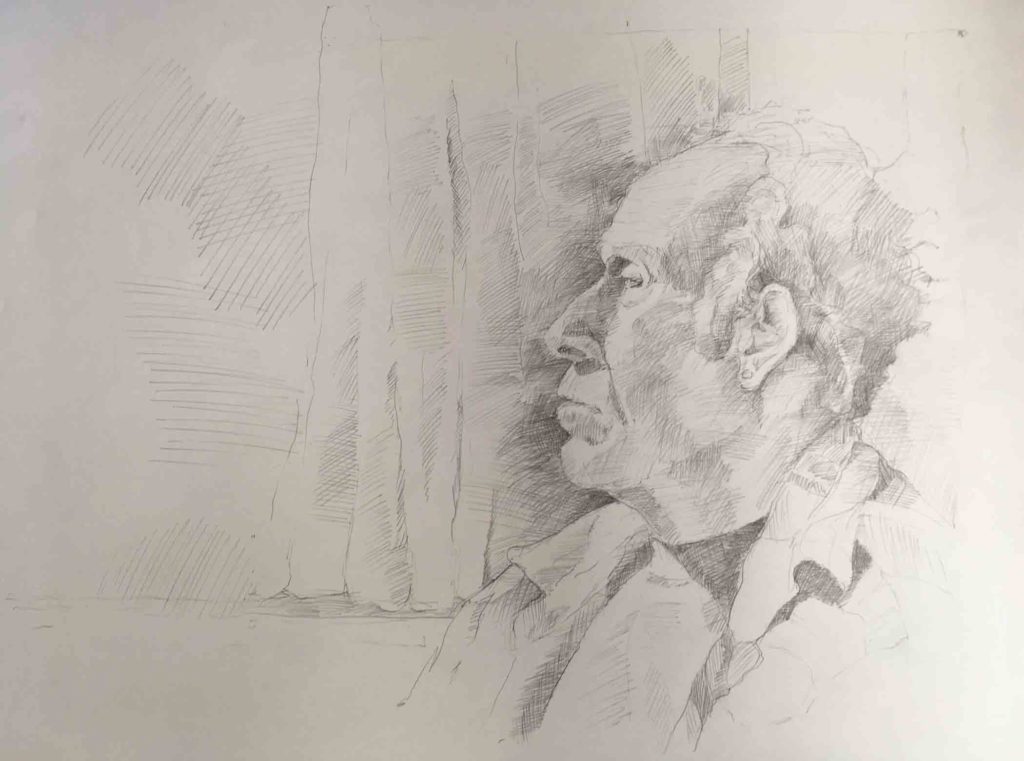
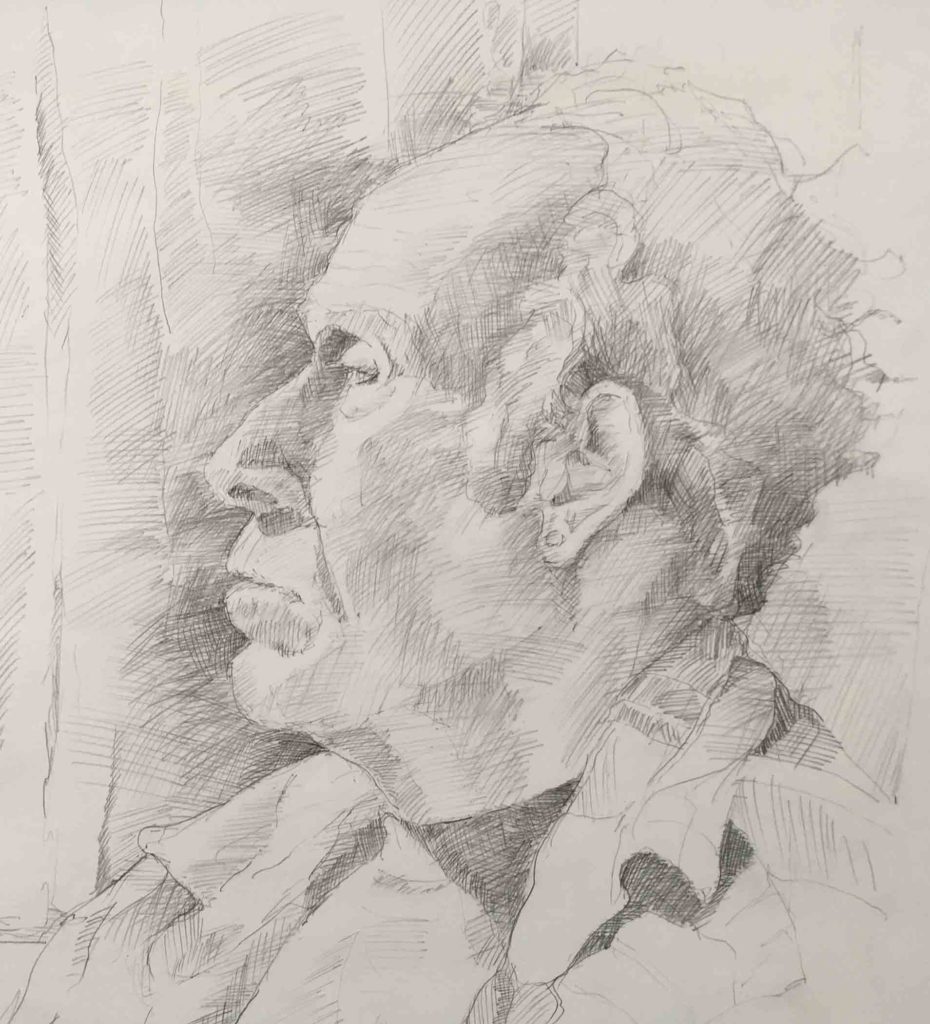
John ©2018 Elizabeth Fram, 18 x 24 inches, Graphite on paper           The contrast between the rich, dark background and the strong light on John’s face was striking. This relatively quick study couldn’t do justice to the deep, velvety background that I envisioned, and which would be such a strong component in the hands of a competent painter. I was drawn to the idea of the composition being very long & narrow, say a 1:3 ratio – with the head at the far right side, posing a strong counterweight to the expanse of dark space. In making use of as much of my paper as possible to study and map the characteristics of his head, I wasn’t able to realize the proportions I would have preferred.

During June, July, and August I tend to gravitate toward periodicals for my art reading, catching up on the back issues that have been piling up. My current favorite is Art & Antiques — a much appreciated Christmas gift subscription from my father. The articles are short enough to squeeze in around the warm weather activities that are taking precedence right now, while still maintaining an engaging diversity of scope that carries just the right depth of information so that I feel like I learned something, yet without needing to wade through an overly erudite dissertation. And the best part – of course – is the images are plentiful and lush.

John, detail

John, detail ©2018 Elizabeth Fram

I have memories of A&A as one of the magazines that sat on my grandmother’s coffee table when I was a kid.  I would occasionally flip through an issue, only to be disappointed by images of old, dark paintings and old, dark furniture…a memory that could well be attributed more to my age and lack of knowledge, than to reality. But times have changed, I’ve changed, and so has the magazine. My dad definitely made a great choice of gift; I’ve been delighted to see that Art & Antiques is now a vibrant and current art journal — anything but old and dark. I’m discovering artists that are new (to me) and learning about old familiars in a fresh light.

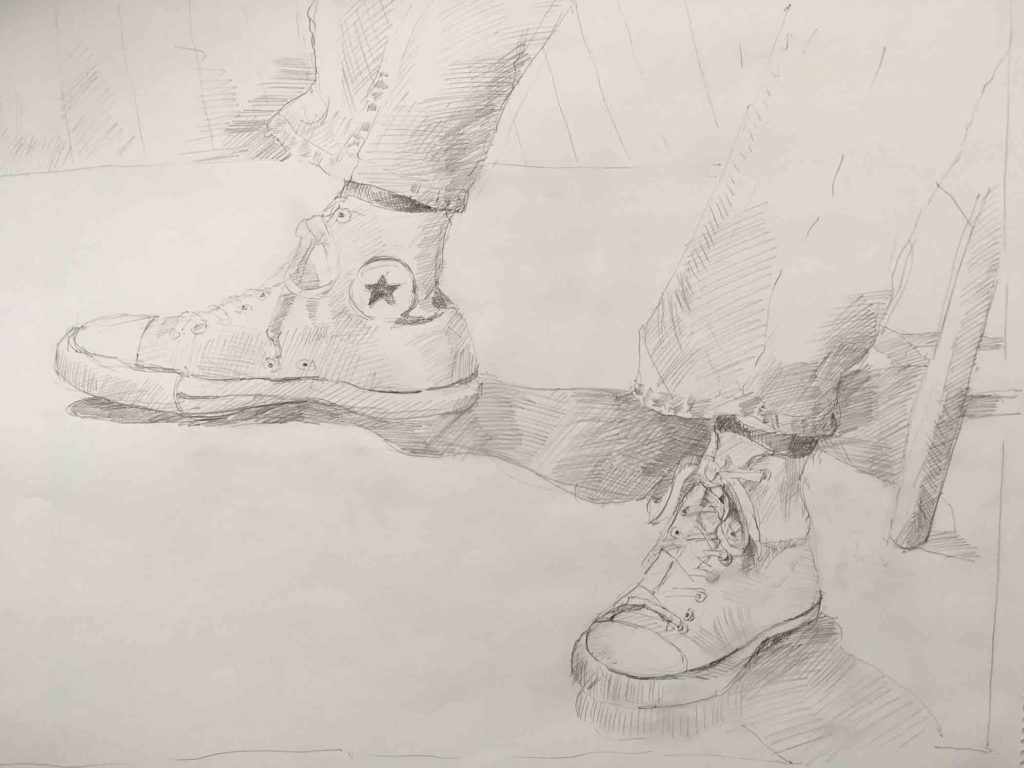
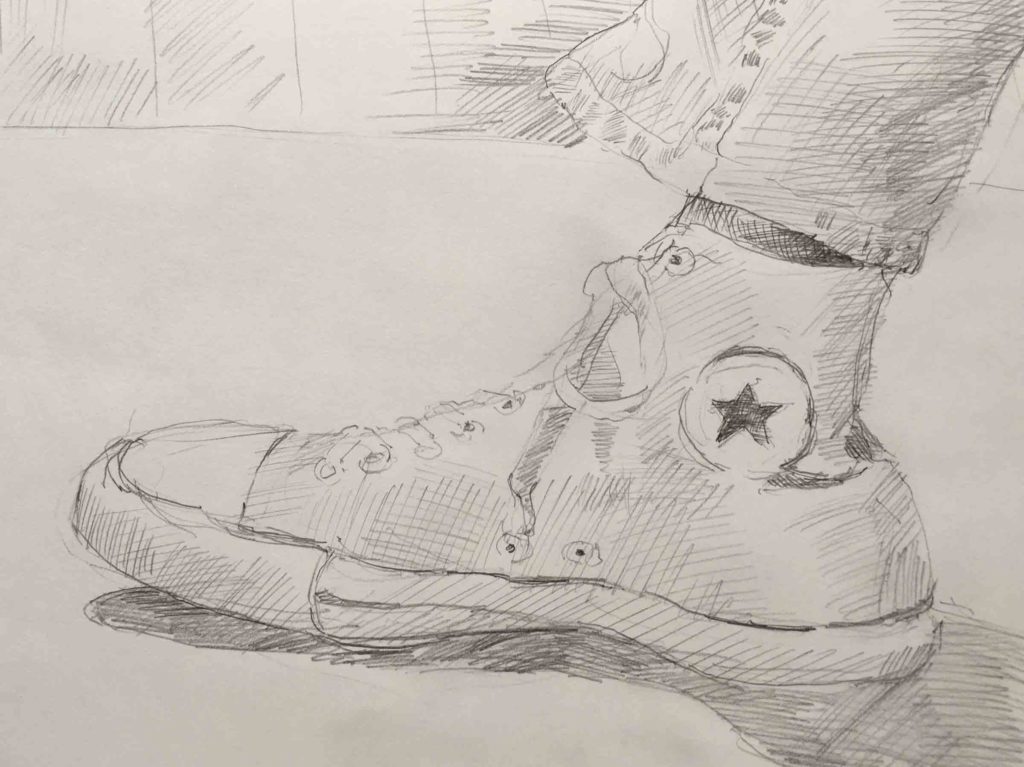
Converse

Converse ©2018 Elizabeth Fram, 18 x 24 inches, Graphite on paper            Usually I try to compose my life drawings so that the full figure is included, but this time, for reasons mentioned above, I only included John’s head. After lunch I couldn’t resist working on his shoes, also full of character and ripe for an interesting composition when combined with the shadow shapes cast by the strong lighting.

However, if you’re looking for something more substantial to sink your teeth into, a new list popped into my Feedly stream last week from My Modern Met: “20 Books Every Artist Needs on Their Bookshelf”. I have only read 7 of the 20, so I’ll be adding a few more titles to my TBR (to be read) list for the fall.
How about you? Are there any on this list that you would particularly recommend, or that you have been meaning to read?

Converse, detail

Converse, detail ©2018 Elizabeth Fram

Meanwhile, I just discovered painter/instructor Ian Roberts, who trained in Toronto and Florence, and now resides in LA. I can completely relate to his writing and ideas, so I treated myself to a Kindle edition of his book Creative Authenticity: 16 Principles to Clarify and Deepen Your Artistic Vision. It’s a series of essays that evolved from a talk he gave to a large group of artists and writers, spiraling outward from those ideas by posing questions and suggesting possibilities, rather than proffering answers.
So far, I’m finding it excellent.

What, if any, seasonal adjustments do you make in your practice and/or reading habits?

Frida Revisited

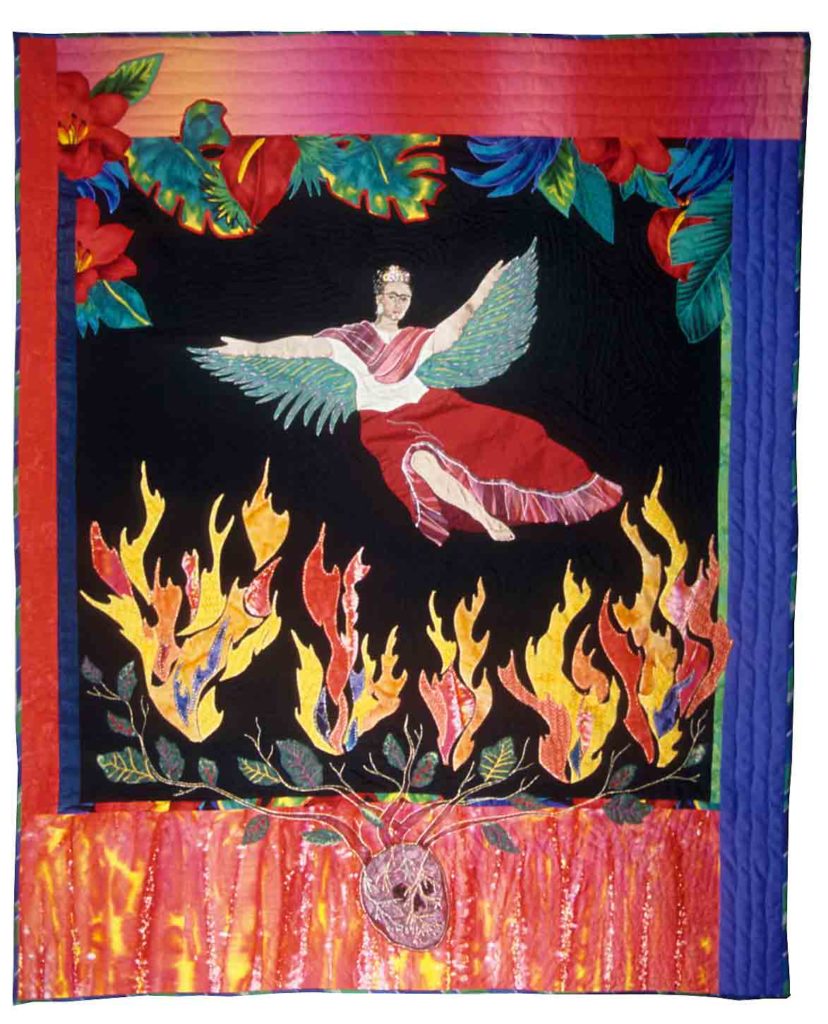
Almost twenty years ago I made an art quilt about Frida Kahlo, hoping it would be accepted into a show at the then Thirteen Moons Gallery in Sante Fe, NM, which at the time was the premier gallery for art quilts in the country. I did a lot of research about Kahlo in preparation and, like so many others, became fascinated by her story, her strength, and her art.

Xochitl

Xochitl     ©2000 Elizabeth Fram, 46 x 37 inches, Silk and Cotton            The name Xochitl comes from the Aztec.  Xochitl was the princess of flowers and art.

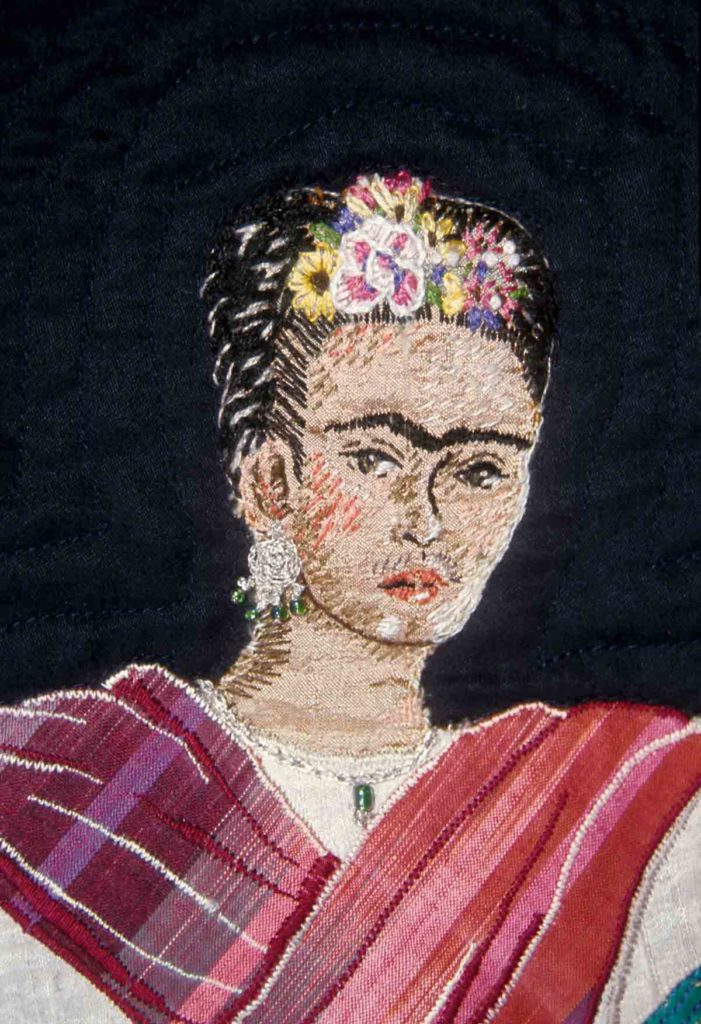
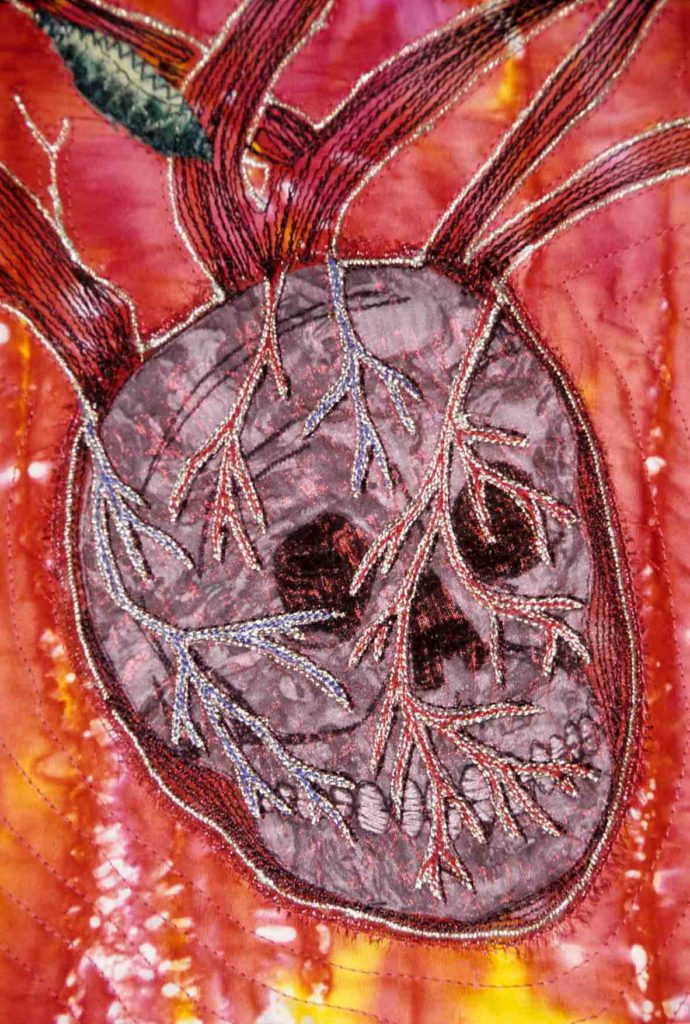
Making the piece was more than a little challenging, earning its share of blood, sweat, & tears. It was a lot of tricky work to figure out how I could best combine machine and hand-work in order to achieve the effects I was going for, and I learned a tremendous amount in the process.

Xochitl detail, head

Xochitl, detail     ©2000 Elizabeth Fram

The happy ending is that it was accepted into the exhibit and became the first textile piece I ever sold.

Xochitl detail, skull

Xochitl, detail     ©2000 Elizabeth Fram

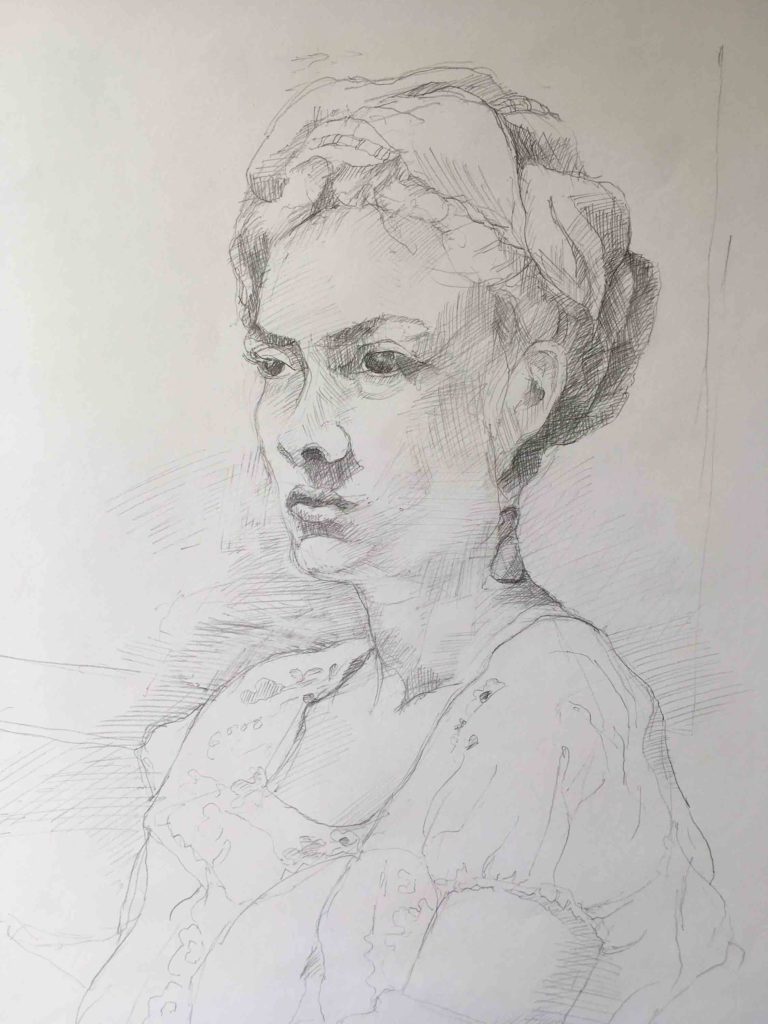
Week before last, our model at life drawing came dressed as Kahlo. She is an unabashed fan, making no secret of her admiration for the artist while setting a striking likeness.

But as the session wore on it was Kathryn’s spirit, not Frida’s, that had us all under its spell as we drew and talked about the mythic painter.

Kathryn

Kathryn     ©2018 Elizabeth Fram, 24 x 18 inches, Graphite on paper

On A Different Note_________________________________________________________________________

I appreciate the sentiment of this blog post from Modern Mrs. Darcy and think you might too. It’s so easy to keep one’s nose to the grindstone, making each day a perpetual puzzle of trying to fit more in around everything else, maybe it’s time to rethink that approach.
Plus, her helpfully annotated Summer Reading Guide 2018  is now available.


Post Residency Mishmash

Something I didn’t expect to face once I got home last week was how challenging it would be to re-adjust to reality after the luxury of centering my brain on largely one single thing for a span of 7 days. It’s made me even more acutely aware, not only of what a gift the week in Johnson truly was, but also of the hundreds of day-to-day concerns, big and small, we all regularly juggle just to keep our heads above water in daily life.
Therefore, if this post seems a bit all over the place, it is. But it is also a reflection of the rich and various arty things that have captured my attention as I’ve pulled myself back into my routine.

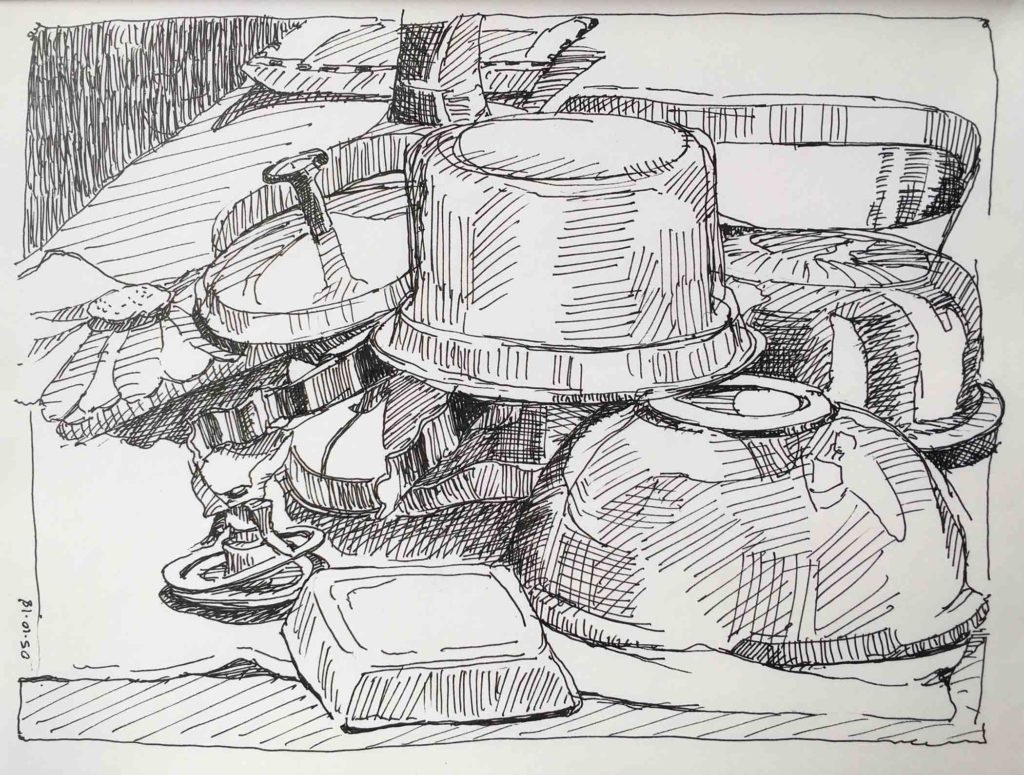
Dishes

©2018 Elizabeth Fram, 8.5 x 11 inches, Ink on Paper

First, after working in that large, open, and mostly empty studio at VSC, I realized that despite packing up a full car-load of supplies, I doubt anyone walking into my home studio while I was away would have noticed anything was gone. In other words: time to clear out! In the midst of tackling that chore I found a stash of old drawings that I had totally forgotten.

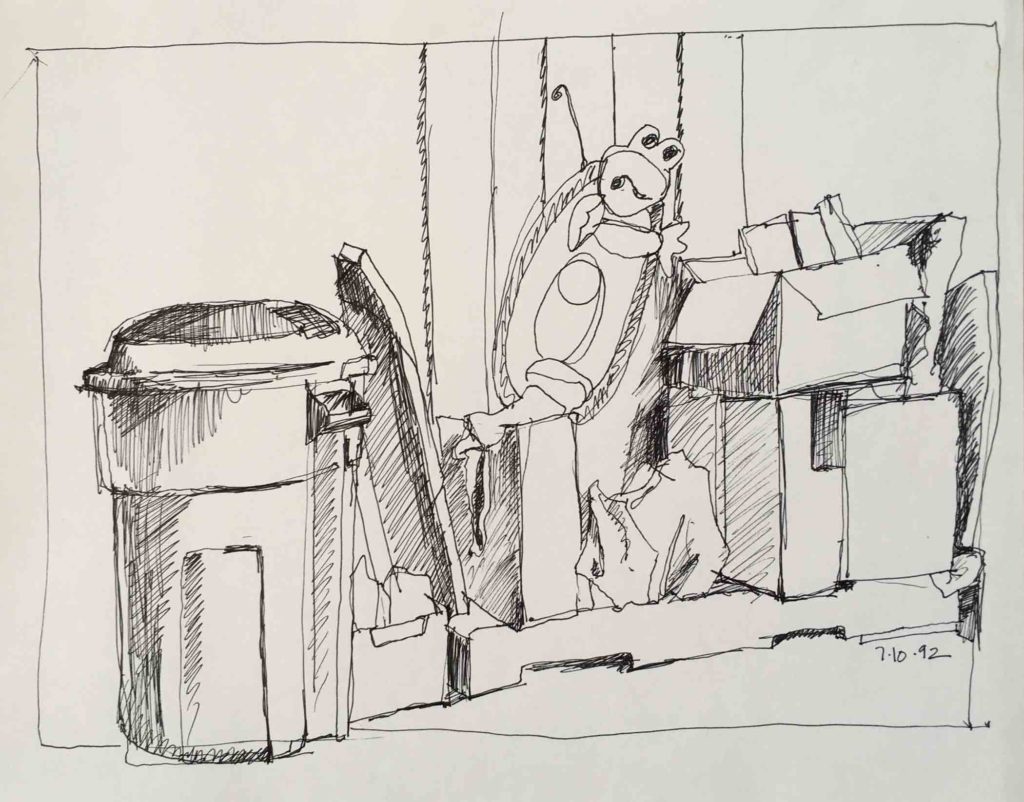
Garage

©1992 Elizabeth Fram, 9 x 12 inches, Ink on Paper

A lot of water and art has passed under the bridge since I made this drawing in 1992 while sitting in the driveway of our house in Hawaii as our kids drew with chalk and rode a tricycle. It caught my eye immediately because I can (now) see in this jumble of boxes and beach toys, piled at the back of our carport, the roots of the sketches of the stacks of drying dishes I’ve been making for the past couple of years. Even all that time ago, without realizing it, I had an urge to distill an image into an abstraction of shapes and values, while moving outside of a self-determined frame. It’s just that it’s taken doing it many, many more times to get to the point of recognizing what I was attempting.

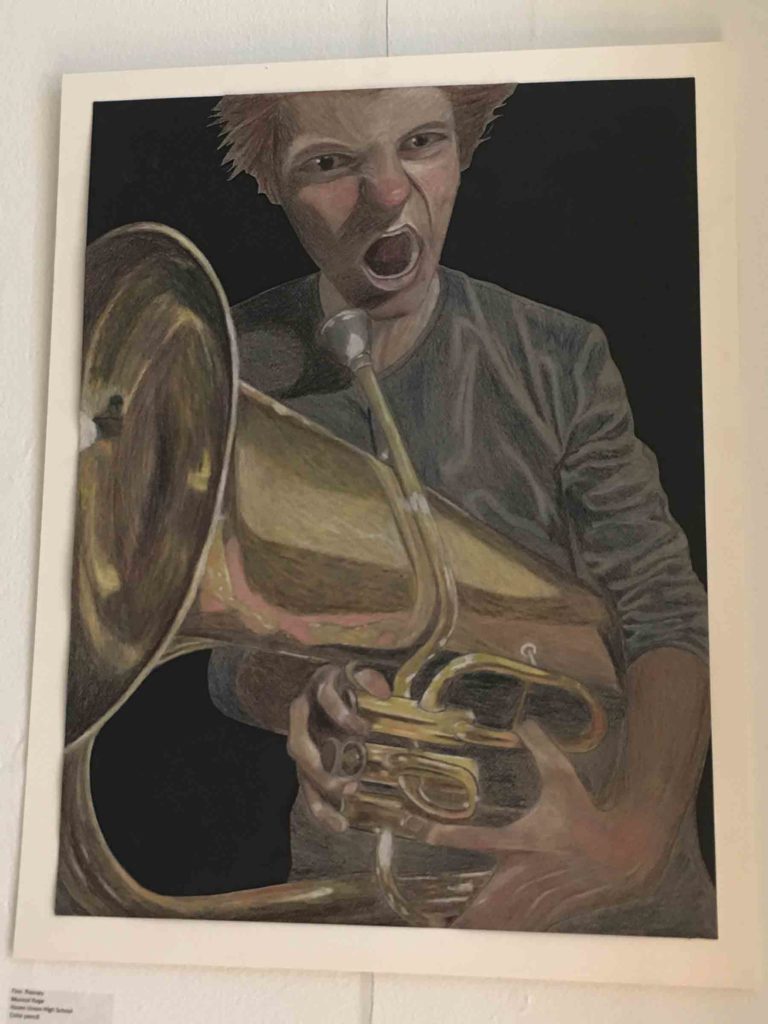
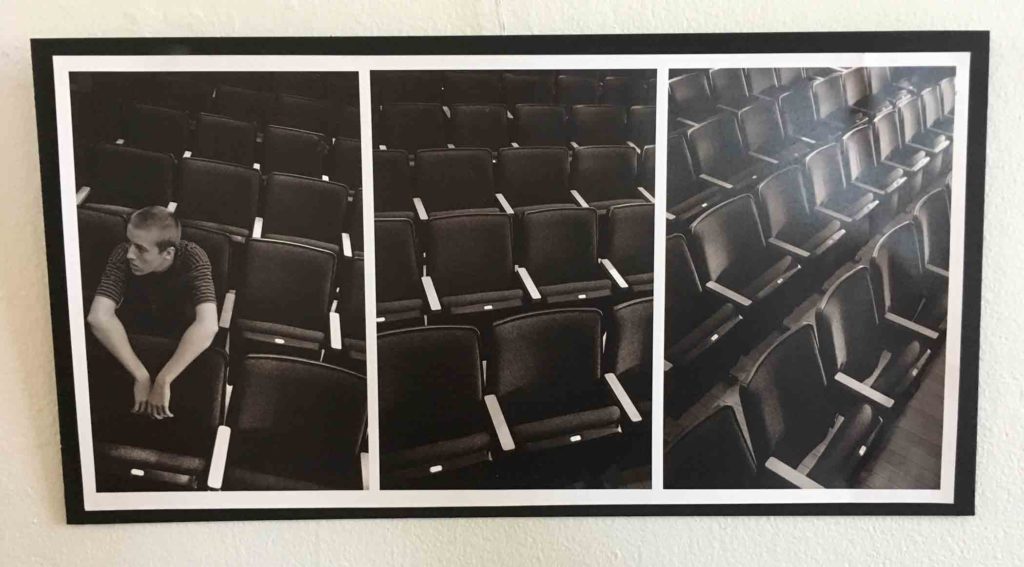
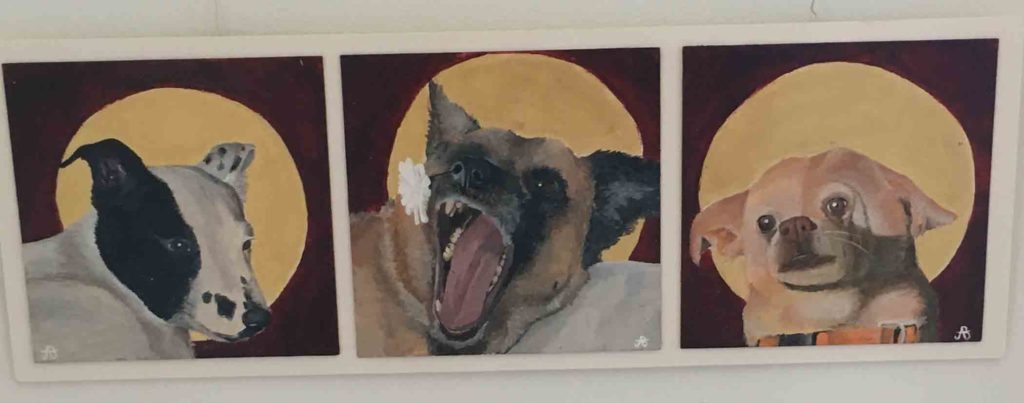
A trip to the Vermont College of Fine Arts to see an exhibit of exceptional high school art was both exciting and humbling. Much of the work coming from these young artists was very strong. I took photos of the 10 pieces that stood out most to me, but I’ve narrowed those down to my favorite three which follow below (with a fourth thrown in…just because I can, and for reasons that most of you will guess). I see a bravery of perspective/vision and adventurous spirit in these works that is quite admirable and mature.

Sunset Journey

Sunset Journey     ©Meredith Nicol, Lyndon Institute, Watercolor, pen and ink   The detailed pen and ink work of this piece unfortunately doesn’t translate in this photo, but I was very impressed with the expressiveness and assured hand of this young artist.

The book I read this past week was Anthony Doerr’s Four Seasons in Rome: On Twins, Insomnia and the Biggest Funeral in the History of the WorldI became very fond of Doerr’s writing style and his prowess with metaphors in All the Light We Cannot See. So paired with my own fond memories of Rome, Four Seasons landed squarely on my to-be-read and library waiting list a while ago. It was definitely worth the wait.
One word of caution: if you haven’t had kids, it might not be for you…too much talk about the messy realities of those first months. But for those of us who have had the privilege, and who know the life-altering joys and challenges that come in that first year, this book is a thing of beauty — especially when coupled with the sights, sounds, smells, and tastes of Rome, which Doerr so masterfully conveys. His genius is in elevating both the simple and the monumental in such a way that they simultaneously evoke a sense of familiarity and awe.
And, although I didn’t plan it that way, it was a great read for Mother’s Day week!

Musical rage

Musical Rage     ©Finn Rooney, Hazen Union High School, Color pencil

Lastly, we are all rejoicing as spring has finally taken hold of this corner of the world. The trees have leafed out in a matter of days, so I guess it would have been better if I had thought to share this haiku with you last week. Despite being a bit late, it still resonates and I keep going back to its simple beauty.

Jewelry

Buds on silver twigs –
Purple, scarlet, green and gold –

Spring’s bright jewelry

From A Haiku Each Day, ©Abigail M. Parker

Untitled Self-Portrait

Untitled Self Portrait     ©Aidan Lodge, People’s Academy, Digital Photography   The unfortunate  glare on the right panel of this striking photo is mine. Apologies.

So what do all these vignettes have in common? One of art’s greatest strengths, regardless of discipline, is it accesses and clarifies the deeper elements of what we already know.

Holy Trinity

Holy Trinity      ©Julia Bamford, Essex high School, Acrylic

Sweet Dreams, Squirrel TV, & a Sneak Peak

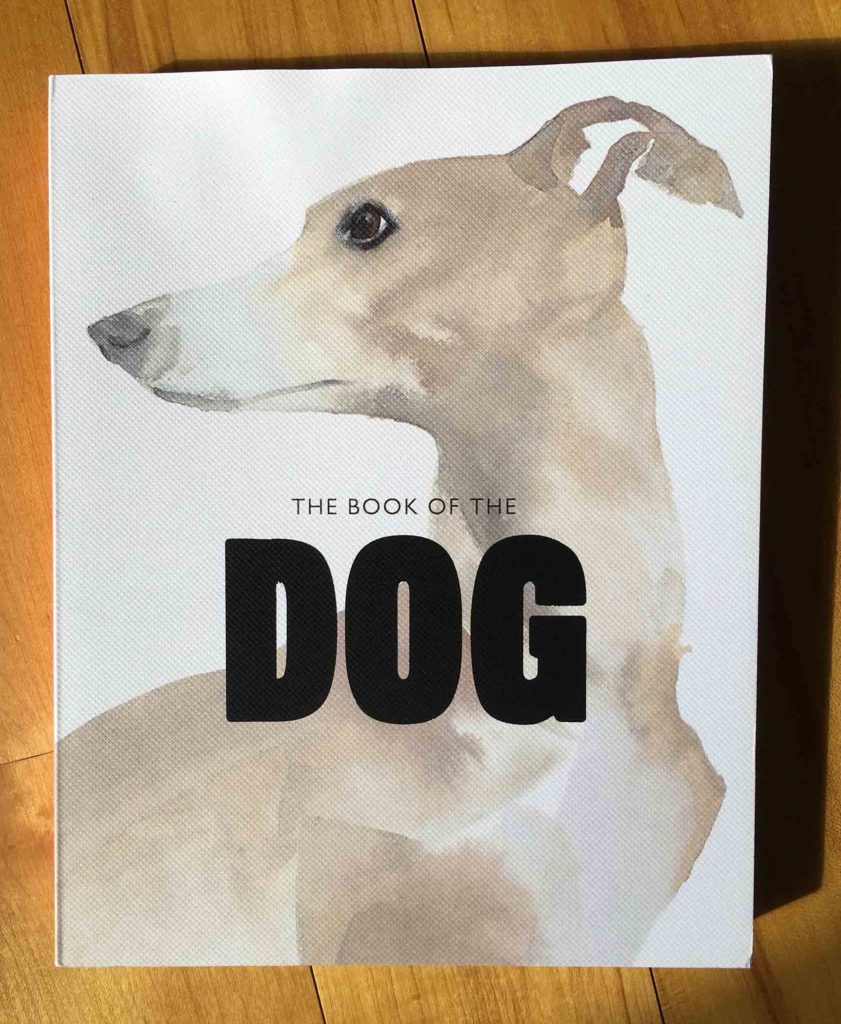
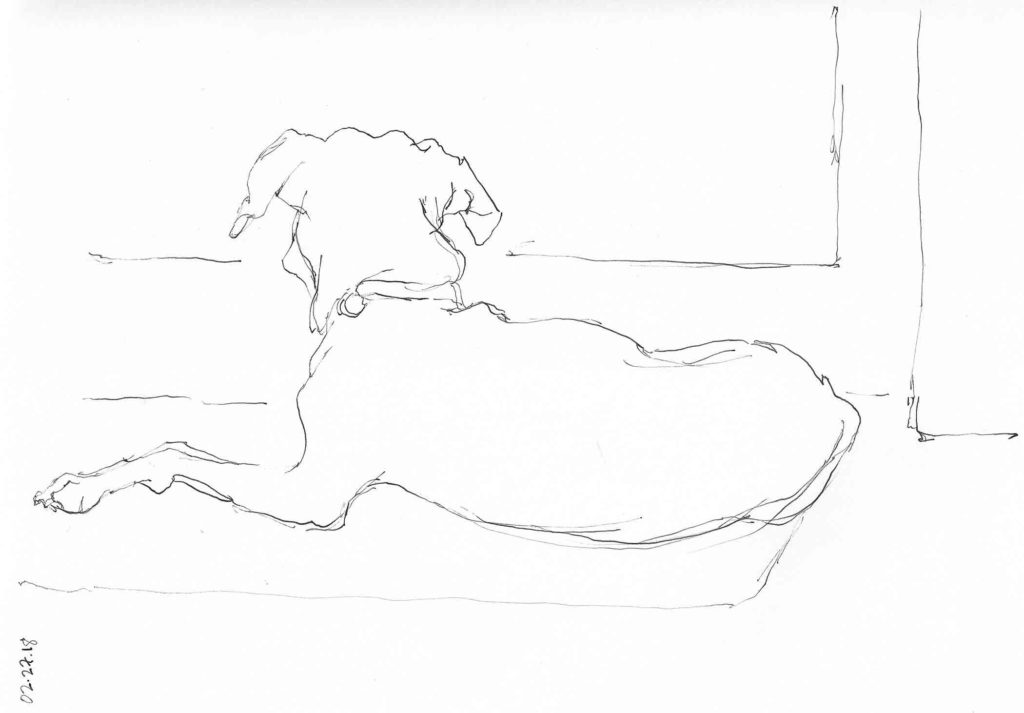
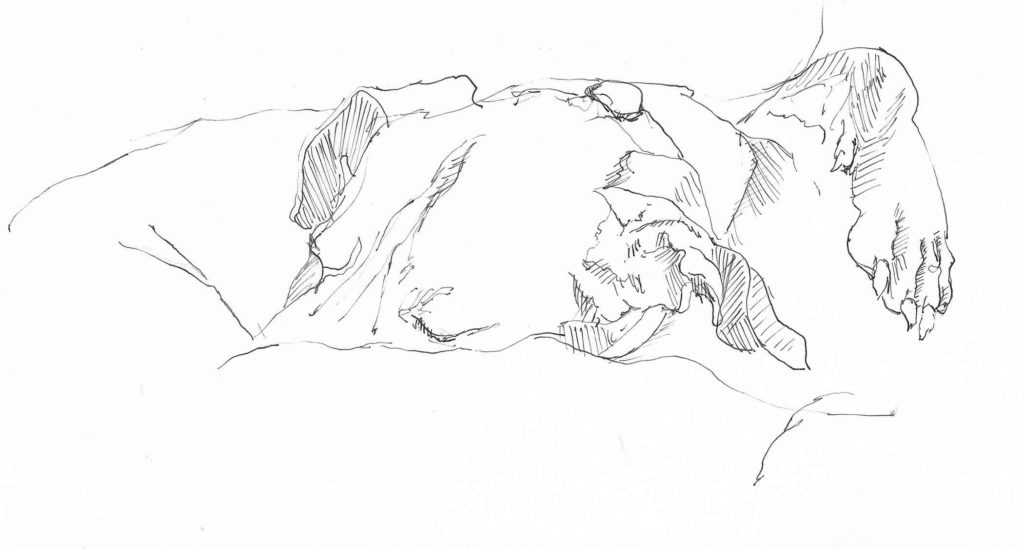
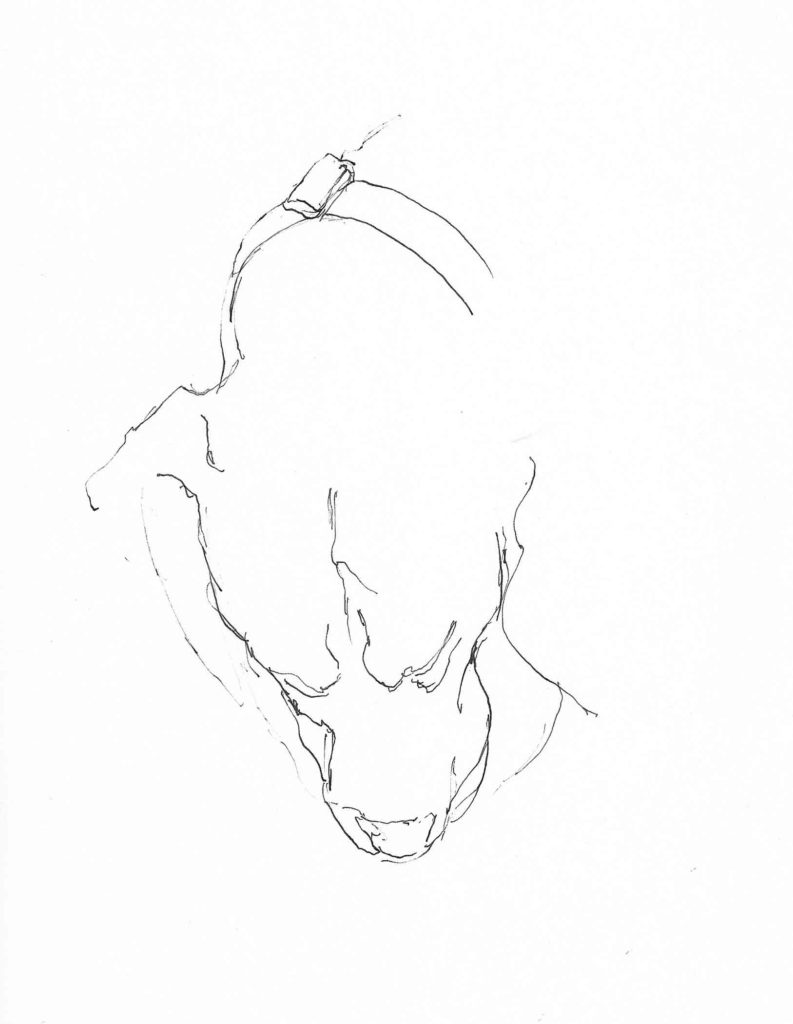
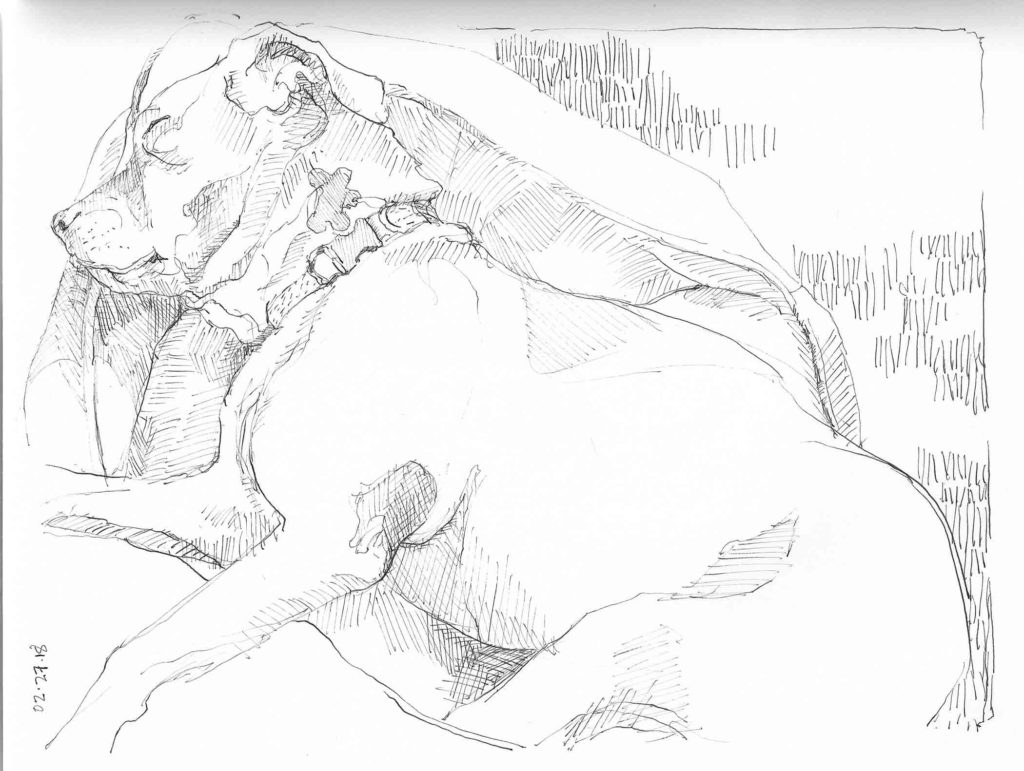
The only souvenir I brought back from our recent trip was a small book purchased in the SF Moma bookstore. Angus Hyland and Kendra Wilson’s The Book of the Dog – Dogs in Art is a charming little collection of dog paintings that span from the 18th century to the present. As the authors note in their introduction, “the undying love of a dog is of course requited on these pages”, which is surely what snagged my attention in the first place. It’s not an exhaustive survey, but rather an eclectic collection of engaging pieces that celebrate the dog/human relationship and the ways that bond irrefutably changes us both. The artwork within is relatable without being sentimental.

Book of the Dog

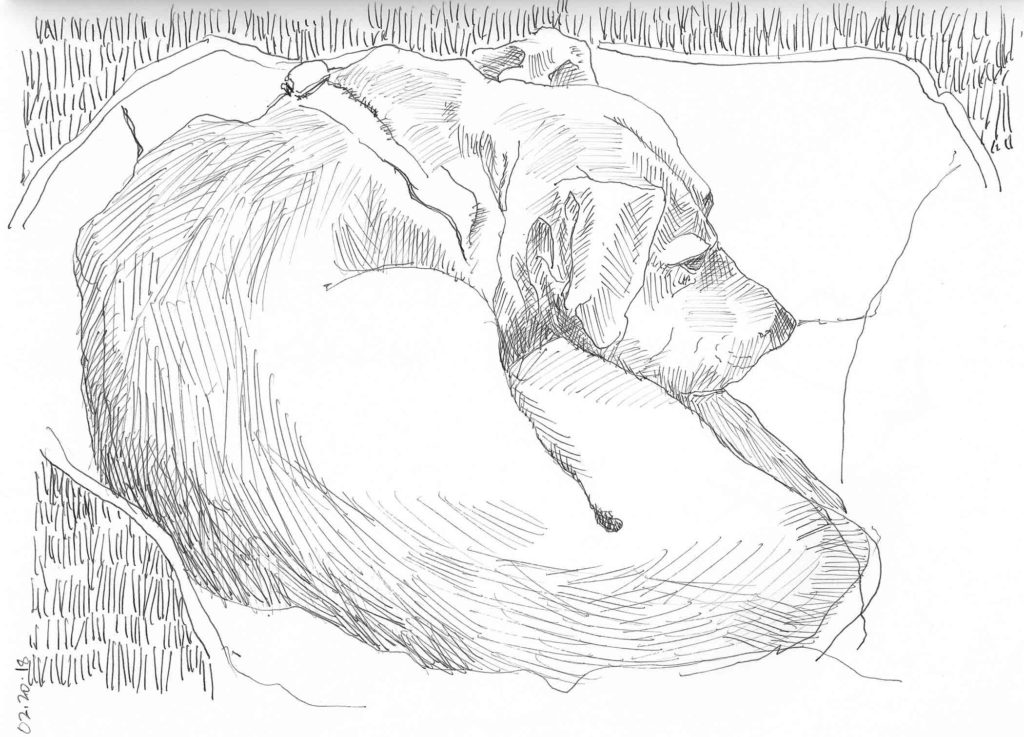
When I think of my own trusty models, it is certainly true that the amount I have learned from our 3 beloved pooches, as they’ve patiently let me draw them over and over, is immeasurable.

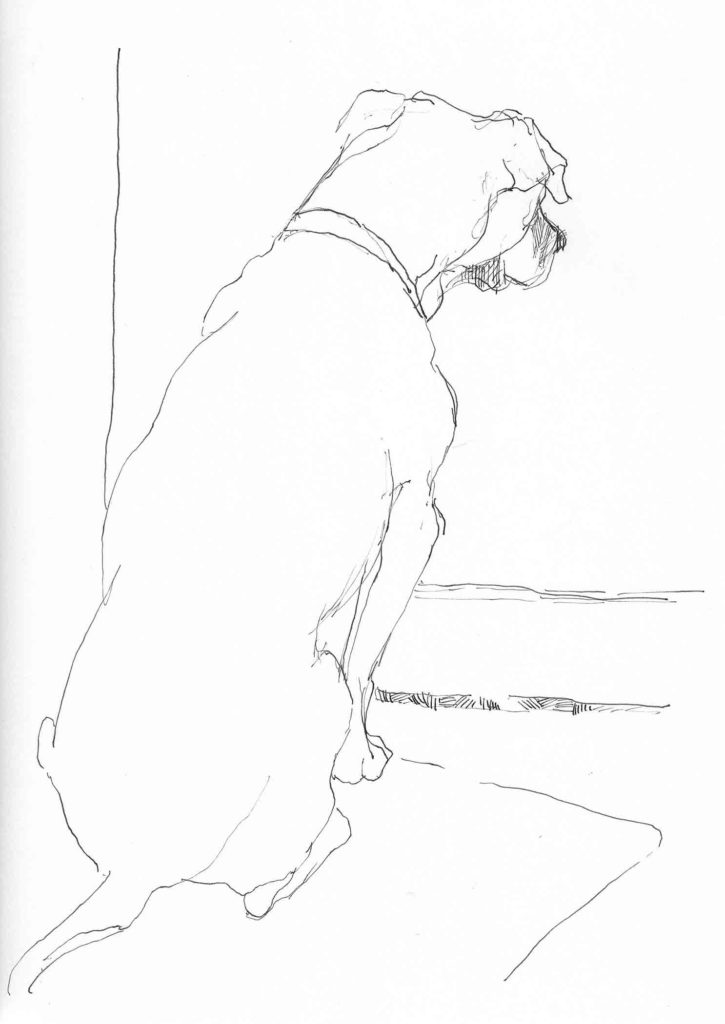
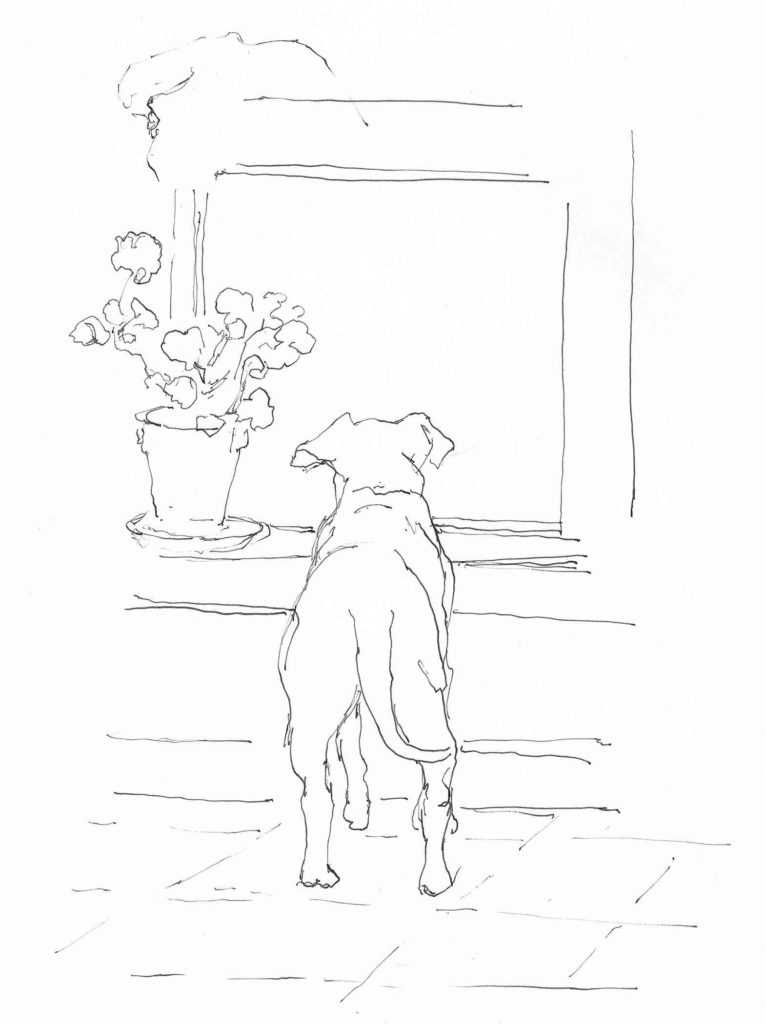
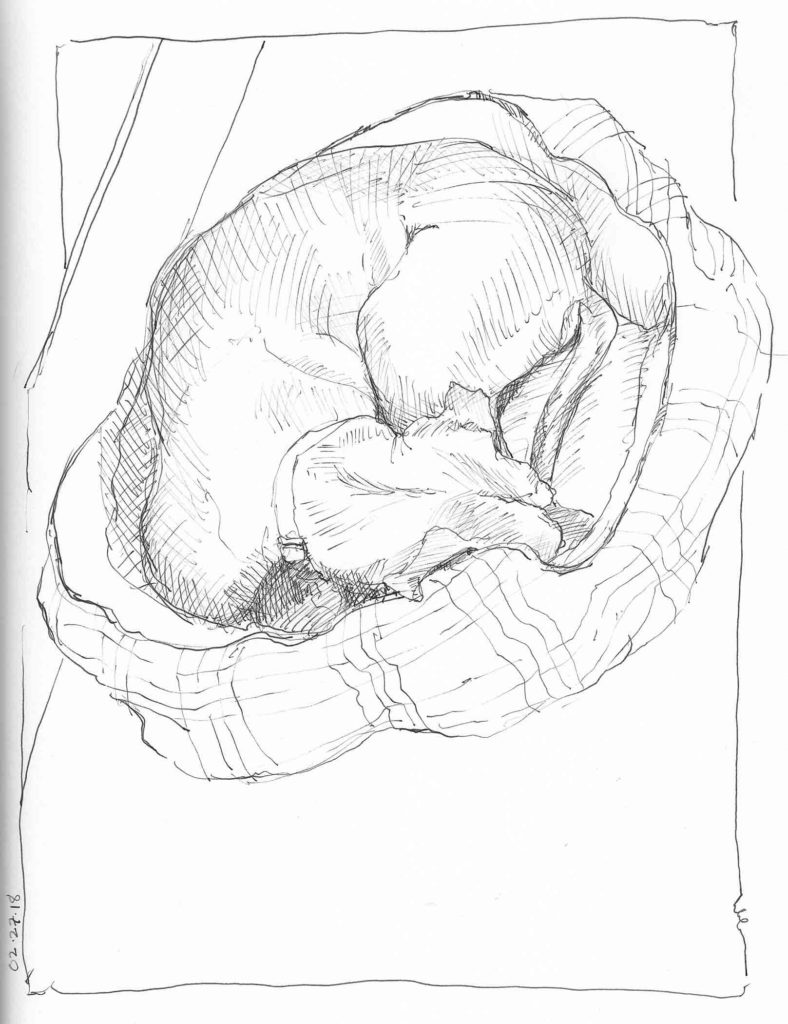
Rather than writing at length this week, I spent most of my blogging time drawing.

Quinn

©2018 Elizabeth Fram

Quinn1

©2018 Elizabeth Fram

Quinn2

©2018 Elizabeth Fram      Our windows are Quinn’s TV. The squirrel channel is on at all hours. Many times I have but a fleeting moment to try to capture a quick outline before she dashes off to another window. You can see the ghost beginning of an abandoned sketch in the upper left corner of this one..

Quinn3

©2018 Elizabeth Fram

Quinn4

©2018 Elizabeth Fram

Quinn 5

©2018 Elizabeth Fram       It wouldn’t tell the full story if I only showed finished images. I have plenty  of interrupted sketches that record my stops and starts as Quinn moves. For instance, she wasn’t holding her paw at this unnatural angle, I just had to abandon her head when she readjusted, opting to capture her foot instead.

©2018 Elizabeth Fram

Quinn7

Slumber     ©2018 Elizabeth Fram, 8.5 x 11, Ink on Paper

Drawing Threads… Sneak Peak  _______________________________________________________________________

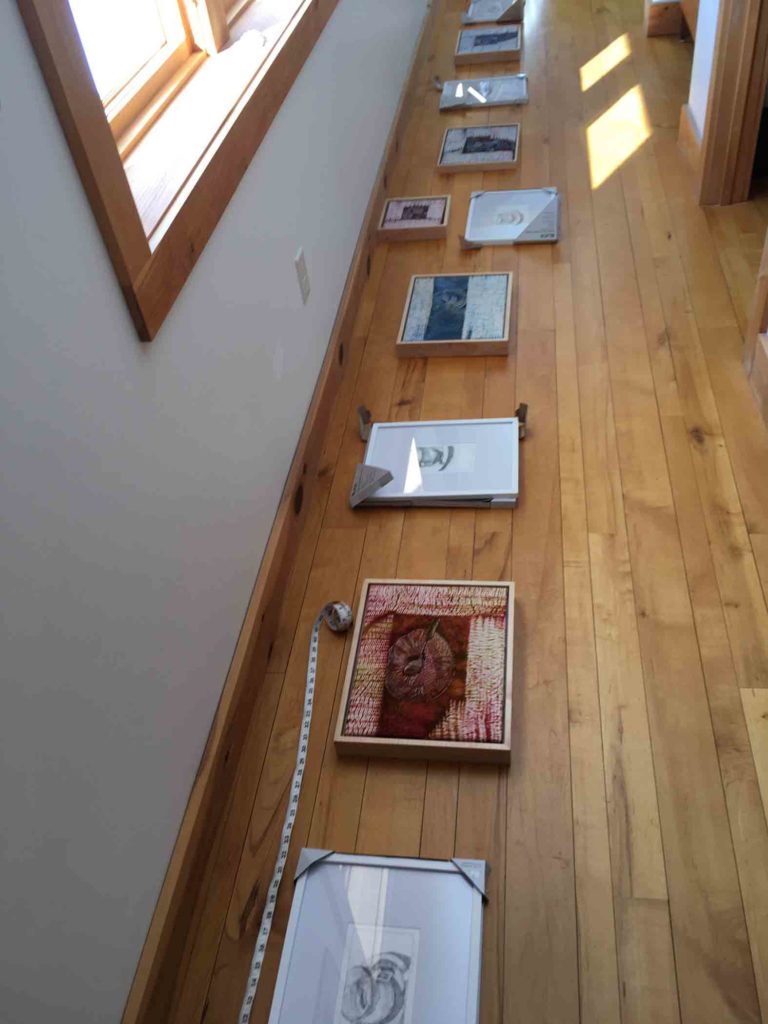
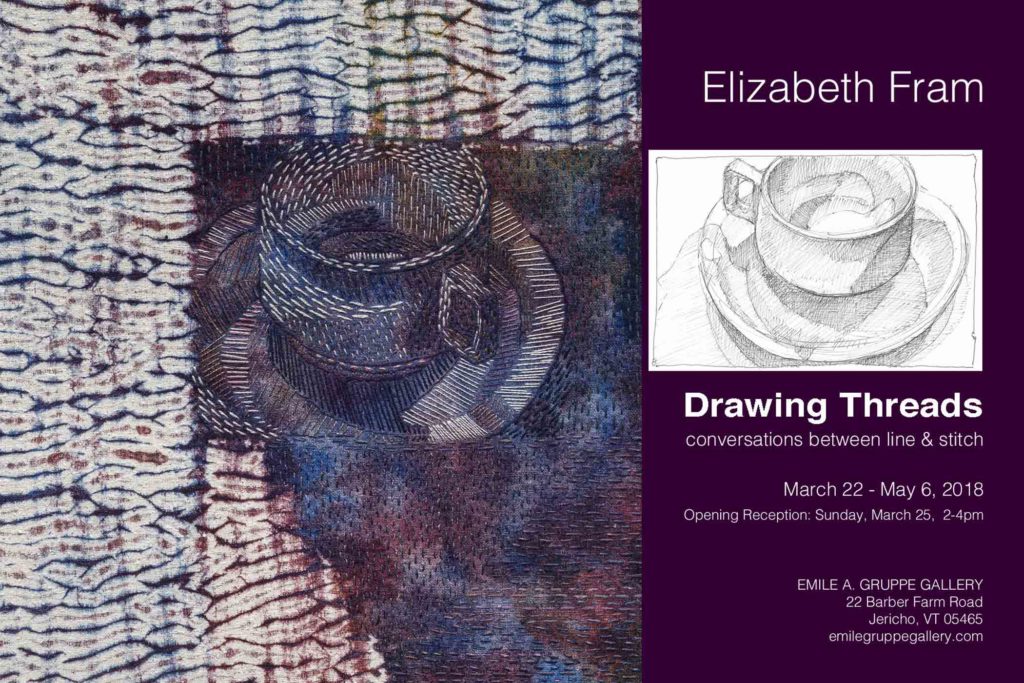
I’ve reached the stage of pulling together all the various loose ends in anticipation of my upcoming show Drawing Threads: Conversations Between Line & Stitch. As I approach the finish line, one of my “icing on the cake” projects is figuring out how best to group the textile pieces with the drawings so that the conversation between them is apparent. This photo shows just a fraction of the work; our long hallway is great for this job.

Layout

Amuse-bouche…

The show will be on view at the Emile A. Gruppe Gallery from March 22 – May 6, 2018, with an opening reception on Sunday, March 25 from 2-4pm. Please join us!
Regular gallery hours are Thursday – Sunday, 10am – 3pm, or by appointment: 802.899.3211

Drawing Threads


Coincidence as Instigator

Don’t you love a good coincidence? Whether or not you really believe in them, the idea of such a thing makes life so much more interesting.

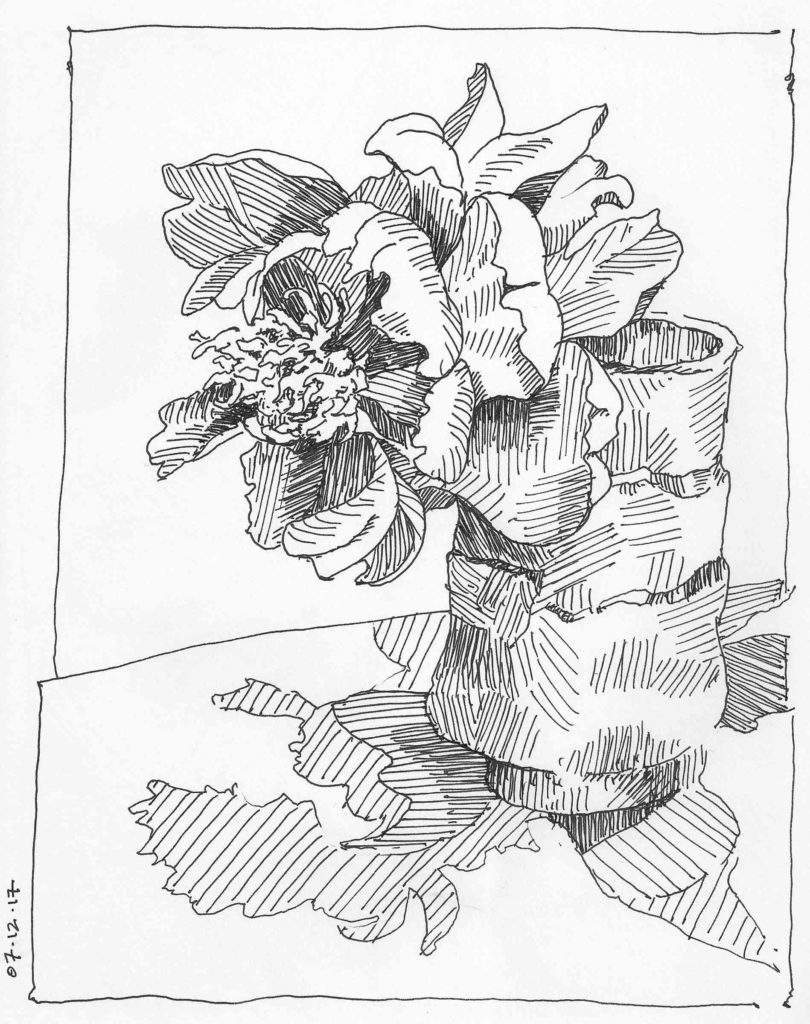
Peony 1

©2018 Elizabeth Fram      This piece was inspired, not by Mary Delany’s work, but by the peonies in my own garden. Documenting its progress here seemed a very apt illustration for this particular post.

Peony 2

©2018 Elizabeth Fram

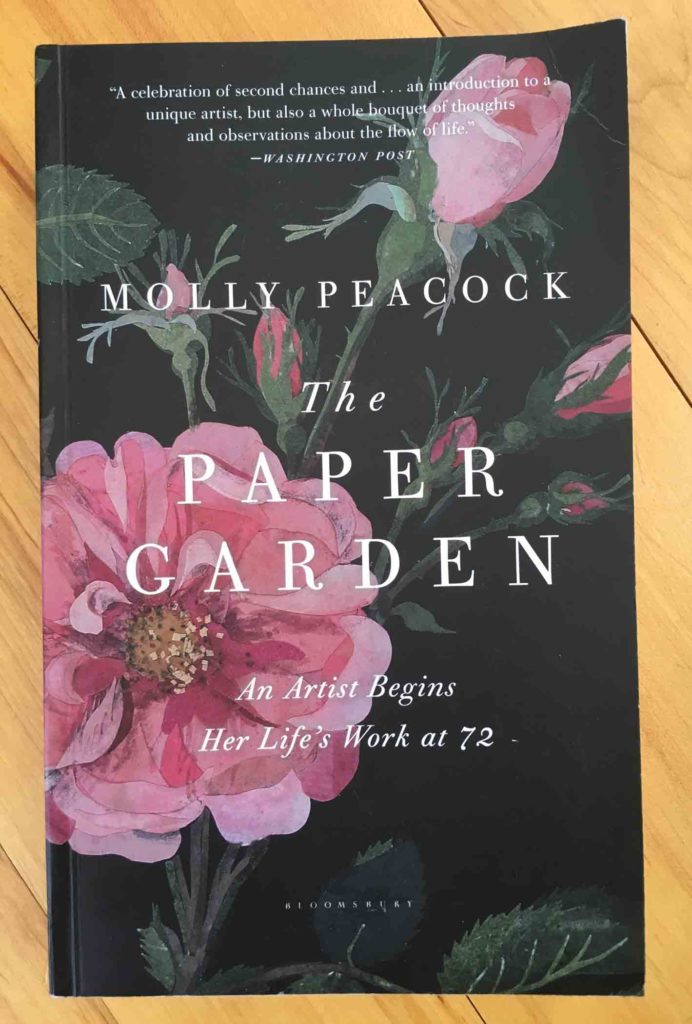
I have a friend I rarely see who, the past couple of times we’ve crossed paths, has mentioned how much she enjoyed The Paper Garden. Written by Molly Peacock, it is a biography of Mary Delany, an eighteenth century woman who first embarked on her artistic career at the age of 72. Delany is credited with being the originator of collage, creating 985 beautifully realistic images of flowers, made of finely cut, exactingly colored paper that she painted herself. Her work, referred to as the Flora Delanica, now resides at the British Museum.

Peony 3

©2018 Elizabeth Fram

Peony 4

©2018 Elizabeth Fram

Respecting my friend’s opinion I made a note of the book, but admittedly hadn’t done much to seek it out. However, I happened upon a pristine copy for 50 cents at the library book sale last summer, so how could I resist? I snapped it up, put it in my ever growing to-be-read stack, and then promptly forgot about it.

Peony 5

©2018 Elizabeth Fram

Peony 6

©2018 Elizabeth Fram

Last September, during our trip through the Atlantic Provinces, one of the highlights was attending a talk at the Nova Scotia College of Art and Design given by visiting artist Zachari Logan. Logan’s work, which I’ve written about before, is a tour de force of draughtsmanship, underpinned with layers of intention that elevate his drawings above and beyond his amazing technical facility. Composed of beautiful tangles of real and imagined flora, often strikingly set on a stark black ground, his pastel drawings of plants are rendered as though scattered on the paper, encircled in wreaths, or woven together in cleverly composed human forms reminiscent of the Renaissance painter Giuseppe Arcimboldo.

Peony 7

Crescendo    ©2018 Elizabeth Fram, Stitched-resist dye and embroidery on silk. It will be  framed to 14 x 11 inches. but this gives you a glimpse into the way the dye bleeds beyond the stitched resist patterning.

As Logan talked about his process, he mentioned that he seeks residencies in countries outside his native Canada, immersing himself in the art and history of that locale while allowing what he finds there to directly inform the work he produces while in residence.

Peony 8

Crescendo, detail     ©2018 Elizabeth Fram

The work in the show we were seeing during his talk in Halifax was the result of a residency in London, inspired by an in-depth study of the paper “mosaicks” (as she called them) of Mary Delany. As he animatedly talked about the beauty and inspiration of these pieces, painstakingly and delicately created by an aging woman in the late 1700’s, it began to dawn on me that she was the same person as the subject of The Paper Garden, sitting on my shelf at home.

The Paper Garden

My friend was right – it is a wonderful book! Part biography, part art book, part memoir , it follows the life of a fascinating and resilient woman whose social circle included nobility and celebrated artists, among them George Frideric Handel and Jonathan Swift. Yet her life had not been easy. Delany’s ability to gracefully meet the often challenging circumstances doled out to her, at a time in history when women had little power or resources beyond those afforded them by the men in their lives, makes for a fascinating read. By interlacing Delany’s life with her art, author Molly Peacock provides an enlightening and contemporary window into the life of an artist who was at her peak in her eighth decade, more than two centuries ago.

Peony Sketch

Peony sketch ©2017 Elizabeth Fram, 11 x 8.5 inches, ink on paper


Coda for 2017

Having our kids home this week has opened the door to favorite memories, among them the books they remember most vividly from when they were little. I fully own that, as a sucker for picture books myself, I was not above choosing books “for them” that contained illustrations and stories that I personally found irresistible.

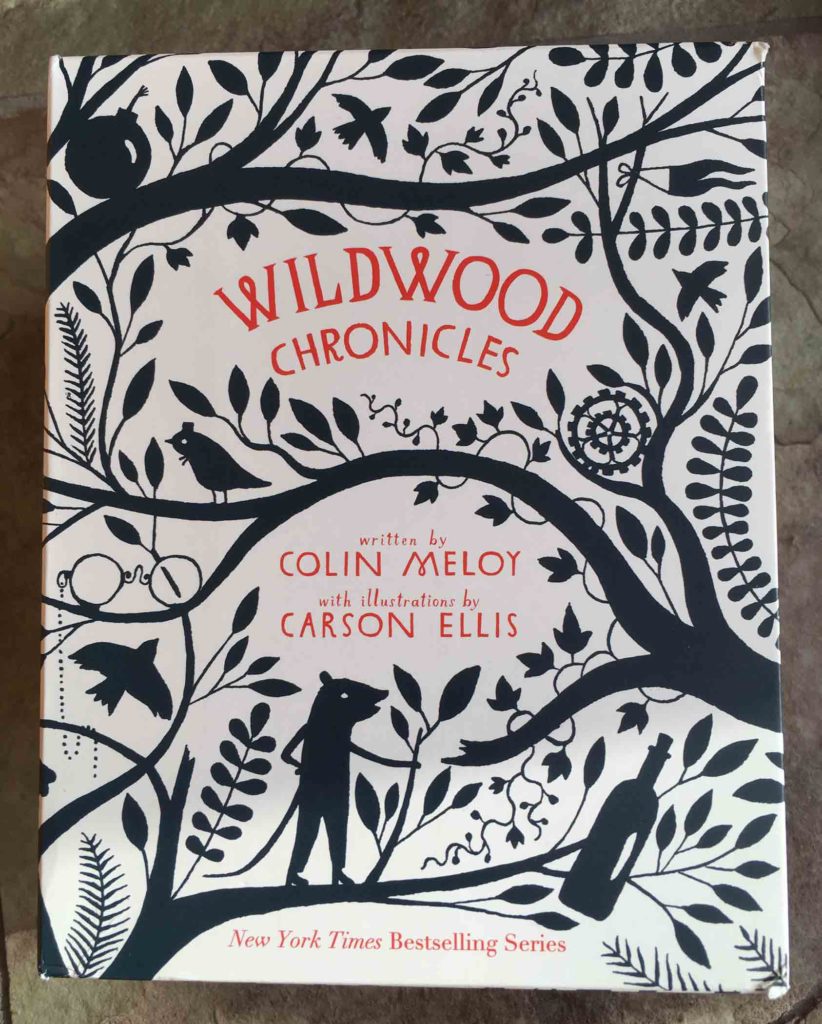
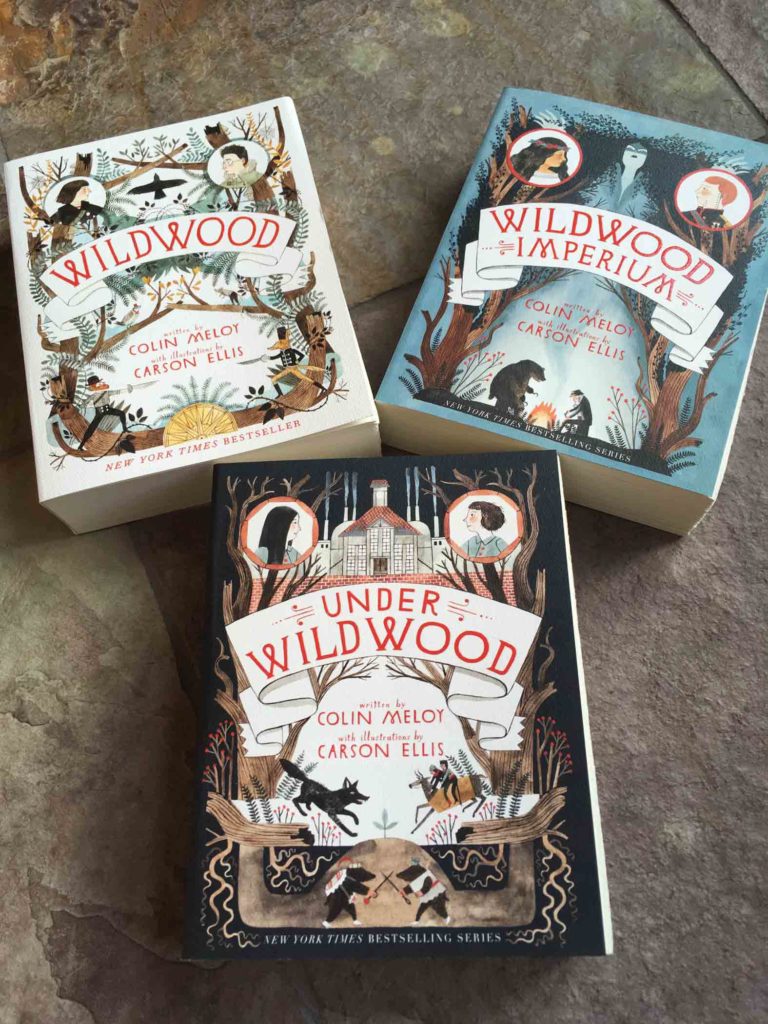
Wildwood Cover

I can’t hide behind my kids any longer so this year I openly requested Colin Meloy’s The Wildwood Chronicles boxed set, beautifully illustrated by his wife Carson Ellis. I can’t wait to get lost in their magical pages during the dark evenings ahead. (For more of Ellis’ wonderful illustration work follow her on Instagram).

Wildwood Chronicles

In closing out 2017, (and to set the stage for 2018), enjoy this inspiring NY Times article about the children’s book illustrator Loren Long. It is a down-to-earth, non-preachy, un-saccharine look into how someone is fulfilling his calling by successfully navigating what might be considered an insurmountable obstacle. The story also contains a link to a charming Facebook live art video interview with Mr. Long.

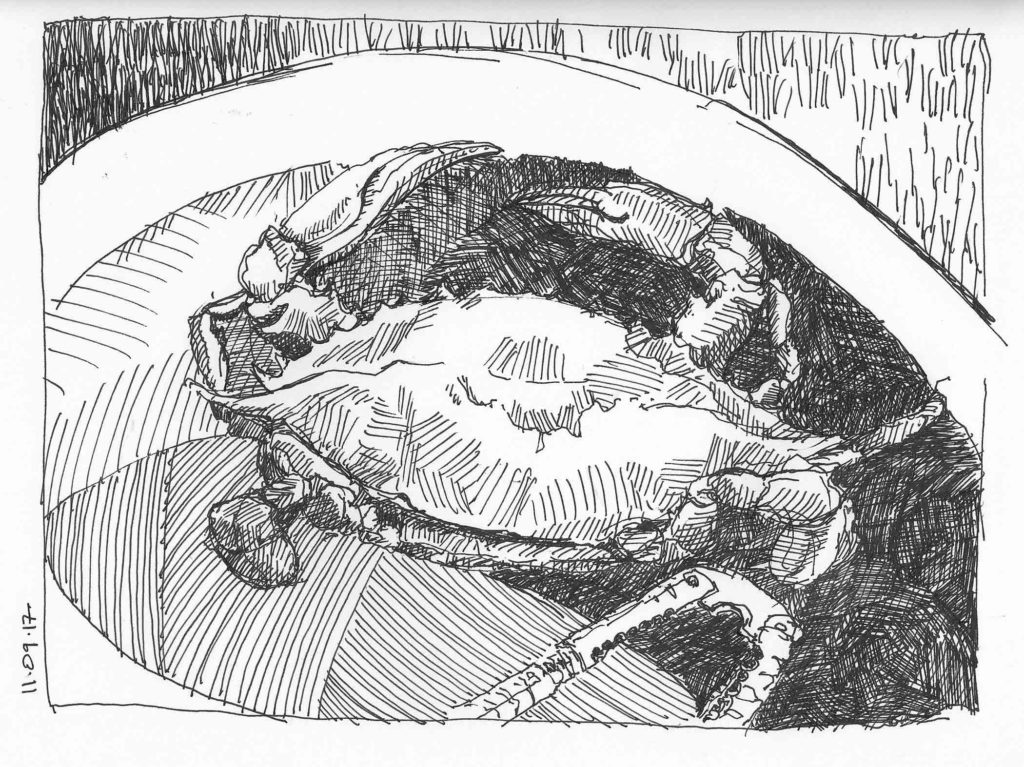
Crab

Crab     ©2017 Elizabeth Fram, 8.5 x 11 inches, Pen on paper

May the new year bring us all plenty of opportunities to enjoy, through image, the fruits of others’  and our own imaginations. Wishing you a healthy and creatively productive new year!

Back in the (Drawing Horse) Saddle

It’s pretty shocking when I stop to realize just how many years it’s been since I last devoted several continuous hours to drawing a figure. Lately the urge to get back to it has been really niggling at me, spurred by the growing toehold regular sketching has nurtured. For more than a year I’ve been on the lookout for a figure drawing gathering that would mesh with my schedule.

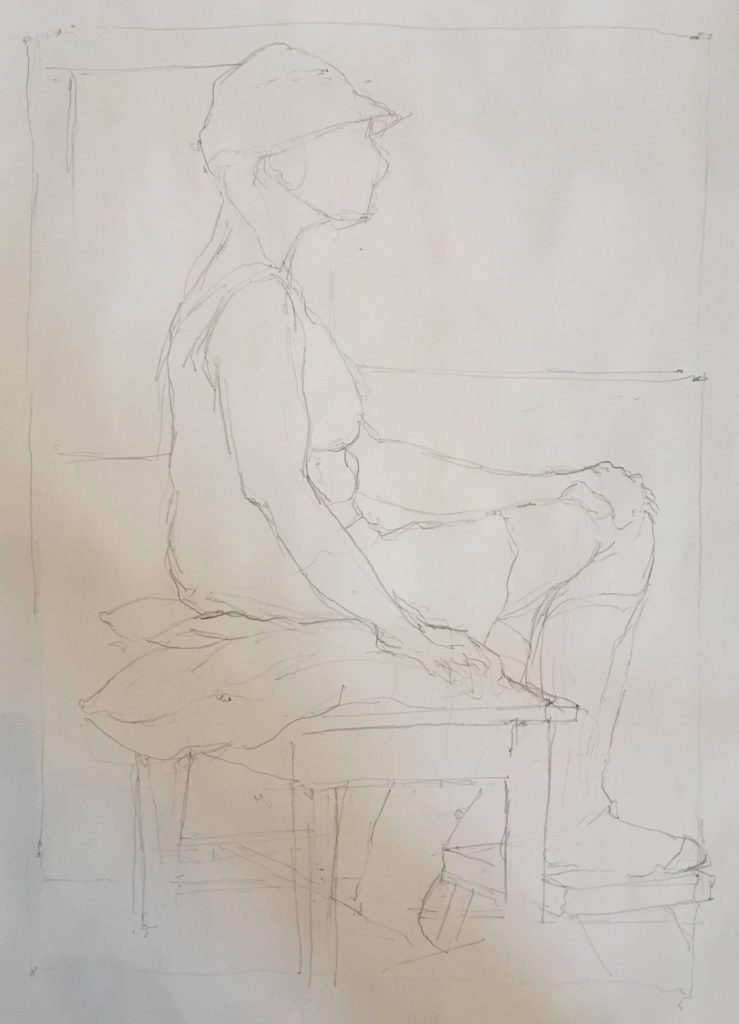
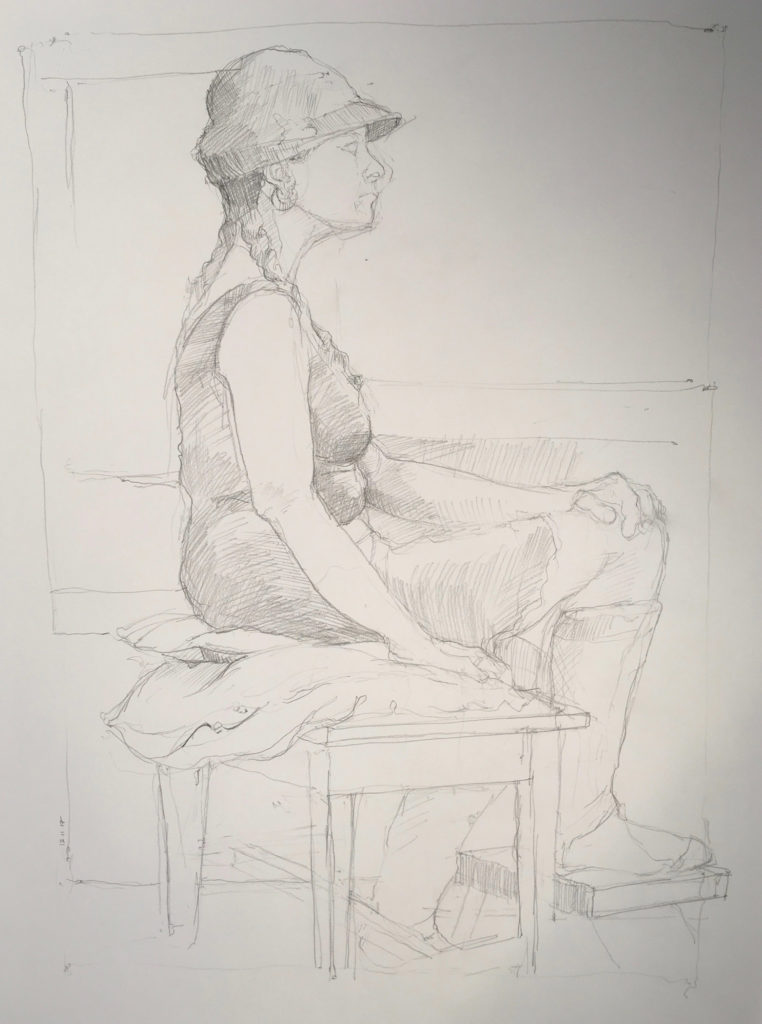
Hat 1

In Process       The majority of my sketchbooks are approximately A4 or A5. Stretching out on an 18 x 24 inch sheet is pure luxury.

Thanks to a couple of friends who tipped me off to a (kinda-sorta) local group, I was able to attend my first life drawing session this past week. I am beyond excited! For 4+ hours I felt like that proverbial clam, snuggled in at high tide, while drawing in the congenial company of a collection of accomplished and welcoming artists who have been meeting regularly for quite some time. The model was superb and there was even jazz playing in the background. Seriously, I was beyond happy.
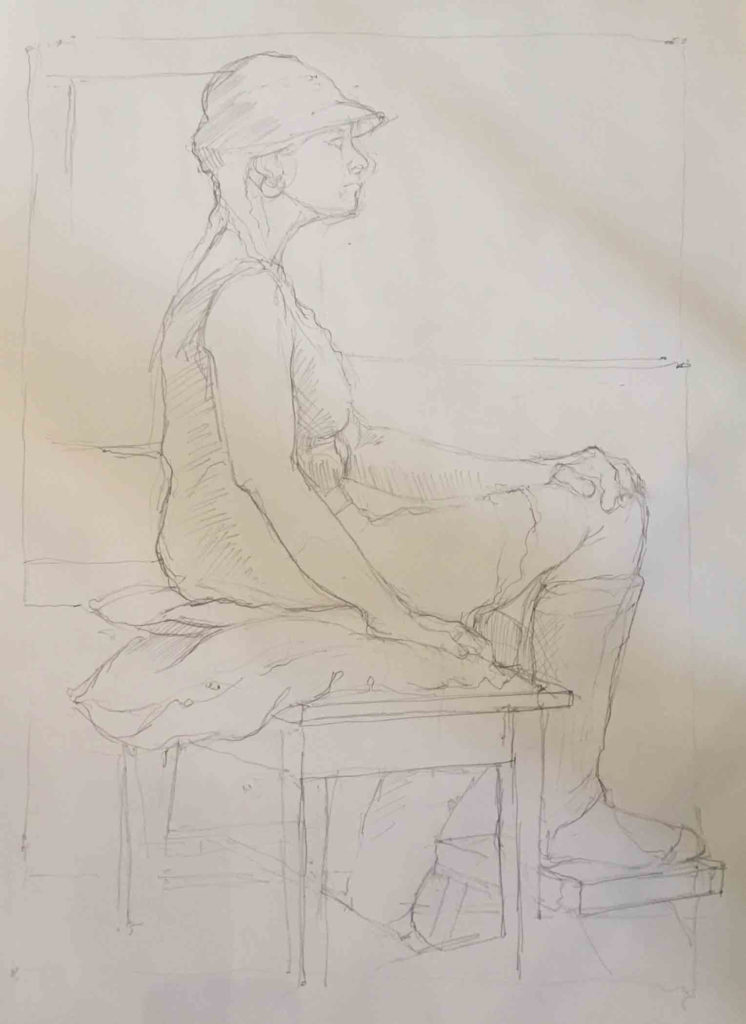
Hat 2

In Process     The model gets regular breaks, which is also a good time to reassess direction. Taking pictures with my phone mid-process is incredibly helpful, allowing for the distance necessary to identify areas that may need to change.

As something of a resource nerd I’m grateful for the library I’ve amassed over the years, pulling the following books/periodicals from my shelf for self-imposed homework. I would recommend any of them if you’re looking for drawing information and inspiration.

The Visual Language of Drawing – James L. McElhinney & the Instructors of The Art Students League of New York

The Natural Way to Draw – Nicolaides

Drawing Atelier: The Figure – Jon de Martin

Drawing magazine

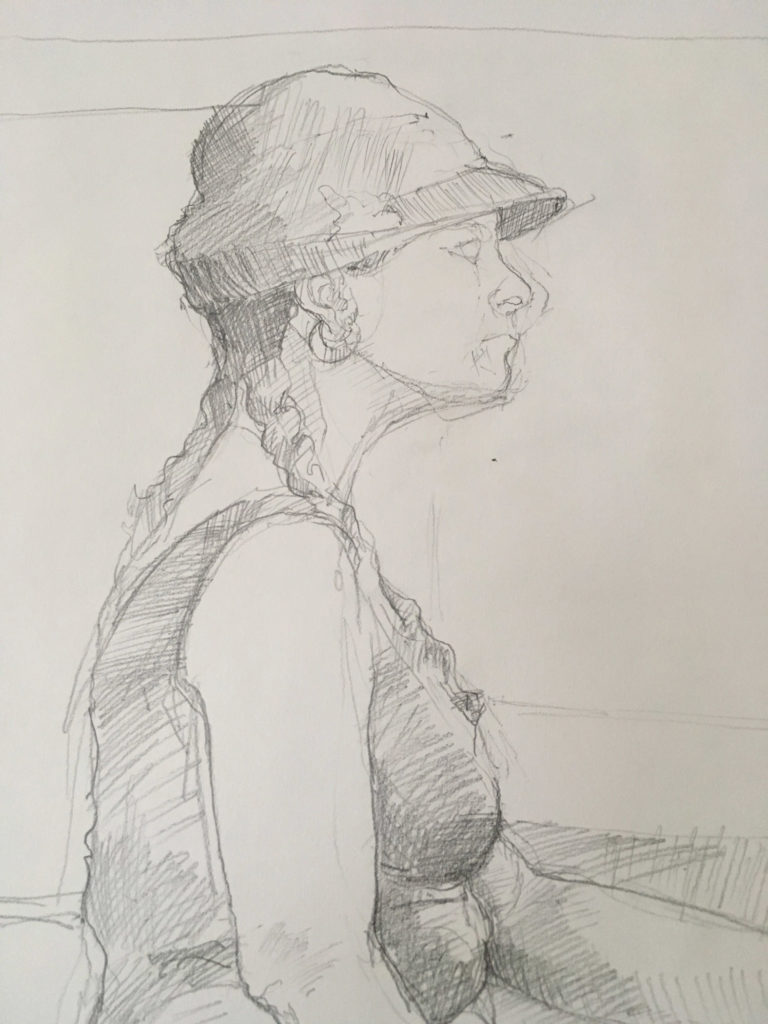
Hat 3

Blue Hat     © 2017 Elizabeth Fram, 24 x 18 inches, Graphite on paper

Working larger gives me a greater opportunity to consider how shapes define not just the image, but also the way they support an abstracted definition of the composition.  Thinking along those lines as I’ve been stitching this week has made me even more aware of the possible parallels between my drawn and stitched work, and the symbiosis (in my mind, at least) that links both disciplines, which makes working back and forth all the richer.

Hat,detail

Blue Hat, detail     ©2017 Elizabeth Fram

Instagram continues to be a wonderful resource. Check out  @ronniecay@bobart1937,  &  @kevinwueste  They all regularly post work from their life drawing sessions. The variety of style and interpretation is quite inspiring.

Perennial Inspiration

I don’t remember exactly when it was I bought Sara Midda’s 1981 book In and Out of the Garden, but it must not have been too long after it came out. Years before I was able to have a garden of my own, that little book has graced my bookshelf in all our many homes, serving as an inspiration and a reminder of the universal beauty and solace to be found in the magic that results from adding seeds to soil.

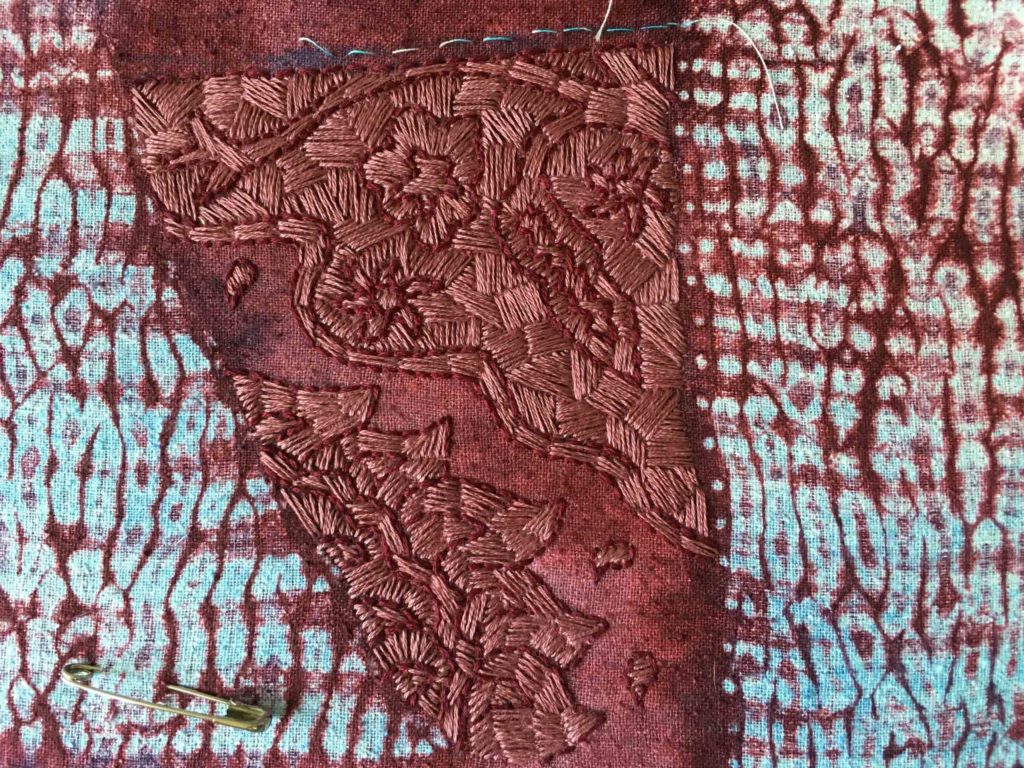
Scissors Detail 1

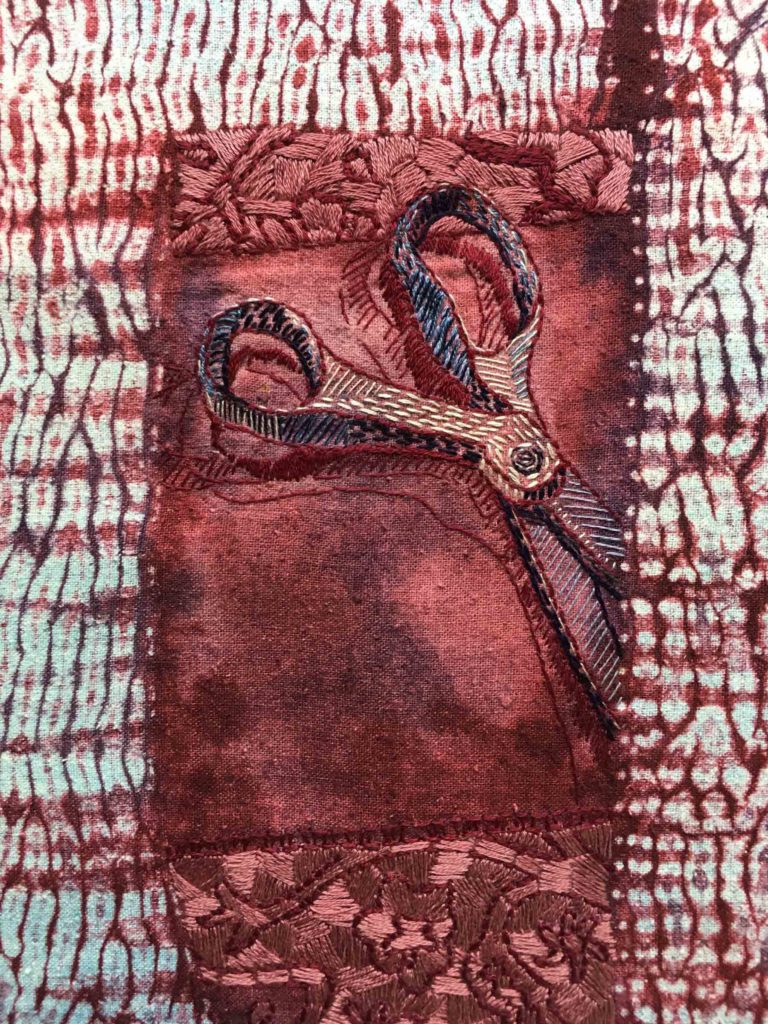
Stitching in progress, detail      ©2017 Elizabeth Fram                                                                    The idea of including and concentrating on an area of tone-on-tone cropped up while working on the piece previous to this one.

The main draw for me is Midda’s tiny watercolor images, luminescent and charming. Paired with her hand-lettered text of quotes, historical facts, poetry, and recipes, I have always found a gentle delight in reading and rereading this book that underscores much of the way the world of horticulture captures the imaginations of those of us inclined to garden.

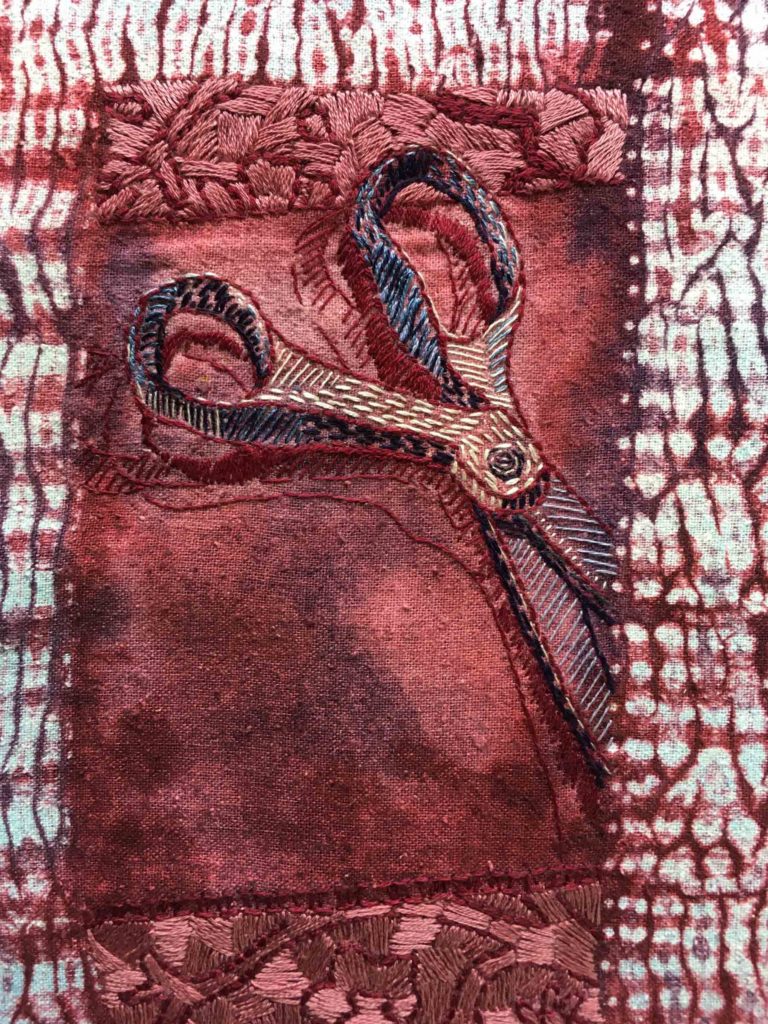
Scissors Detail 2

Detail      ©2017 Elizabeth Fram                                                                  The scissors remain more sketchily defined as a foil to the heavily stitched areas above and below them.

In 1990 she followed up with Sara Midda’s South of France – A Sketchbook, and in 2014 A Bowl of Olives: On Food and Memory was released. I was quick to buy copies of each as soon as I learned it was out, happy to become re-immersed in Midda’s eye for the details that honor the essence of the unsung elements that surround us, things we tend to take for granted but which give such a strong sense of place and moment. All three books are meditations of a sort, quiet picture books with “more”. To some degree I am sure appreciation for her observations have had some lasting sway on my own choice of subjects.

Scissors Detail 3

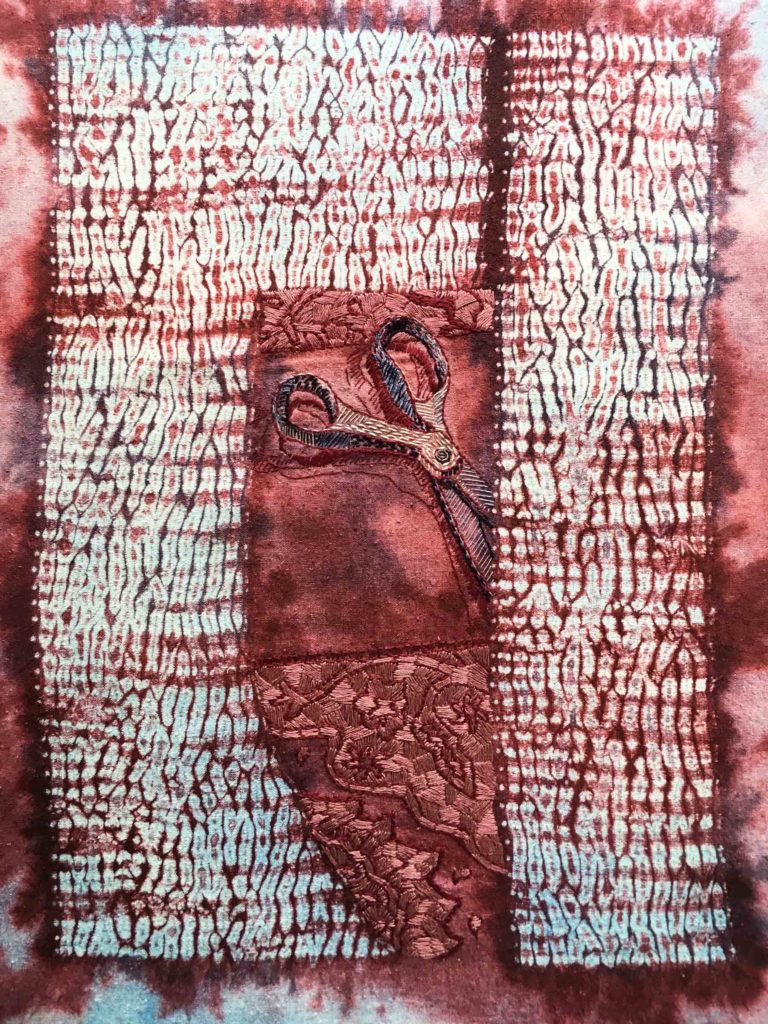
Detail      ©2017 Elizabeth Fram                                                                  In the end, I think it’s the “conversation” between the diversity of pattern, evident in both the stitching and the stitched-resist pattern, that pulls the piece together, making it whole.

Despite looking, I haven’t had much luck learning more about Sara Midda. There is relatively little information about her on the web other than a few promotional articles and blog posts marking the release of each book. Disappointingly, she doesn’t seem to have ever had a website. So I was thrilled to discover that Danny Gregory* conducted a 40 minute video interview with her on his Sketchbook Club blog last week. How lovely it is to hear her talk about her process and the history of these books. Outwardly quiet and gentle, just like her art, it was one of those rare occasions when all elements seemed to add up.

Scissors Unframed

Divide and Conquer, unframed     ©2017 Elizabeth Fram                  Stitched-resist dye and embroidery on silk

Have you had a similar experience with a book that has had a lasting impact on you? Please fill us in…

*I credit Danny Gregory’s book Everyday Matters and his original blog of the same name as being the instigation behind spurring me to commit to drawing regularly. I have no doubt his welcoming and encouraging approach, pointing out the huge benefits to be gleaned from drawing, regardless of ability or experience, has been one of the main driving forces behind awakening or reinvigorating the desire to draw for thousands of people. If you aren’t familiar with him, check out his site.