A change of scene is good for the soul and for the art practice.
There’s no better souvenir than the refreshed outlook one brings back to the studio after time away.
One of the highlights of our recent vacation was a visit to Shangri La, Doris Duke’s Honolulu home / now museum that is dedicated to her massive collection of Islamic art.
Below are just a few of the many gems that caught my eye.
Diamond Head from the museum’s lawn
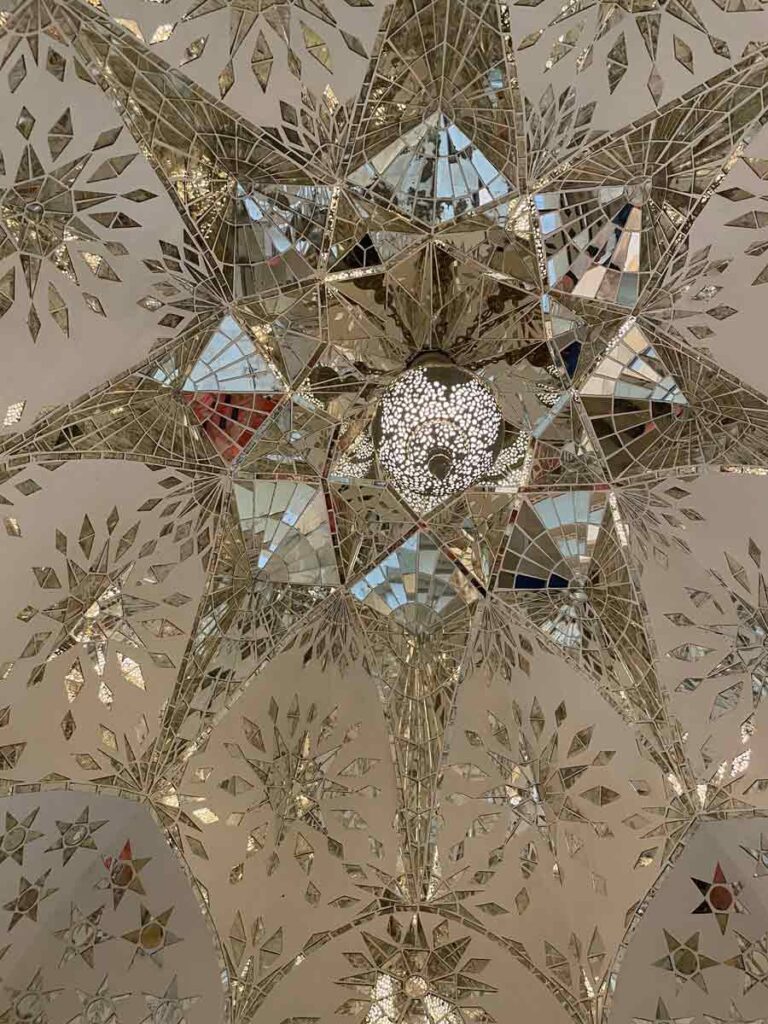
A mirrored ceiling within what had once been a dressing room
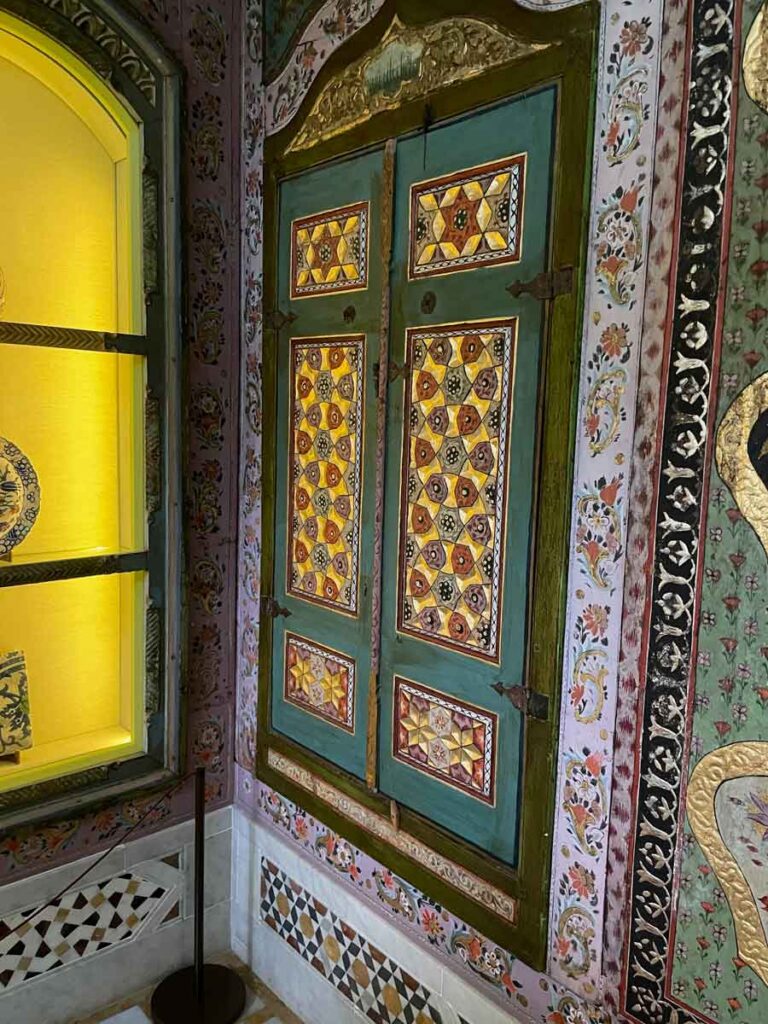
Heavily carved and intricately painted doors embellished with gold leaf
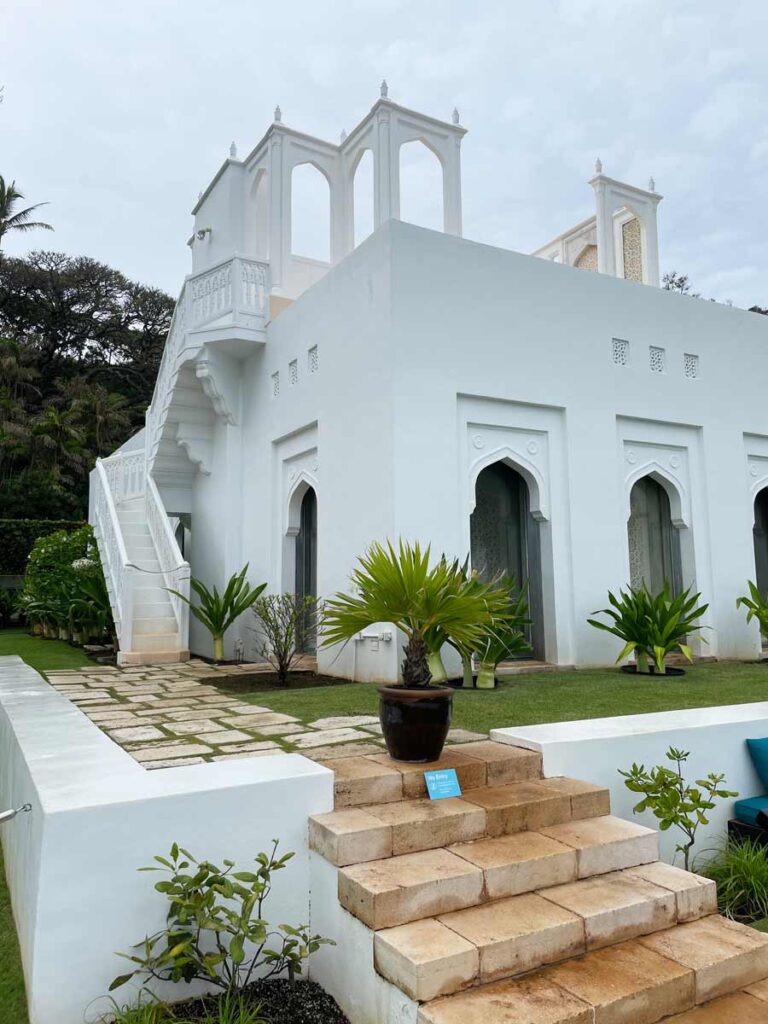
Outdoor stairs leading to an open-air patio on the roof of one of the galleries. Can you imagine the parties?!
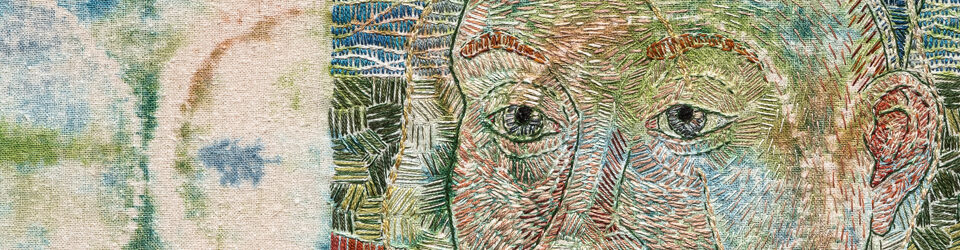
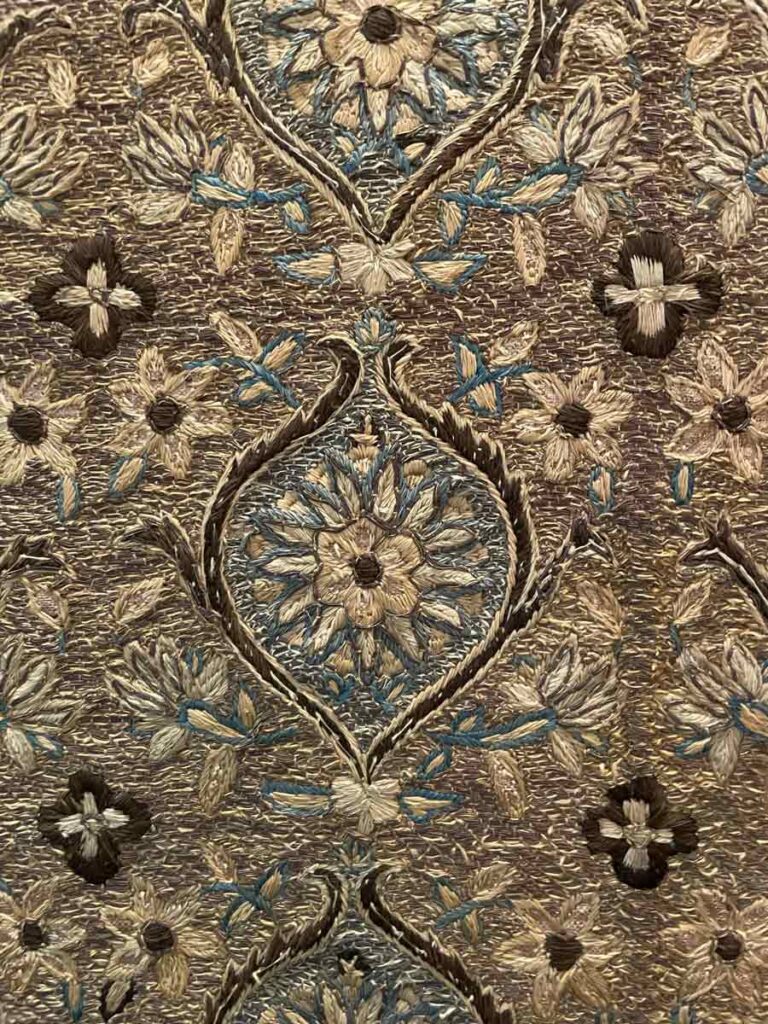
While vividly-colored tilework dominates the collection, this embroidered tapestry stood out for its textural detail and subtle use of teal blue.
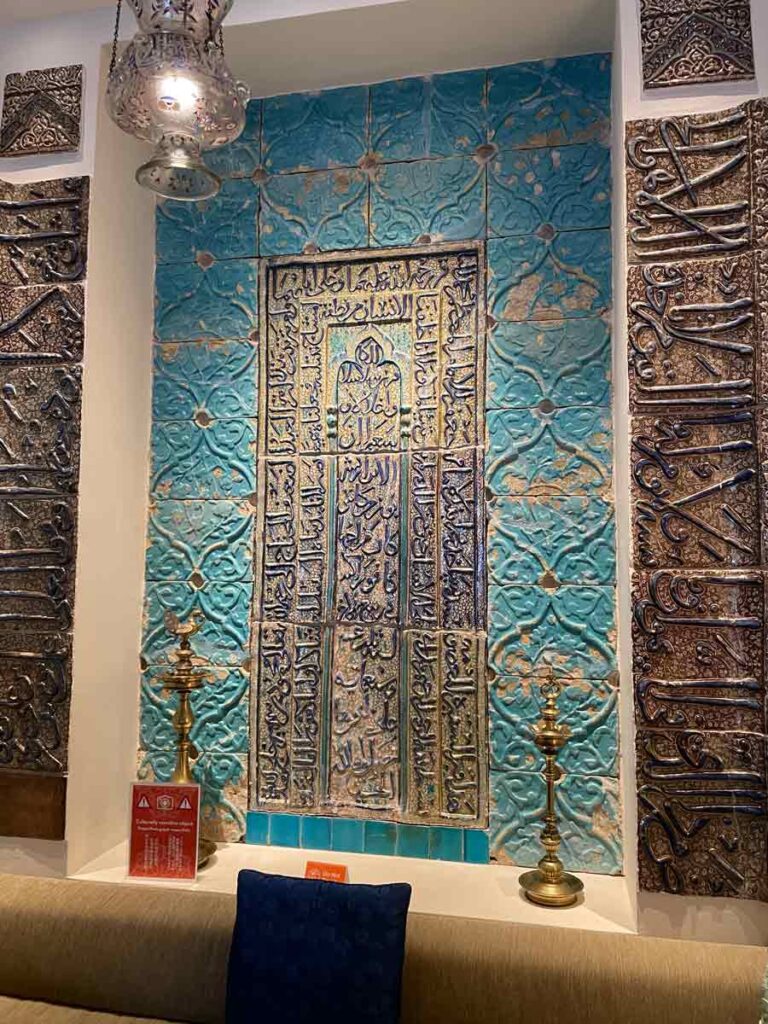
The abundance of rich details – paint work, tiles and the perforated lantern – made this little alcove sparkle
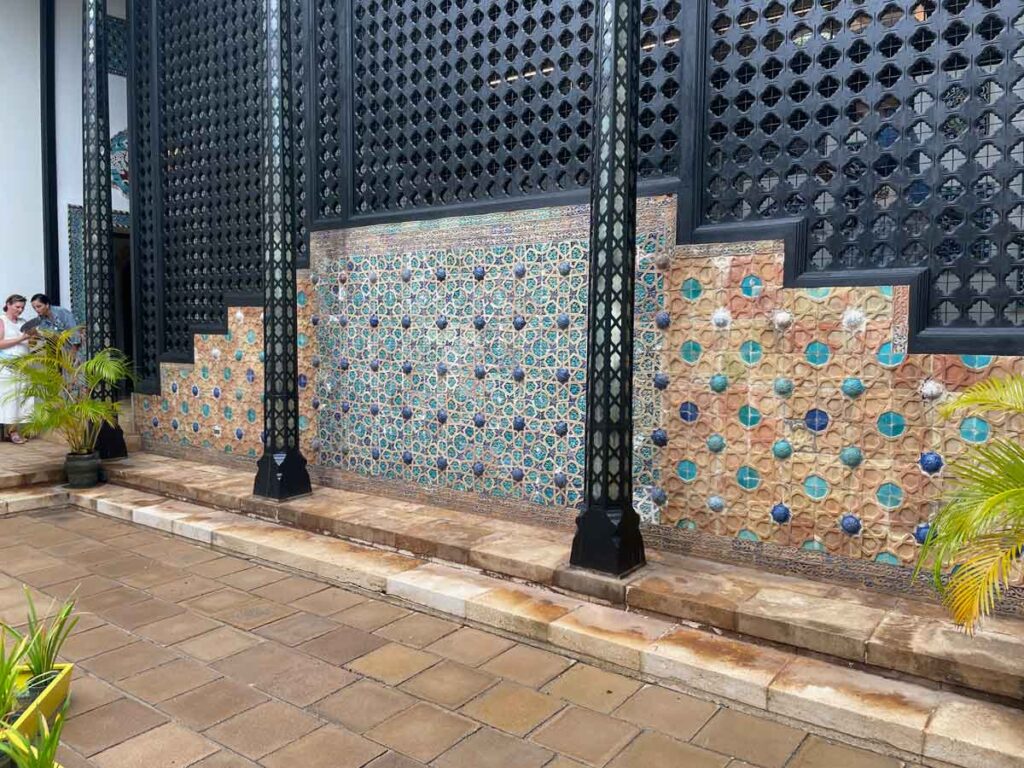
The museum’s galleries branch off a central, open-air courtyard. This spectacular tile wall and the metal grillwork above it anchor one side of that space.
Heavenly blue
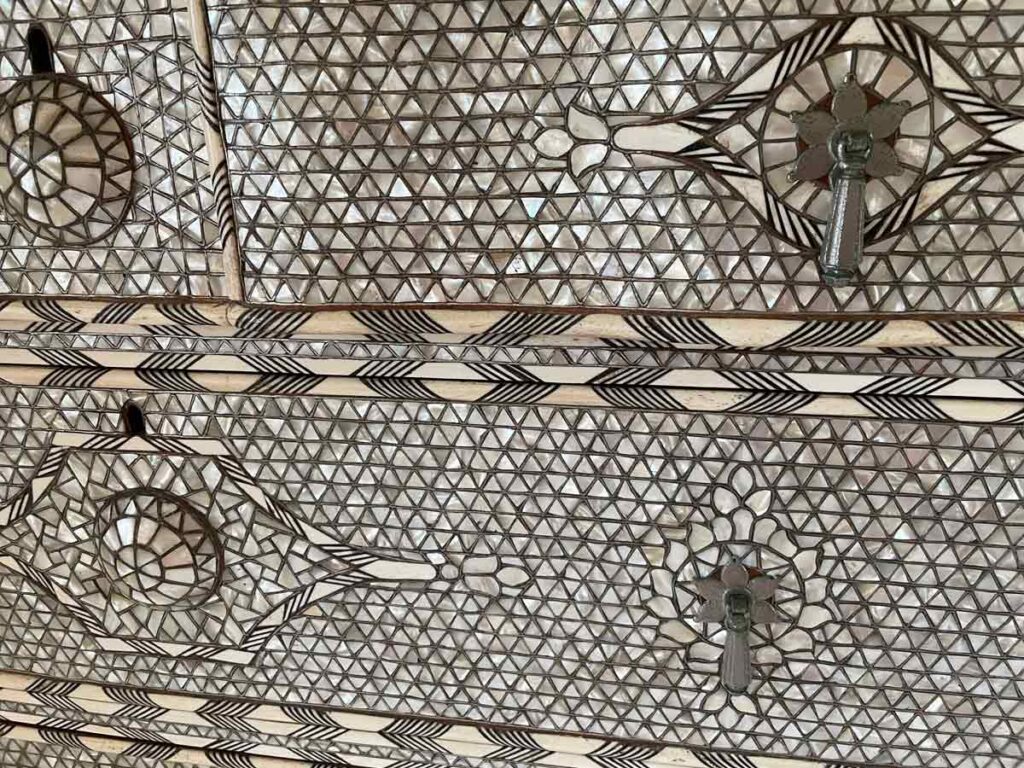
The elaborate details of a mother of pearl inlaid bureau
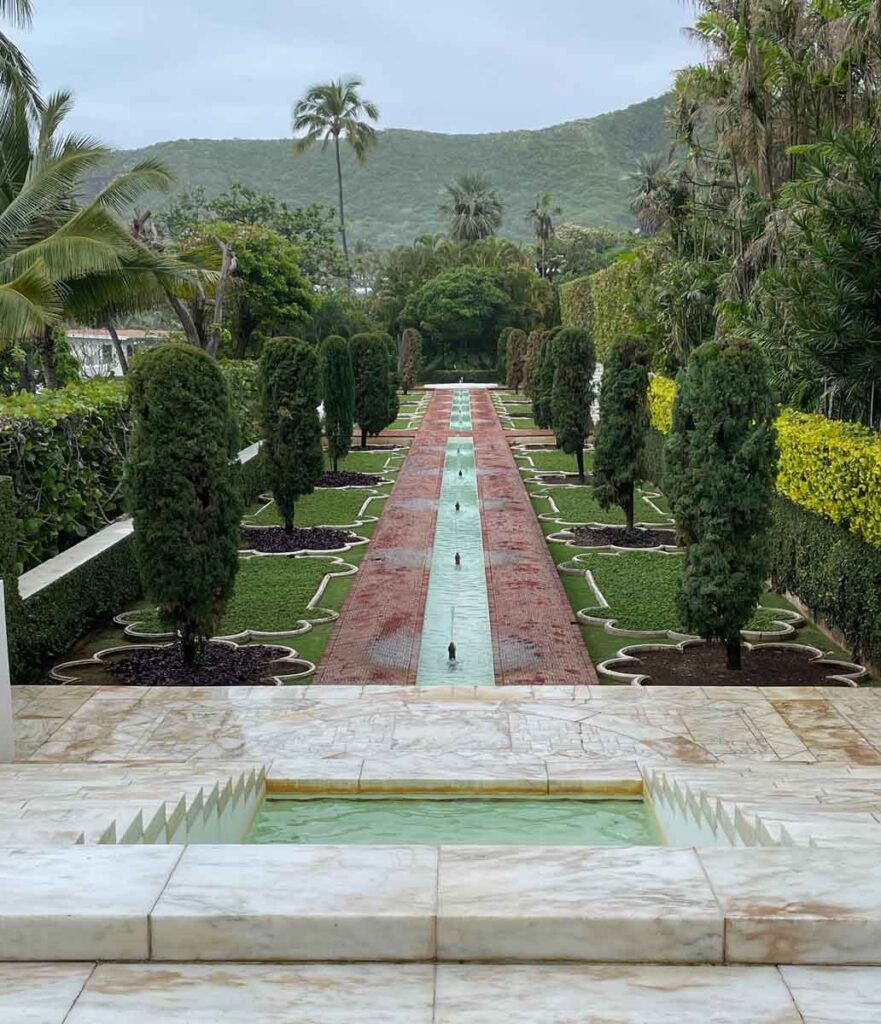
This beautiful recreation of a Mughal Garden is inspired by the Shalimar Gardens built in 1637 CE in Lahore, Pakistan, which were constructed during reign of the Mughal Empire.
Who knows how or when all this inspiration may resurface. The main thing is, it’s now in the “vault”.
✶
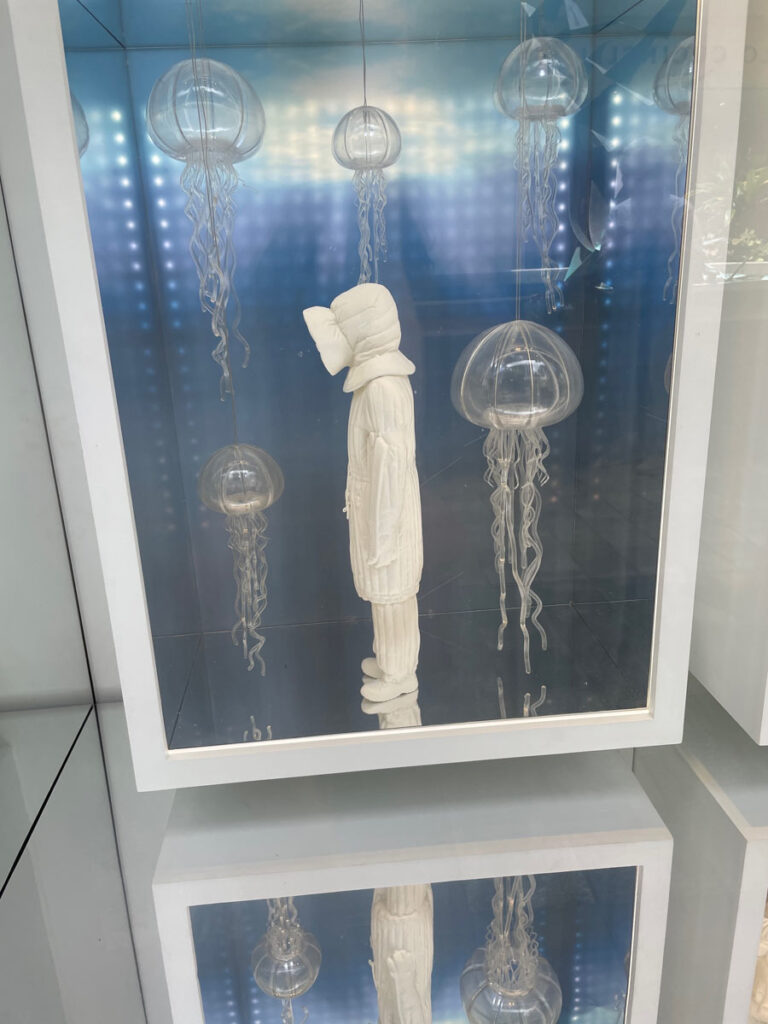
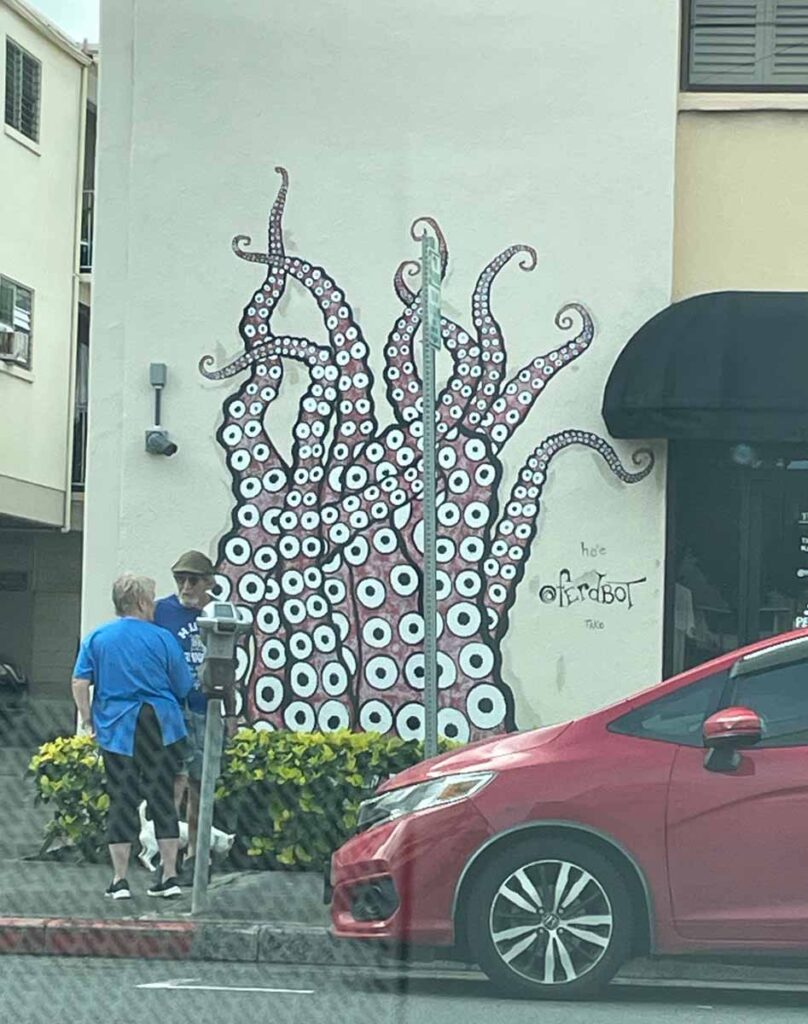
A couple of irresistible, sea-related visual treats spotted at other Oahu locations…
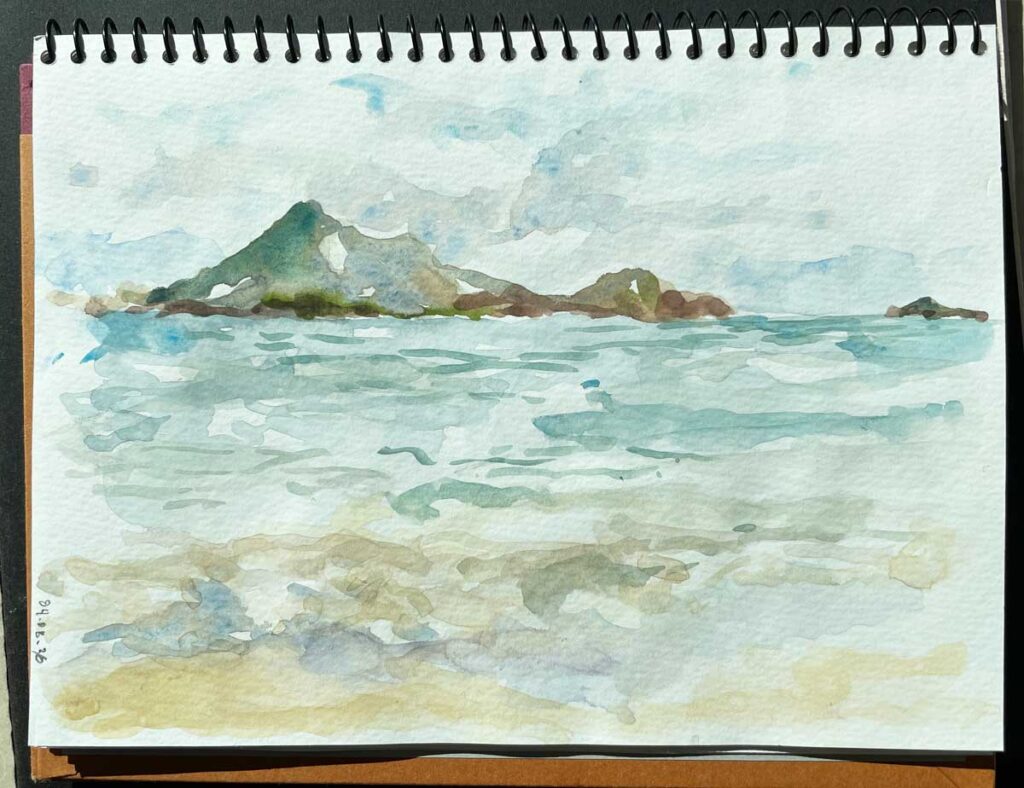
And despite the on-again, off-again rain – there was still an opportunity to walk (and sketch) along the beach.
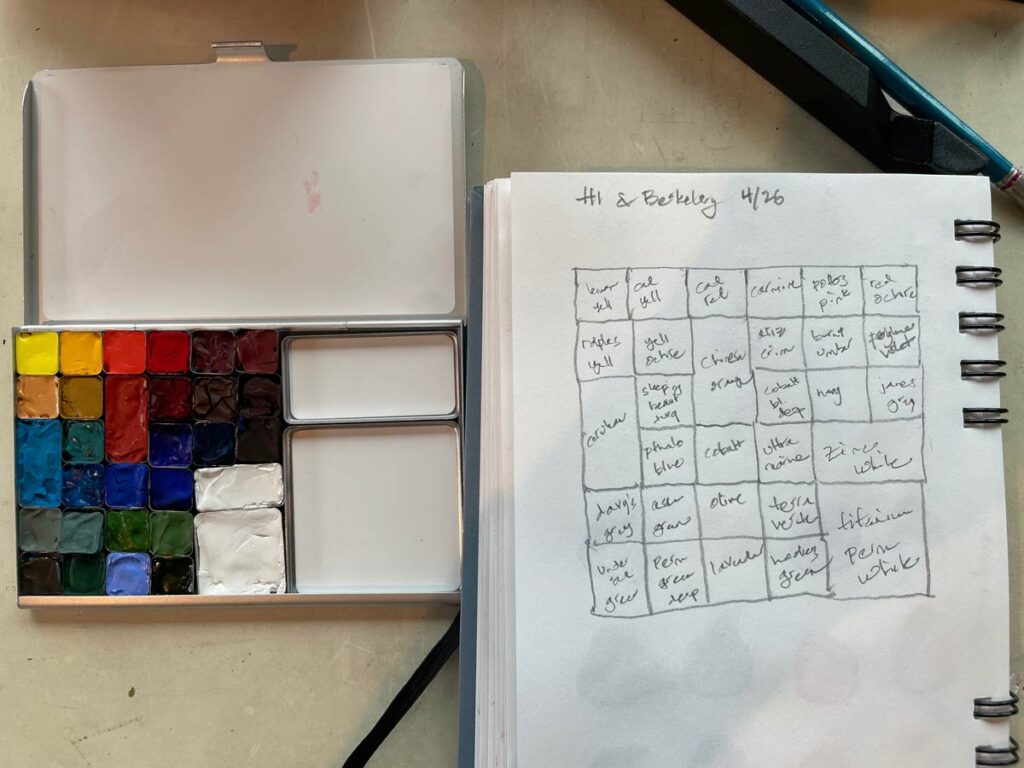
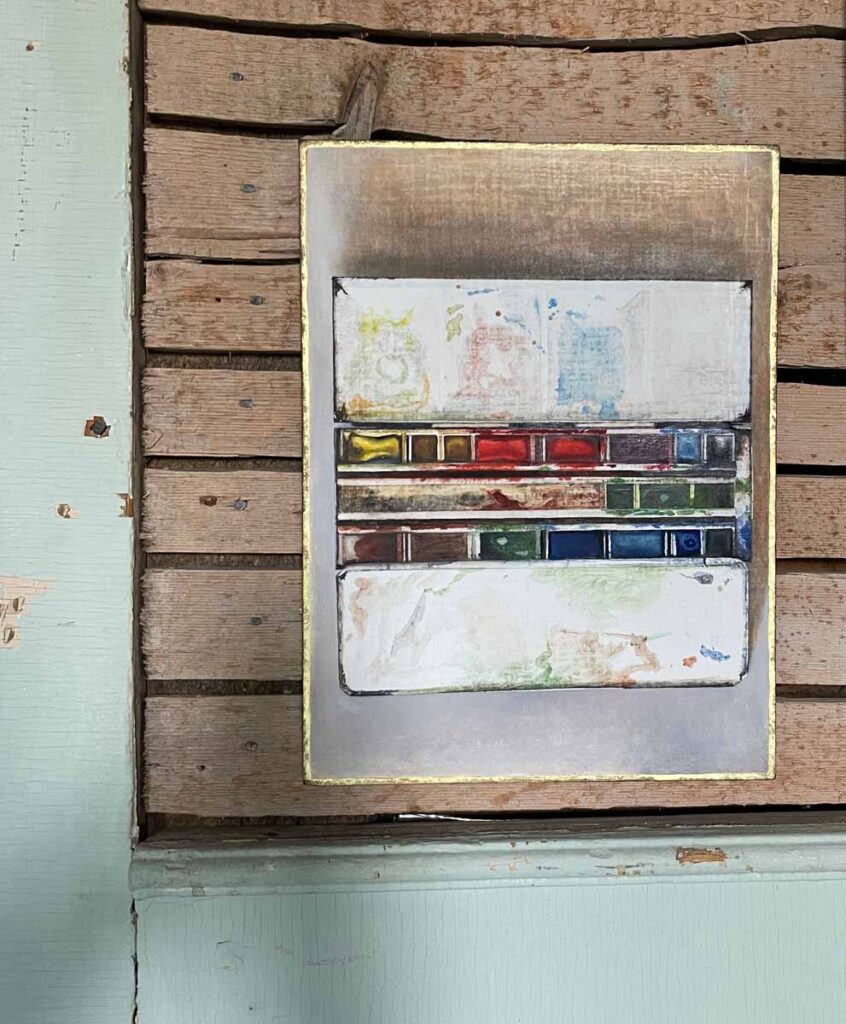
I brought along my new travel palette (5-5/16″ x 3-3/8″ x 1/4″) from Art Toolkit. It was a huge success. I left room for a couple of extra mixing pans on the right, and still was able to fit plenty of paint colors.
I took this shot before we left so I would remember what colors I brought with me. The stainless steel pans are all removable and can be switched around. The variety of available pan sizes gives one a lot of flexibility according to which colors you want to bring, and how much of each. They all rest on a magnet that is built into the palette bottom – so there’s no fear that anything will fall out.
✷
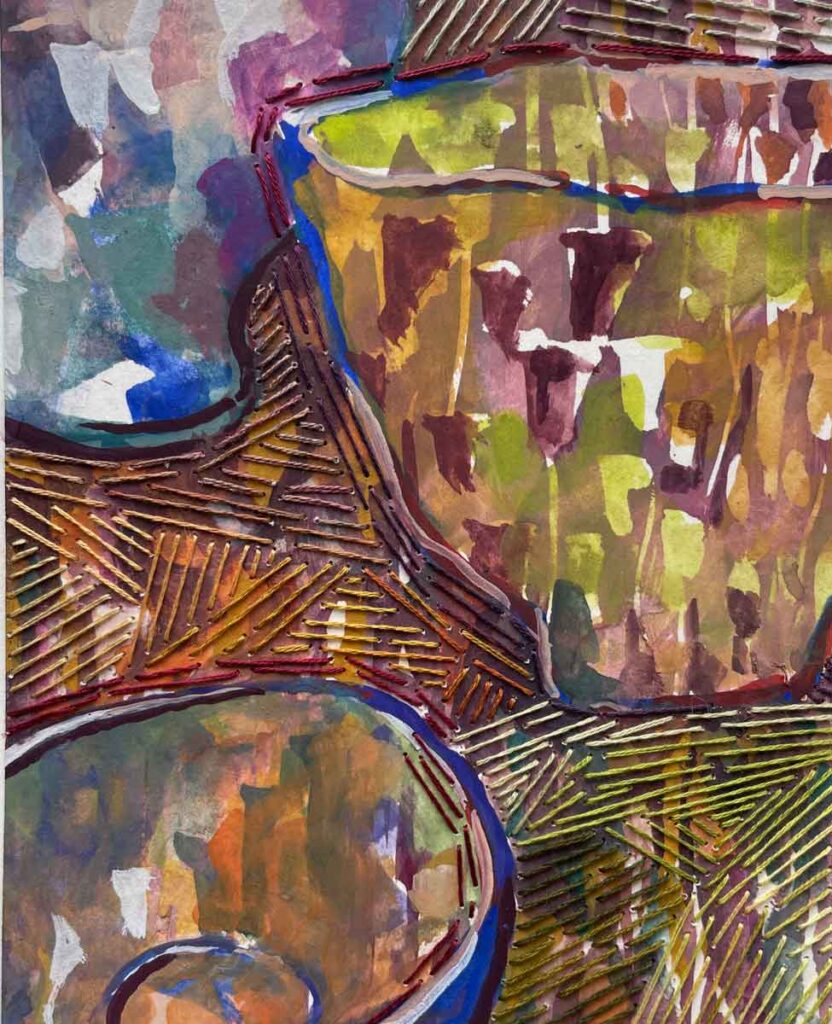
Now that I’m back I’ve been hard at work, mostly following various ideas to see where they lead. I’m pleased with the direction the stitching is taking on this piece that I showed you last time.
And one final thing to share:
I am really excited to have stumbled upon Northern Kentucky University’s Drawing Database. on YouTube. The bite-size art history videos lured me in, but I will be back for some of the longer sessions. Hope you enjoy it too.
Cued by the trees, which seem to be changing color by the hour, I’ve been taking time to just soak in and enjoy the sights around me this season. Below are a few of the things that have caught my eye in the past couple of weeks.
There are so many wonderful artworks in this show! These shots barely skim the surface of the 22 artists exhibiting, or their work. I will be back again (and again) in an effort to capture more before the exhibit closes on October 12. I hope you can make it at least once.
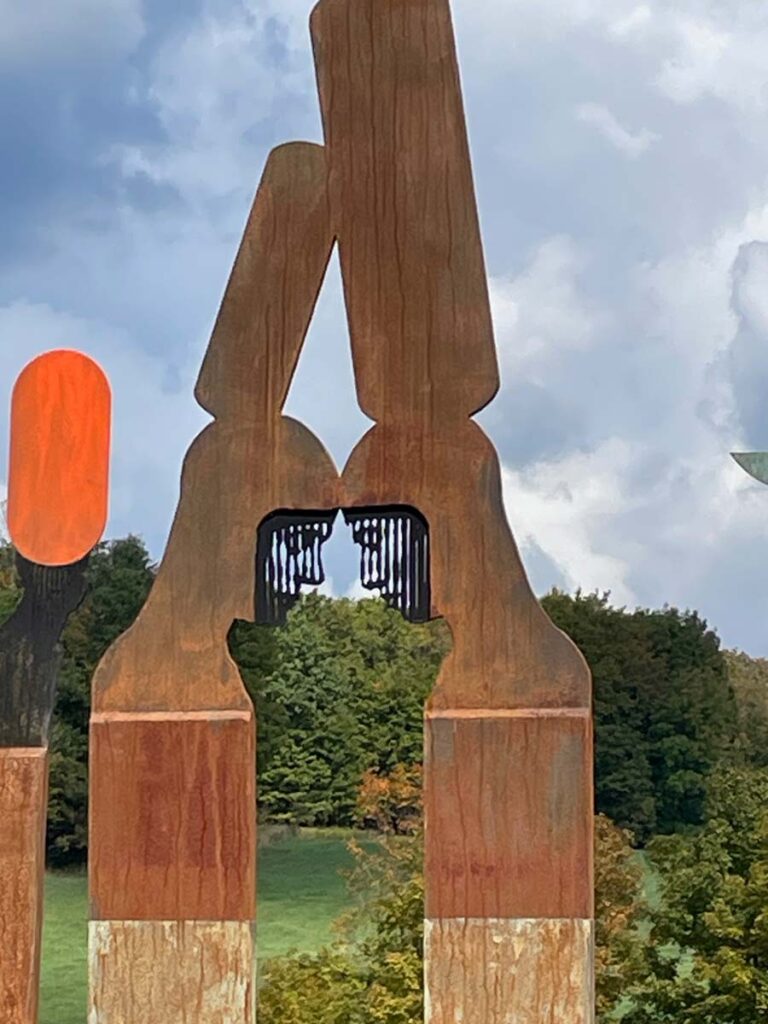
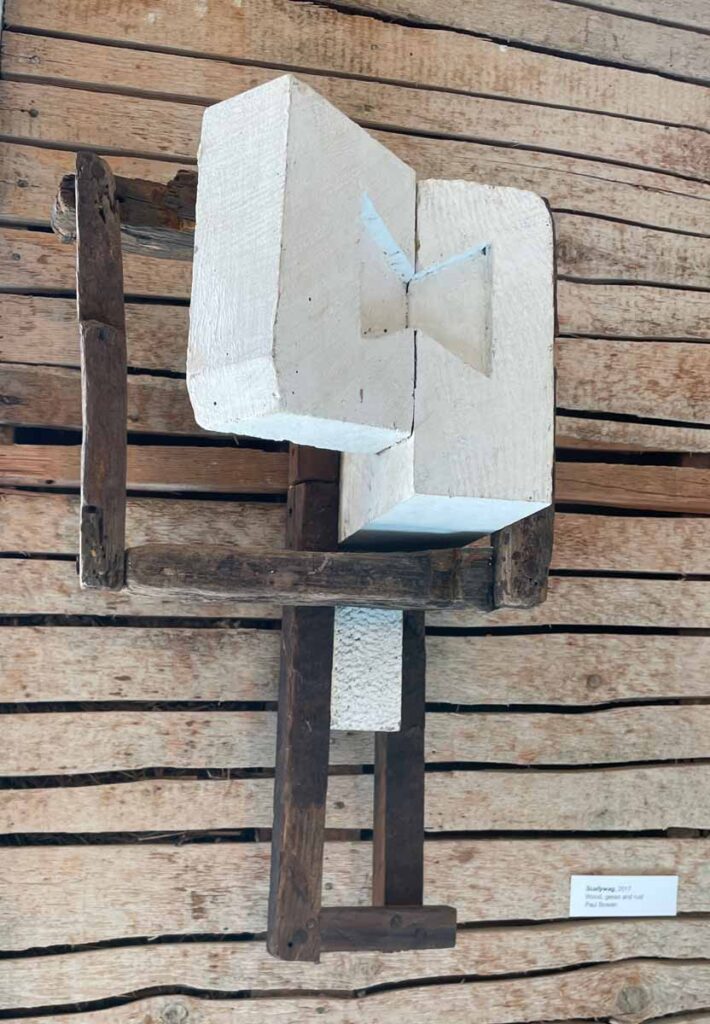
Usually I am careful to document the labels which fully identify works that I am photographing. I was so excited moving through the exhibit that I forgot myself and, other than the piece above, can only provide the name of each artist for the works below. This show is that good. However, I’ve linked to each artist’s web presence, if available.
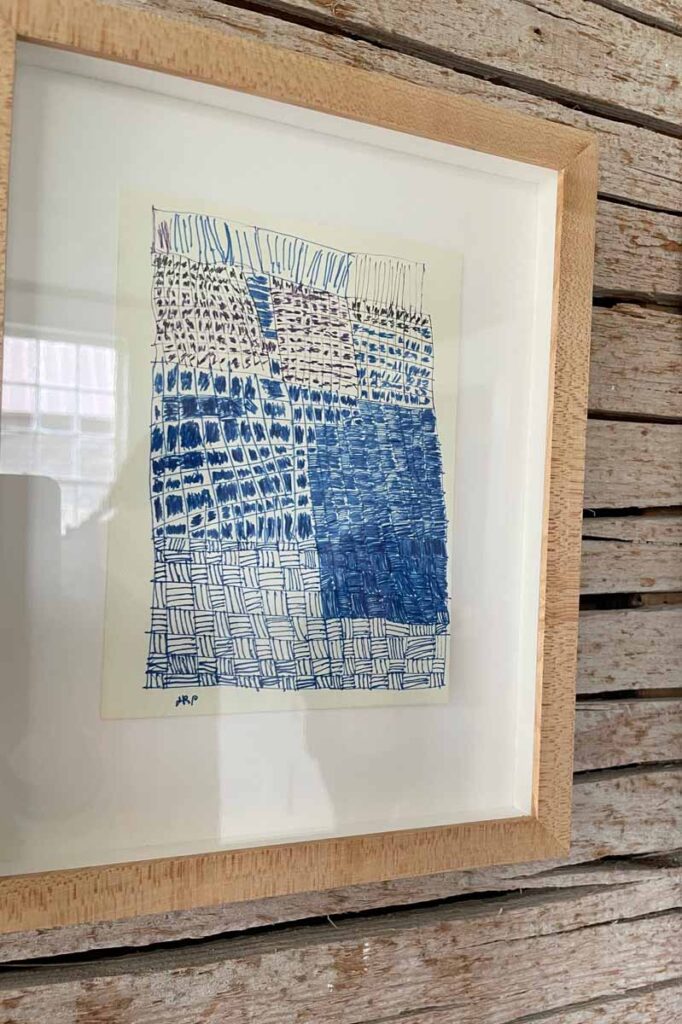
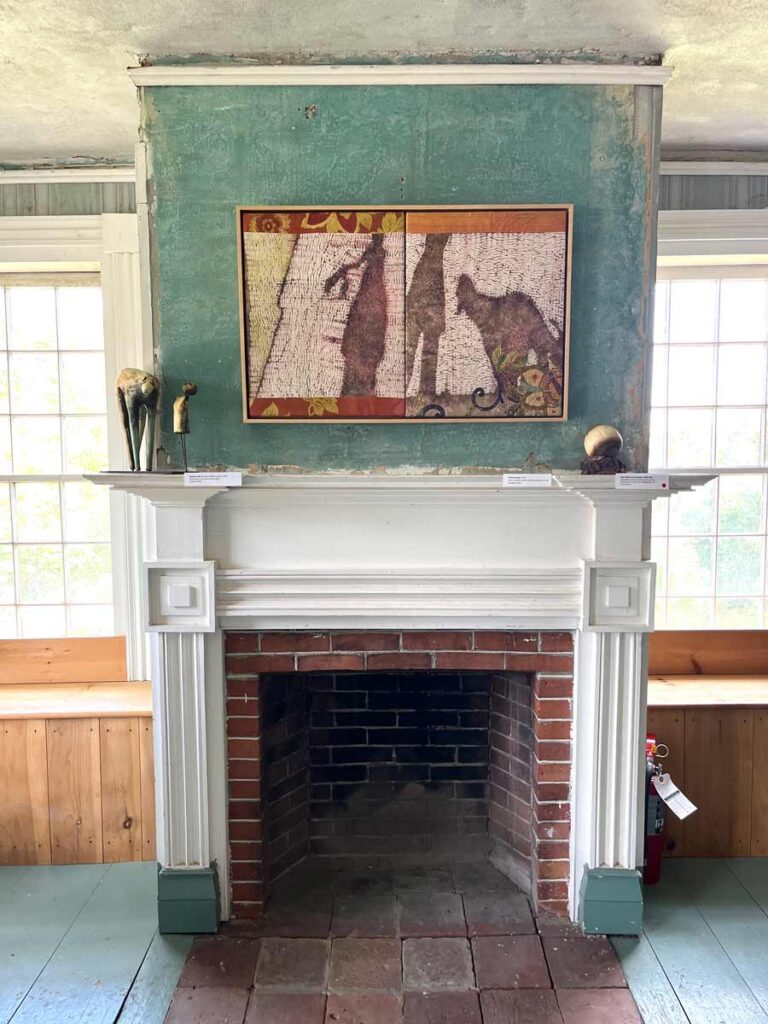
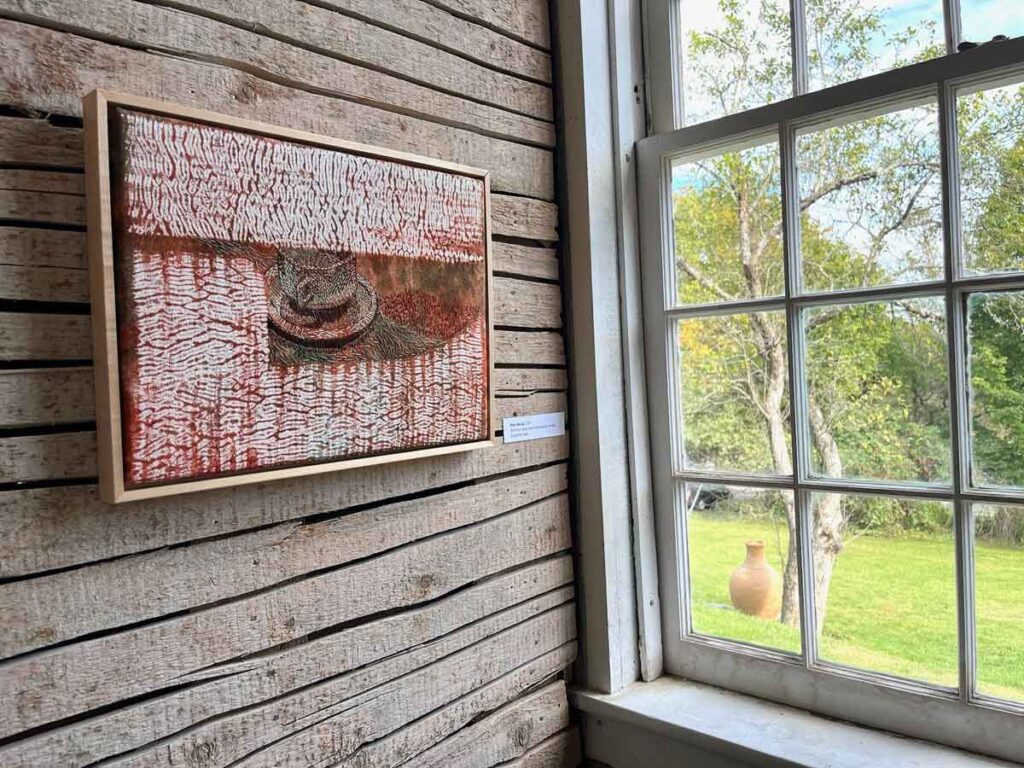
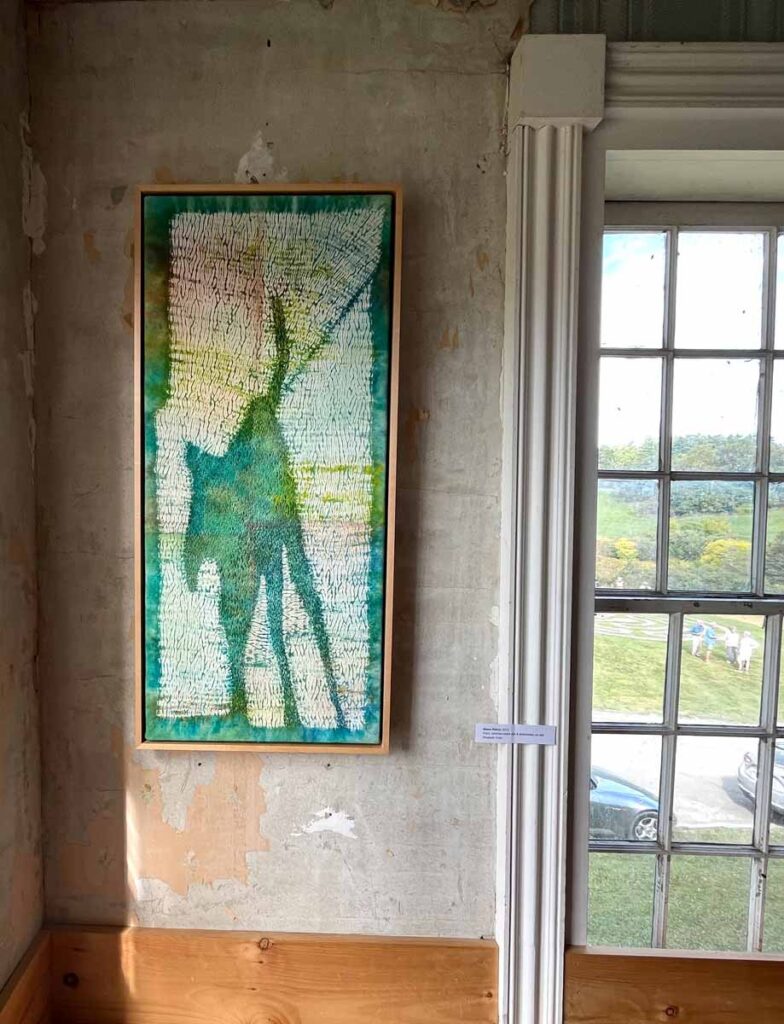
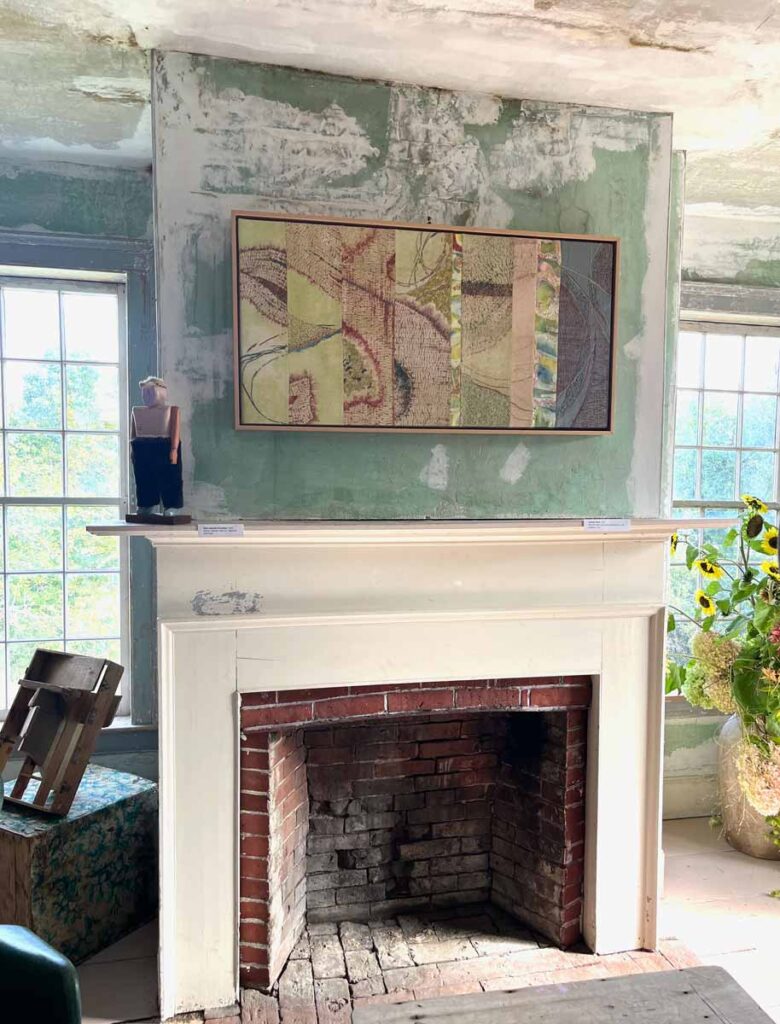
The preserved patina of ancient paint, wallpaper and exposed lath within the Kent Museum building all work in concert with the art on display. Below are a few examples of my pieces in the show. It makes my heart sing to see the thoughtful way they are presented in conversation with their surroundings and others’ work.
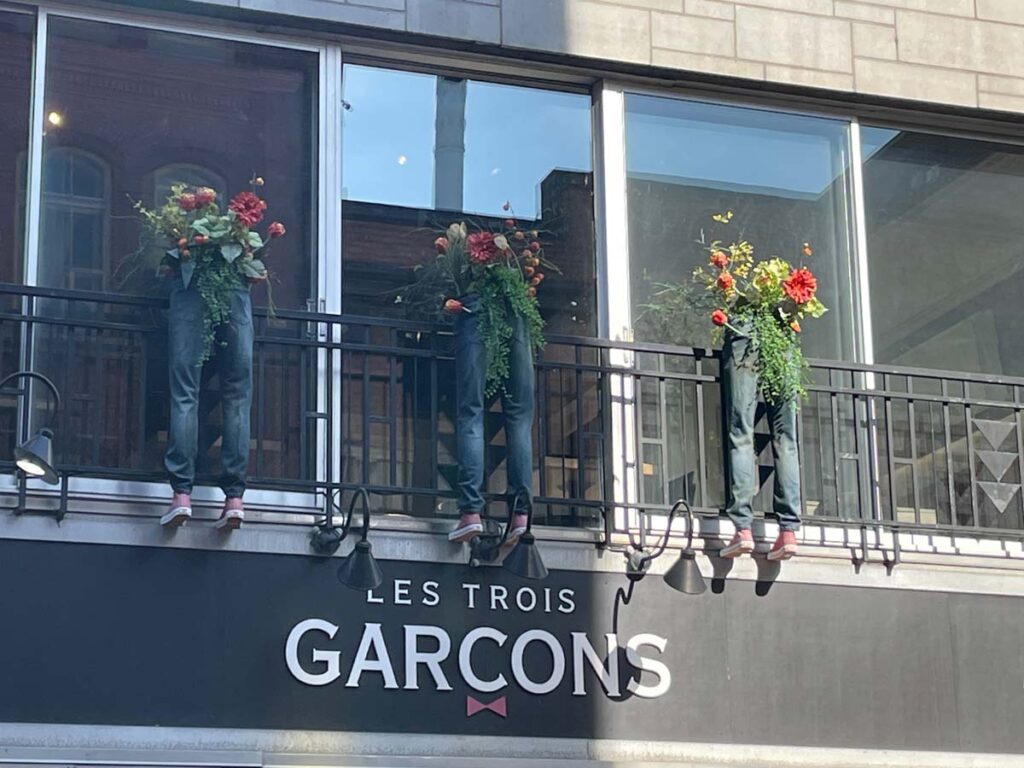
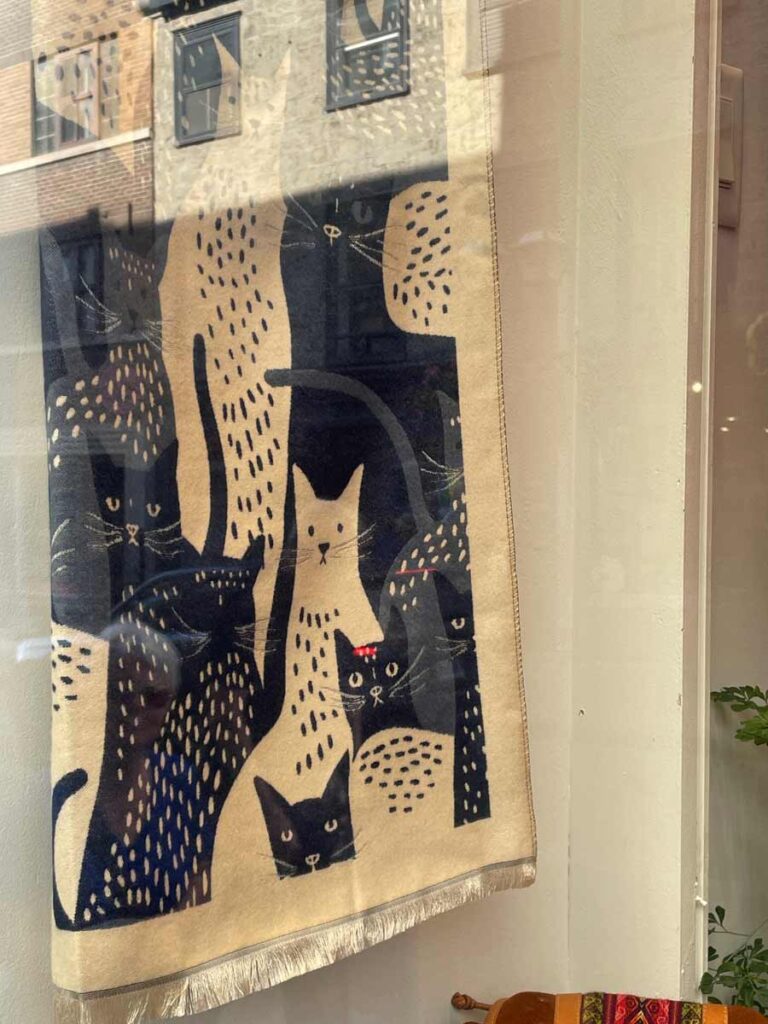
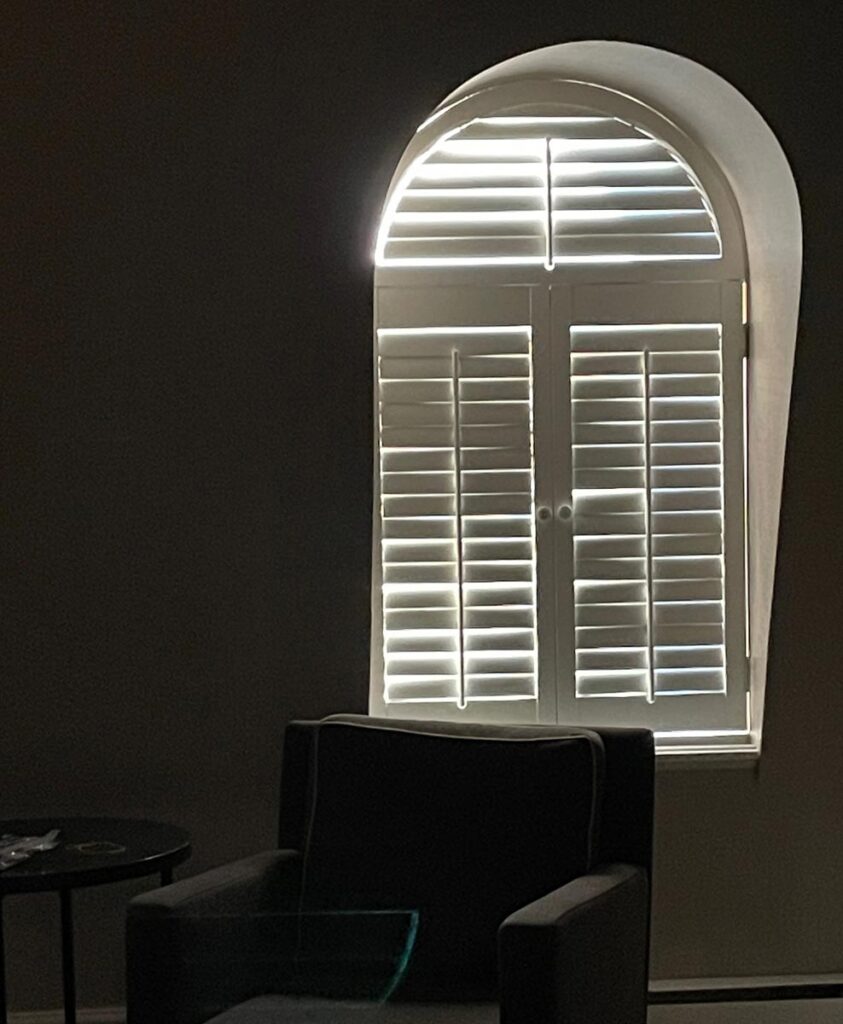
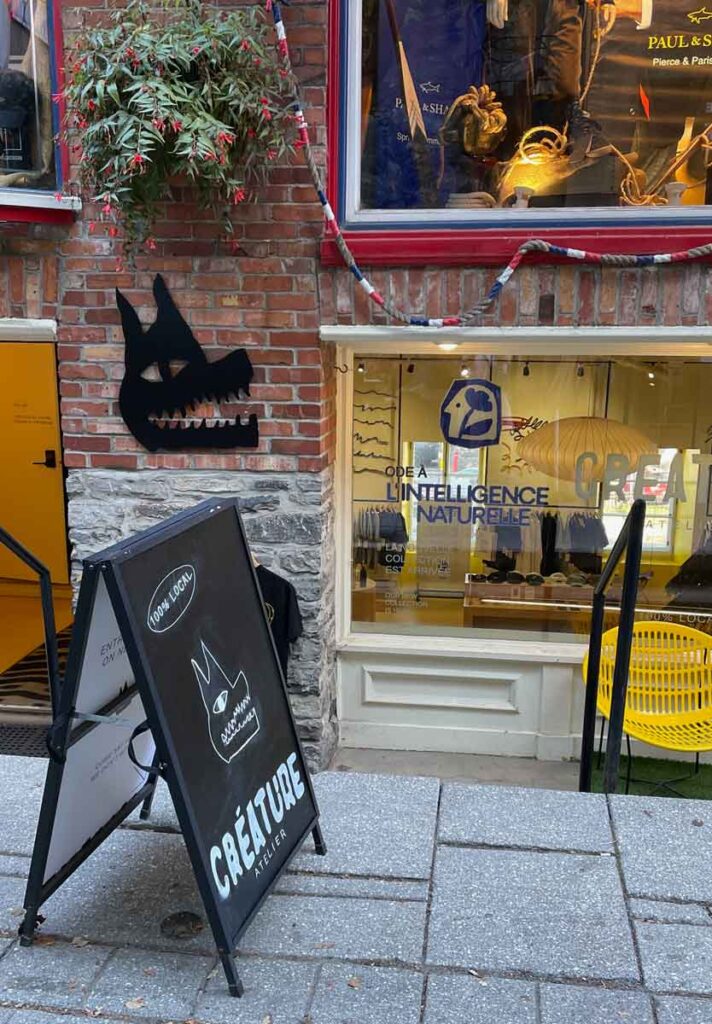
The following on-the-fly shots in Québec weren’t necessarily inspirational and have no particular redeeming quality other than they made me smile. I think we could all use a bit more levity these days, don’t you?
The last in a lineup of cannons that are part of the Fortifications of Québec and which highlight this area’s past military function as a defensive battery, the irony of this vase tipped on its side with hands offering flowers and wheat from its opening is delightful. Zoom in to see that the treads of the tires are leaving tracks of roses. Having neglected to find any info near this sculpture, I searched the internet but came up empty regarding the artist. However, I did discover that In 1617, the first French family to settle in the colony — Louis Hébert, his wife Marie Rollet, and their three children established their farm on this site atop Cap Diamant which is today Montmorency Park. They grew cereal crops, vegetables and different medicinal plants.
✷
One more thing that’s making me happy: I’m rereading Stephen King’s On Writing: A Memoir of the Craft. Per his suggestion, I edited out any adverbs that had snuck into this post 😊. Ha! I haven’t gotten to the part where he’s horrified by emojis.
Regardless of what your creative practice may be – or if you even have one – you will enjoy this book. Not to worry – it isn’t remotely scary.
My father passed away last week.
He was a Mainer through and through, a fact upon which most of his life hinged.
Sitting by his bedside during his final week, I listened as he fondly reminisced about many things that were so “him”, including: his love of being on the water (he marked periods of his life by sailboats, much the way many of us recount the years by the succession of dogs who have graced our families), the pride he had in crafting the delicate curve of a particularly challenging set of table legs for one of his many fine furniture projects, and memories of the island people whose salt-of-the-earth integrity had greatly influenced his own approach to life throughout his 98 years.
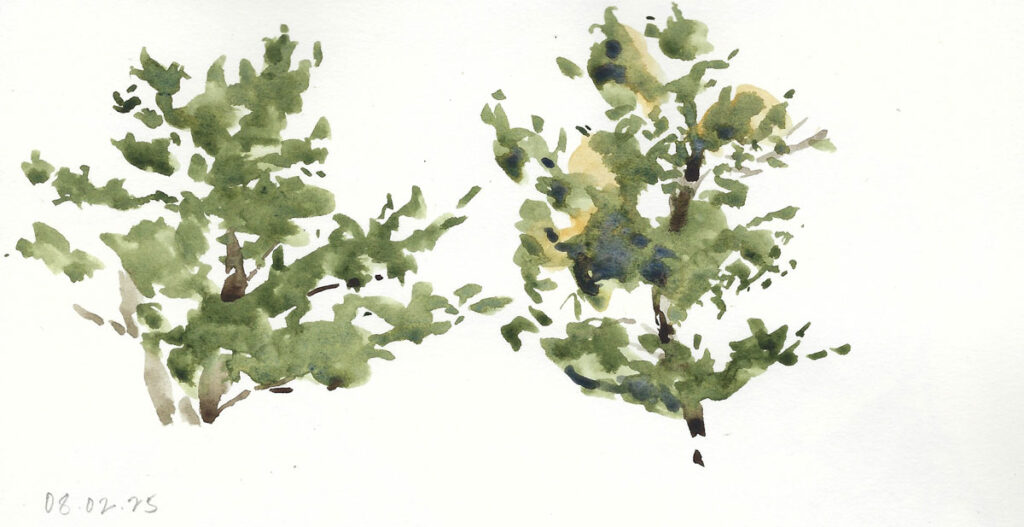
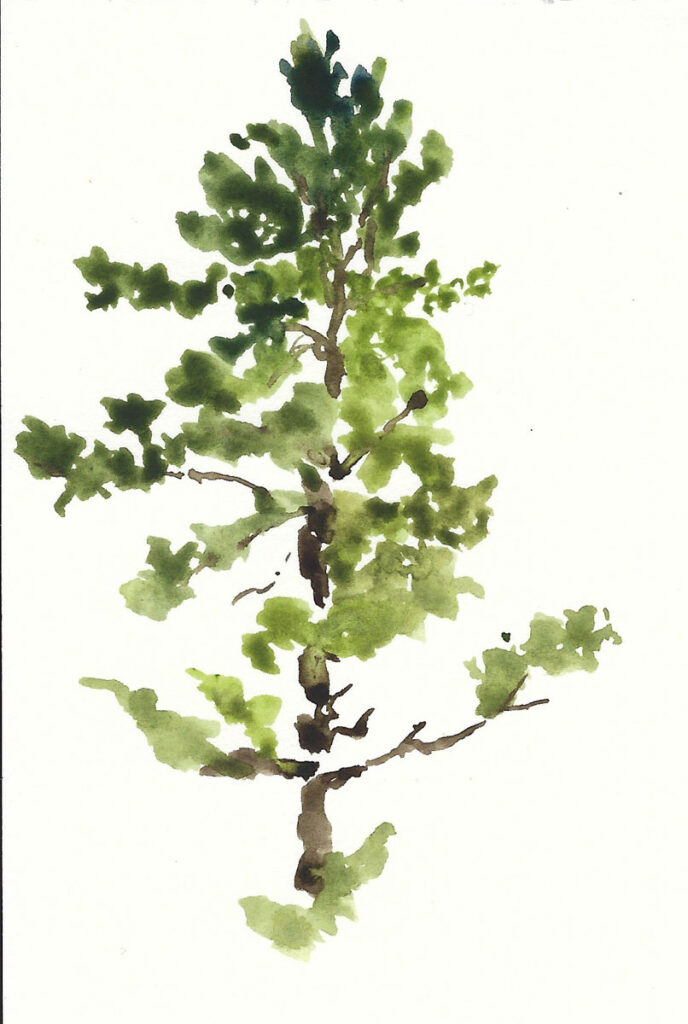
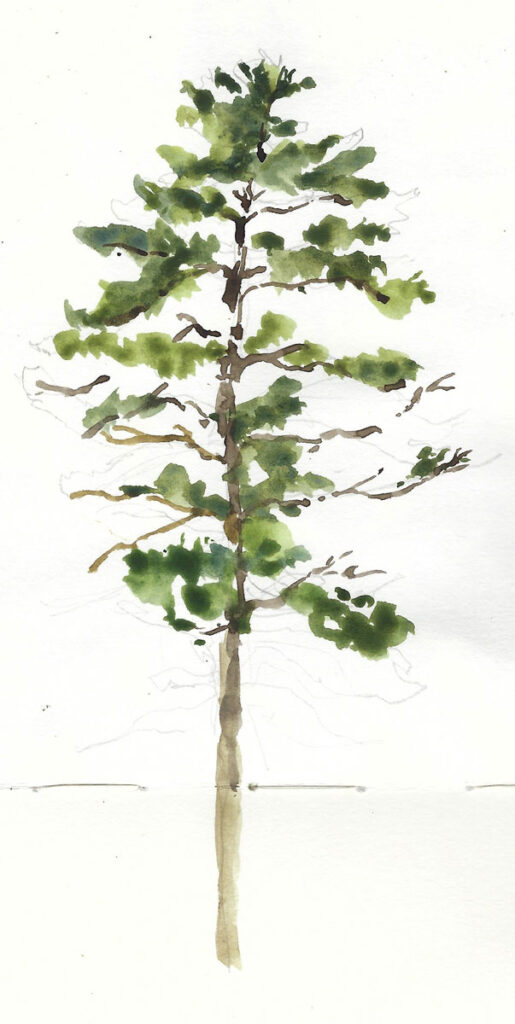
Early in the morning, before going down to be with him, I would sit on his apartment porch and take a few moments to quietly paint the nearby pine trees — tall and stately Eastern White Pines, which coincidentally are Maine’s state tree.
I realized as I worked to capture their distinctively irregular shapes that these sturdy conifers could be seen as an apt representation of the man who, along with our mother, had raised my brother and me: tall, upright, determined, resilient, unique, long-lived, and even, to make a terrible pun that he would have loved to hate, a bit sappy (classical music, especially Bach, could bring him to tears).
Much of making art is seeing the connections and metaphors that hover over our lives. Thanks to this unexpected sketching epiphany, I have a new way of seeing and remembering Dad — not only here in Vermont, but especially along his beloved coast of Maine.
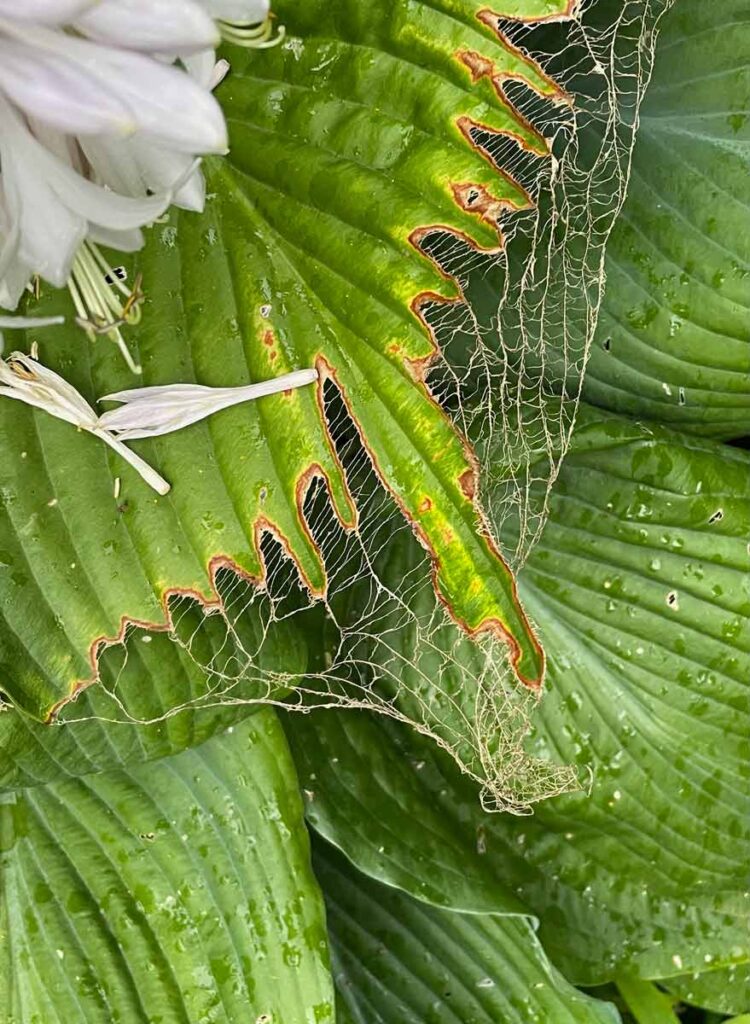
Walking to the compost the other morning, this sight caught my eye.
I’m not sure what creature or disease found this one particular hosta leaf, ignoring all others on this and numerous other plants, but considering how much I’ve been immersed in knotless netting over the past several months, I was immediately smitten.
My camera roll is filled with such images — quick captures of all sorts of things that grab me in the moment and which would soon be forgotten if I didn’t take the shot. The results would mean absolutely nothing to anybody else, but to me they are a reminder that inspiration for my work is everywhere.
The color combination of magenta and burnt orange in humble drips from my chipotle and beet leftover lunch concoction, were recorded and became the root inspiration of a later work.
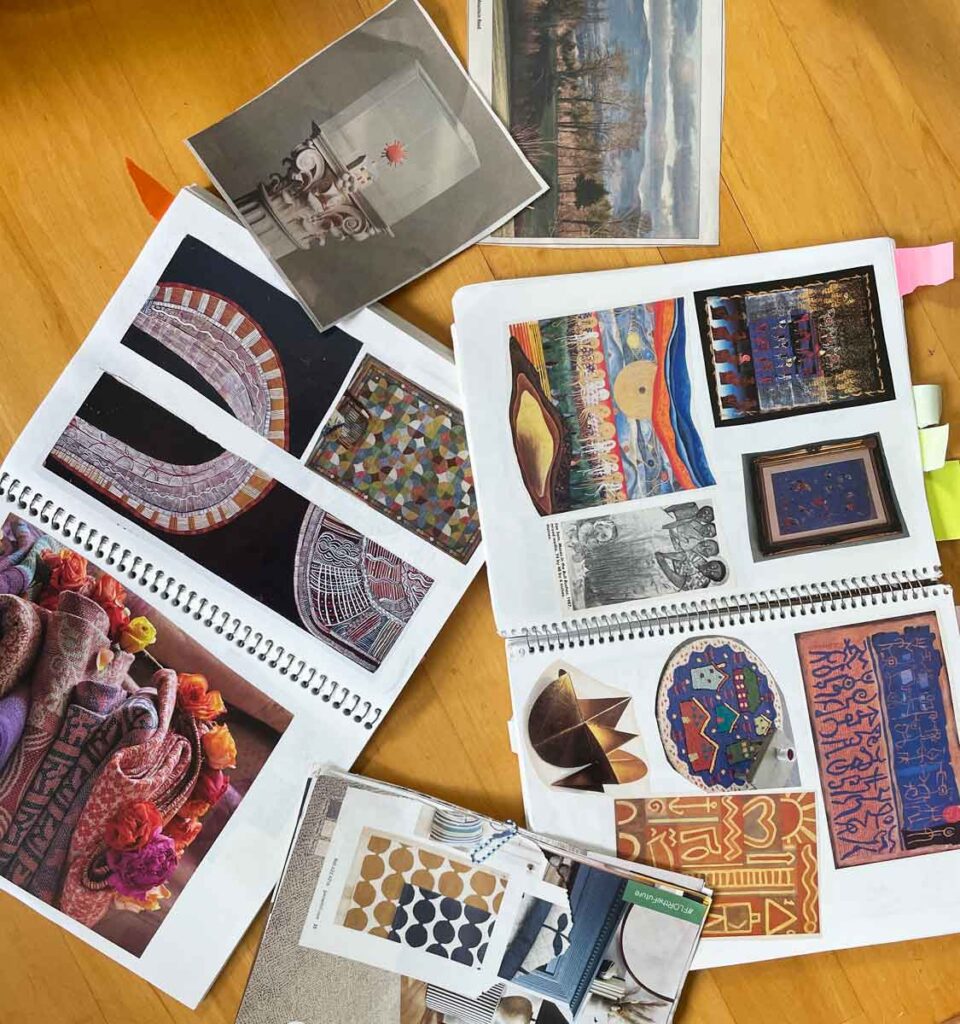
Similarly, for years I’ve kept a couple of cheap spiral sketchbooks that I continue to fill with images of all sorts. Gleaned from anywhere and everywhere, just looking through them gets my creative juices flowing.
My inspiration notebooks with assorted images waiting to be glued into them
For the most part these images (or parts of them) are merely jumping-off points. Various elements — be it a shape, a color combination, a texture, you name it — are ripe for contributing to the structural underpinnings of some future unknown piece, or for making my way past the inevitable stumbling blocks that crop up in the middle of works in progress.
Those drips on my lunch plate were the impetus behind this piece from 2011
Deceptively simple yet worth their weight in gold, these resources are my rolodex of inspiration. Often lying dormant for years, somewhere down the line one image will seed exactly the idea I need.
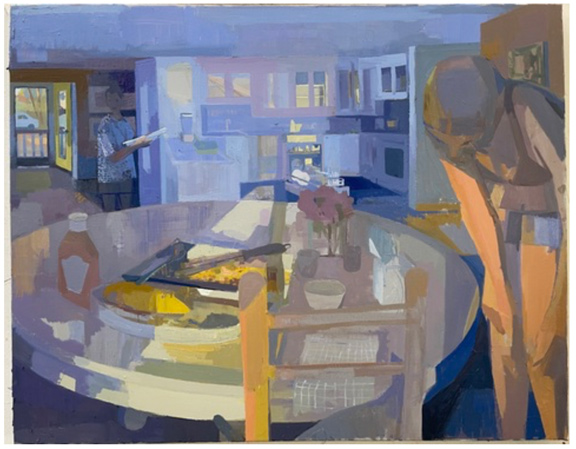
Take a swing through Susan Lichtman’s website – her paintings are a wonderful dance between representation and abstraction, with light carrying the rhythm.
My first 9-5 job was as a potter’s apprentice.
I went into it imagining my throwing skills would blossom, but in reality it was my biceps that grew, not my artistic chops. The potter who hired me, in addition to his pots, sold clay and glazes. So I spent the majority of my days that summer carrying 40-pound bags of clay to other potter’s cars and measuring chemicals for glaze mixtures.
Poof! went my romantic notions of spending my time at the wheel. I left that job mostly having learned that I was glad to be headed to college. And while I didn’t get very far in becoming a potter, I’ve never lost my attraction for things made of clay.
One of my favorite books from that era is M.C. Richards’ Centering. In it she relates the following parable which has stayed with me as a wonderful philosophical riddle:
There are many marvelous stories of potters in ancient China. In one of them a noble is riding through a town and he passes a potter at work. He admires the pots the man is making: their grace and a kind of rude strength in them. He dismounts from his horse and speaks with the potter. “How are you able to form these vessels so that they possess such convincing beauty?” “Oh,” answers the potter, ” you are looking at the mere outward shape. What I am forming lies within. I am interested only in what remains after the pot has been broken.”
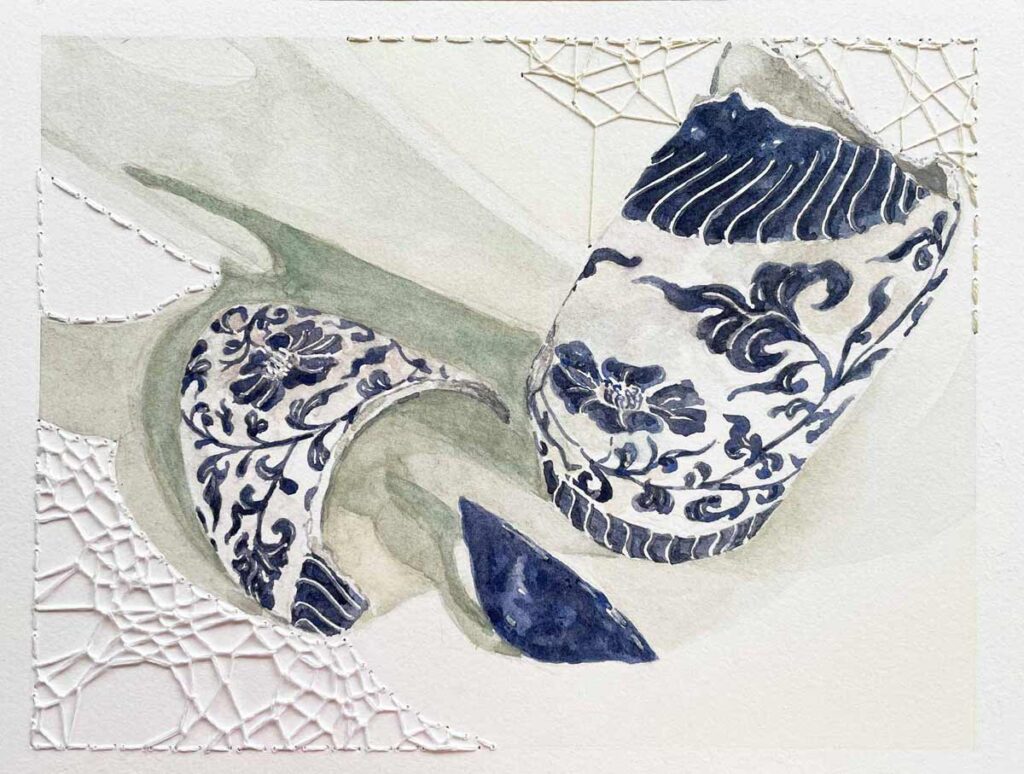
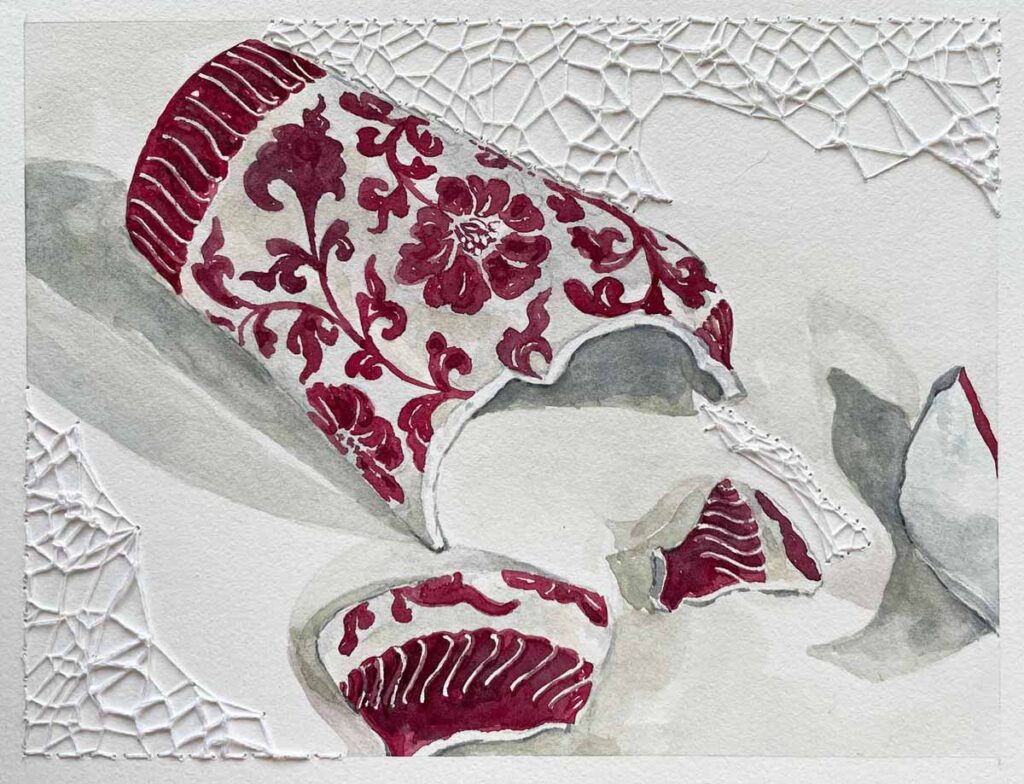
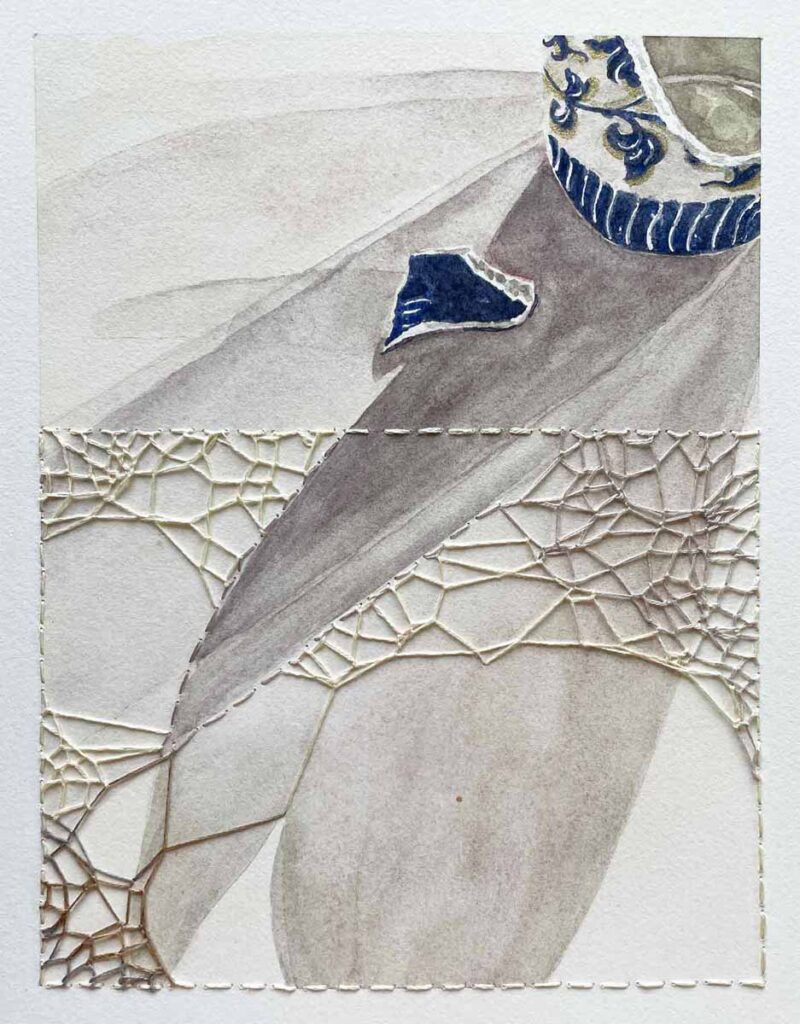
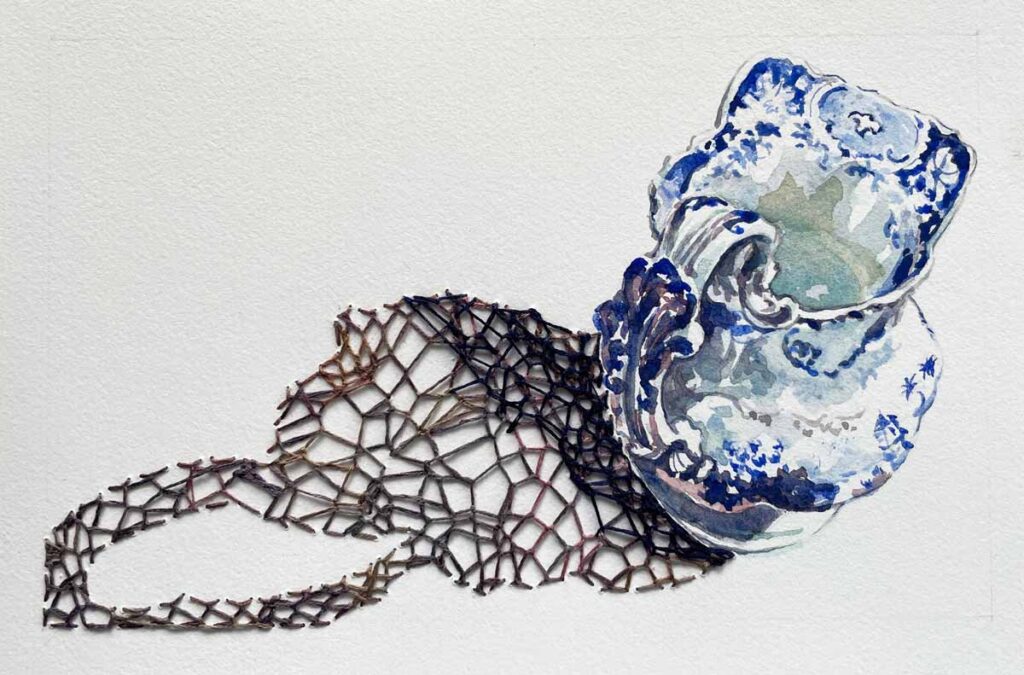
I was recently reminded of this story when I dropped a beloved hand-painted clay vase that I picked up at a flea market years ago. What heartbreak! I couldn’t bring myself to toss it out so I ordered a kintsugi kit to put the pieces back together, hoping to give it a second life.
But in the meantime, I’ve been painting the vase’s shards with dramatic shadows, incorporating knotless netting to accentuate the resulting forms and to insert a suggestion of repair or mending. The outcome is that the memory of the original remains intact, acknowledging what was while simultaneously embracing what is.
✷
Speaking of memory…
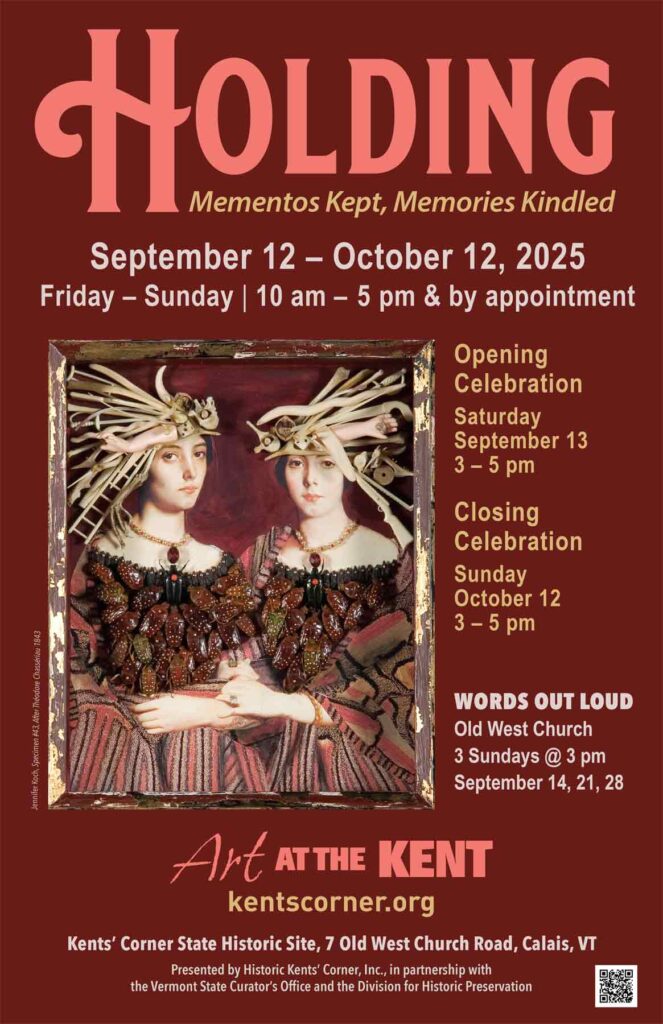
I’m over the moon to share that these latest netted paintings will be among a varied selection of my work chosen to be part of Art at the Kent this fall in their group show that will investigate memory.
Mark your calendar now to be sure to visit one of our state’s most beloved annual exhibitions, presented in a truly magical Vermont setting during one of the loveliest seasons of the year.
I received an email in May alerting me that Pocket, the free save-for-later app I’ve been using for years to store all sorts of reading content, is going away. This change is a bit like mandatory closet-cleaning, forcing me to make my way through the virtual piles I’ve amassed, deciding what to keep and what to toss before it all disappears into the ether.
It’s been a handy app to have but, if I’m honest, I’ve used it like a virtual attic, forgetting most of what I’ve stowed there once it was safely saved. Rediscovering what is still relevant and getting rid of the rest is long overdue.
Here are 5 links I’ve unearthed that are worth saving & sharing:
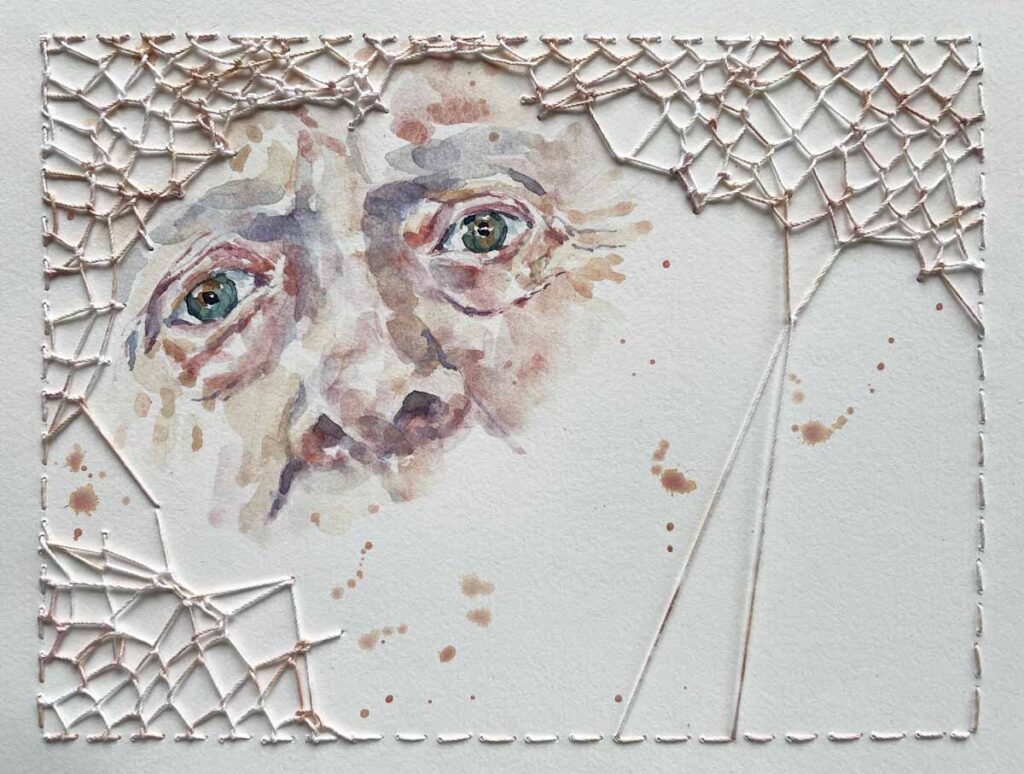
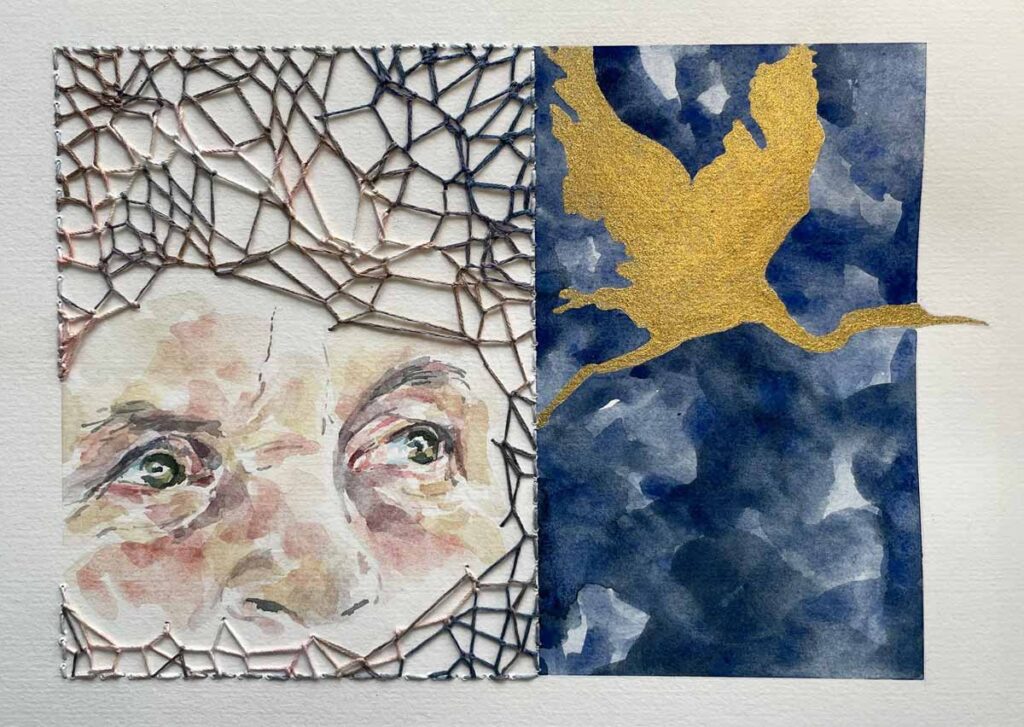
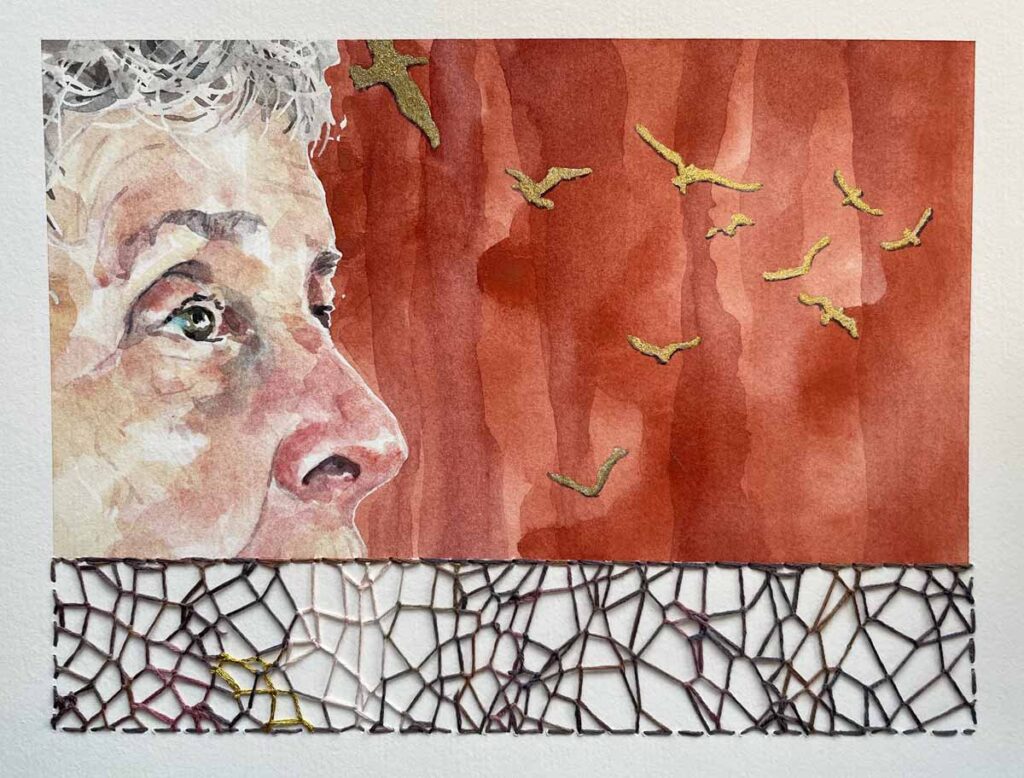
On the more creative side of things, you may remember that in March I began experimenting with knotless netting as another way to add textural interest to my paintings. Those explorations have continued behind the scenes while I’ve been pulling “Full Bloom” together and getting it launched.
Here are a handful of the pieces I’ve been working on. I’ll have more to show next time.
Welcome to Part 2 of my post about Scotland. If you missed Part 1, feel free to jump back to take a look. Today I’m moving on to gardens and other miscellaneous delights.
Strolling through a well-designed garden is, artistically speaking, every bit as rewarding as wandering the galleries of a museum. While inherently different, they are wonderfully similar. Visiting a museum is akin to stepping into a time capsule to witness freeze-frame moments caught in time. But while a garden within an historic setting may bring the past to mind, one is still always conscious that what surrounds us is never still; it is constantly growing and transforming.
✦
Nothing is more the child of art than a garden.” -Sir Walter Scott
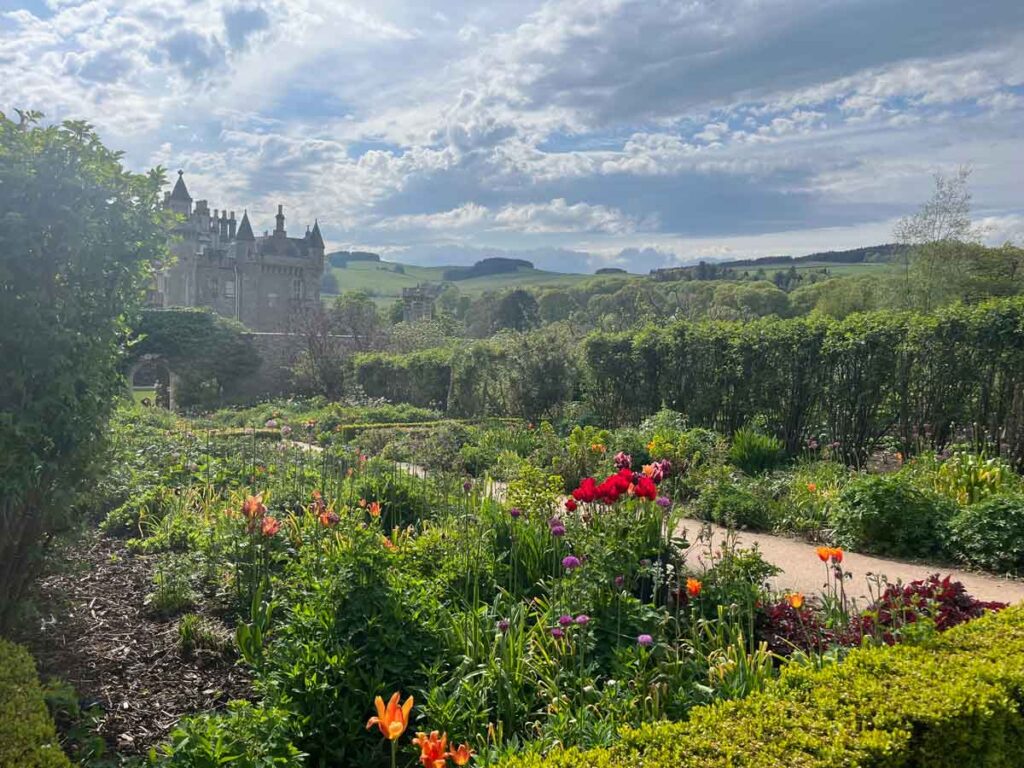
Abbotsford, the home (“palace of imagination”) of novelist Sir Walter Scott, is situated on the River Tweed and looks like an illustration from a fairy tale.
Taking in this view, I couldn’t help but think of Scottish author Robert Louis Stevenson’s poem The Land of Counterpane. which my mother read to me when I was very young and home sick.
Scott created three successive gardens.
My favorite was the walled kitchen garden which covers an acre and apparently looks much the same as it would have in Scott’s time. It is a mix of flowers and scented plants, herbs, fruits, vegetables.
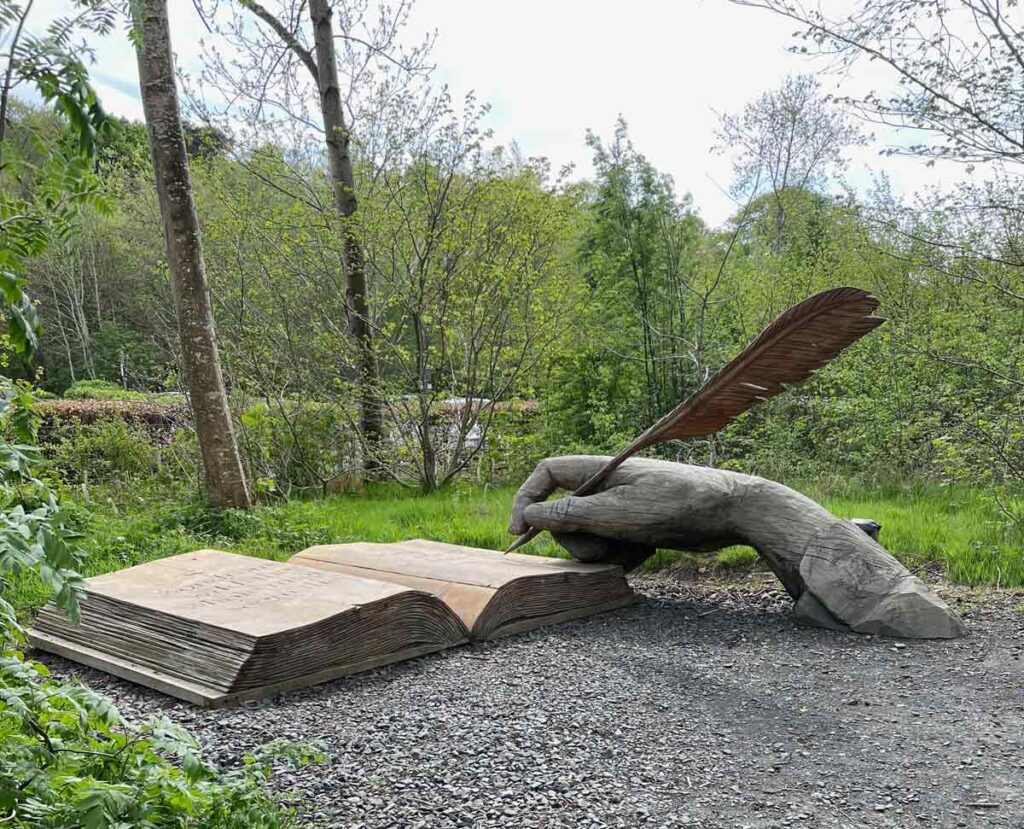
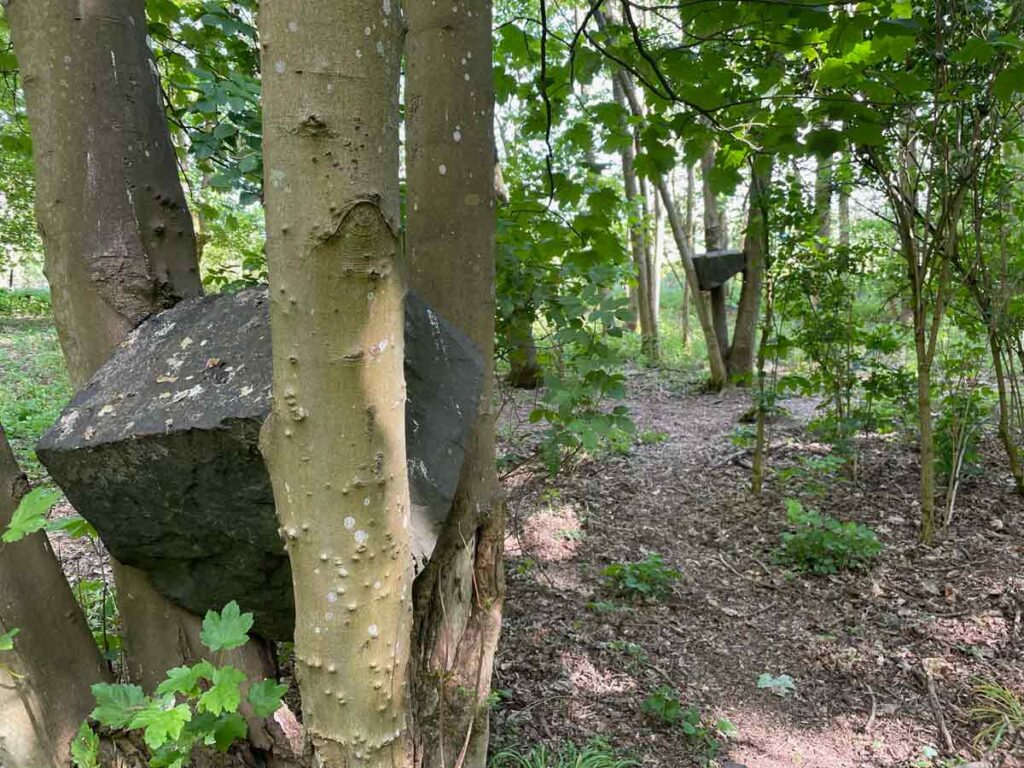
Separate from the house gardens, there is also a mini-sculpture garden/woods walk on the property. With a name like “Witch Corner”, I couldn’t resist. The chainsaw sculptures are inspired by Scott’s writing.
✦
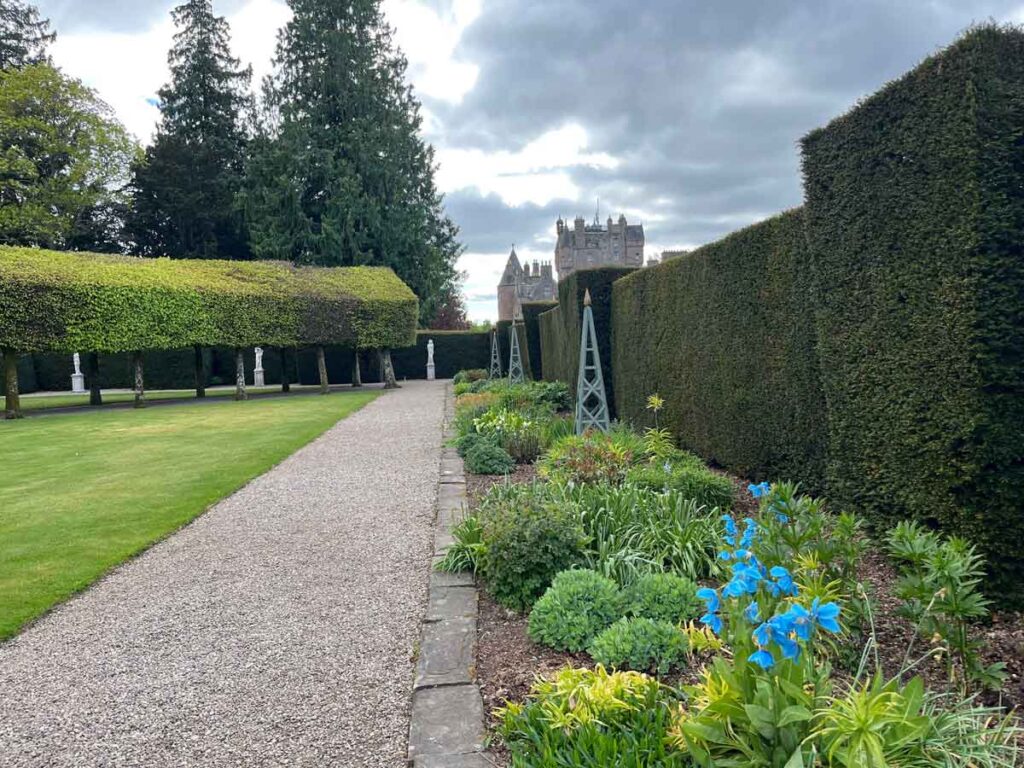
Dating back to 1372, Glamis Castle was the childhood home of Queen Elizabeth, the Queen Mother of Elizabeth II. Frankly, I was more interested in the fact that it is said to have been the inspiration for Shakespeare’s Macbeth.
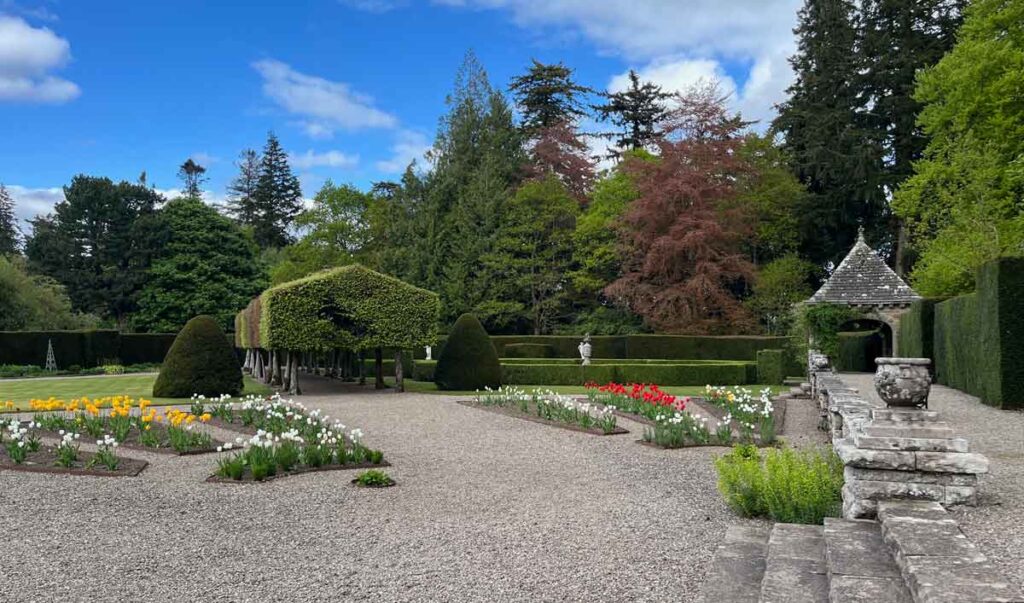
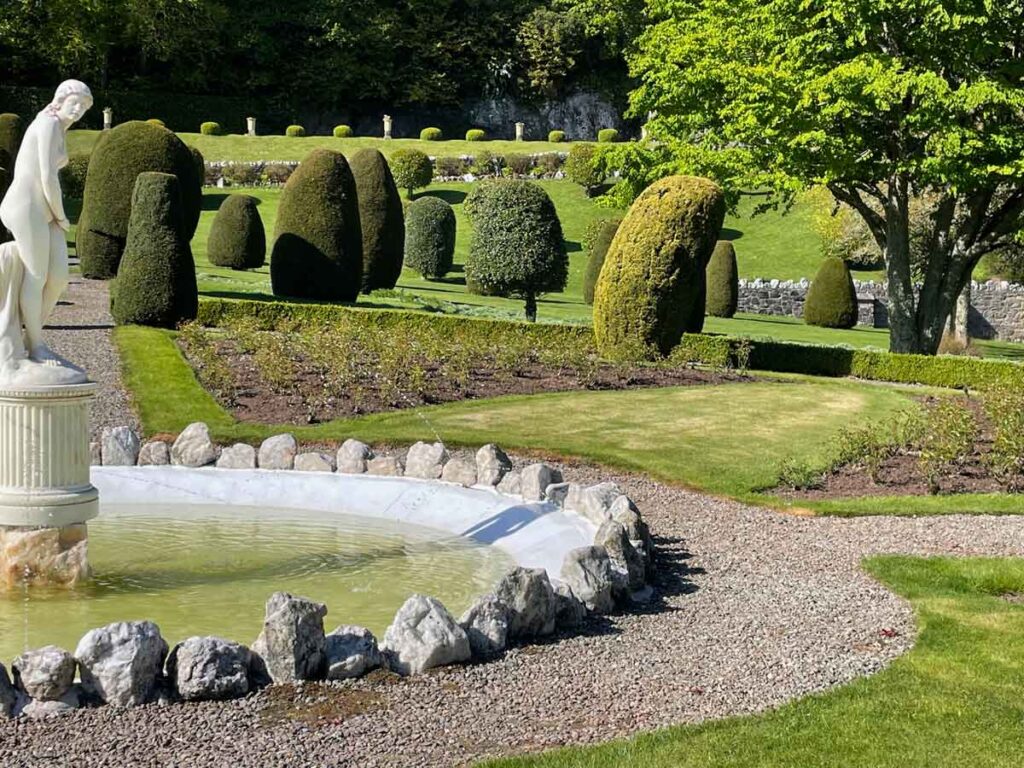
The Italian Garden at Glamis Castle
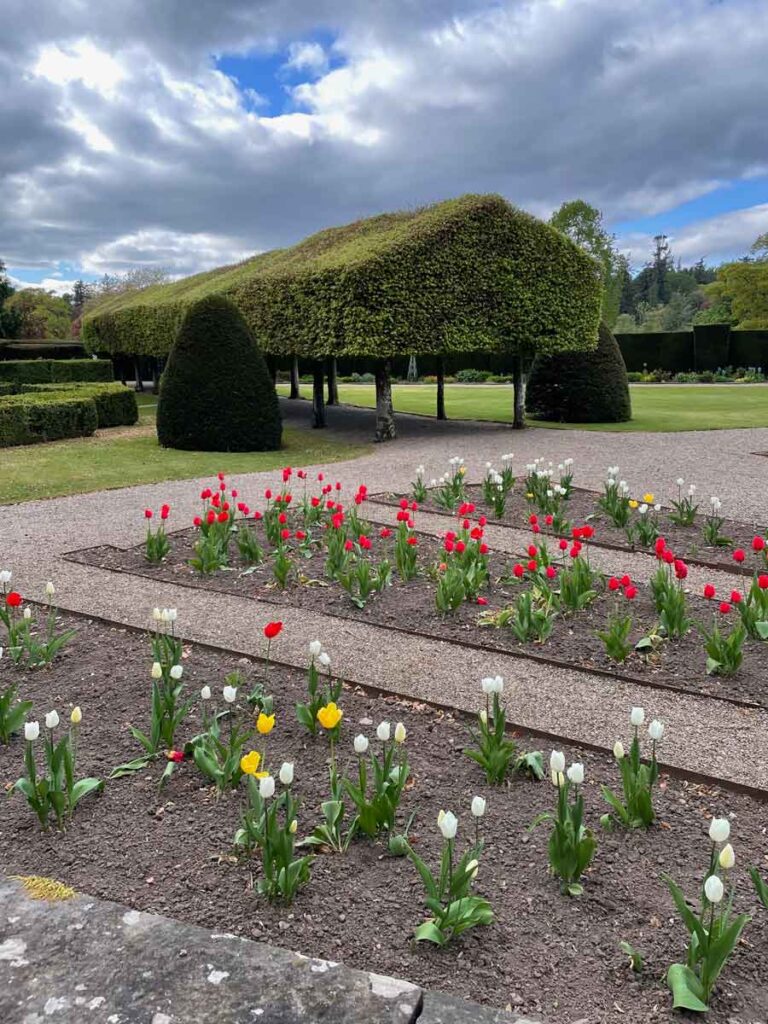
The two house-shaped allées captured my heart immediately
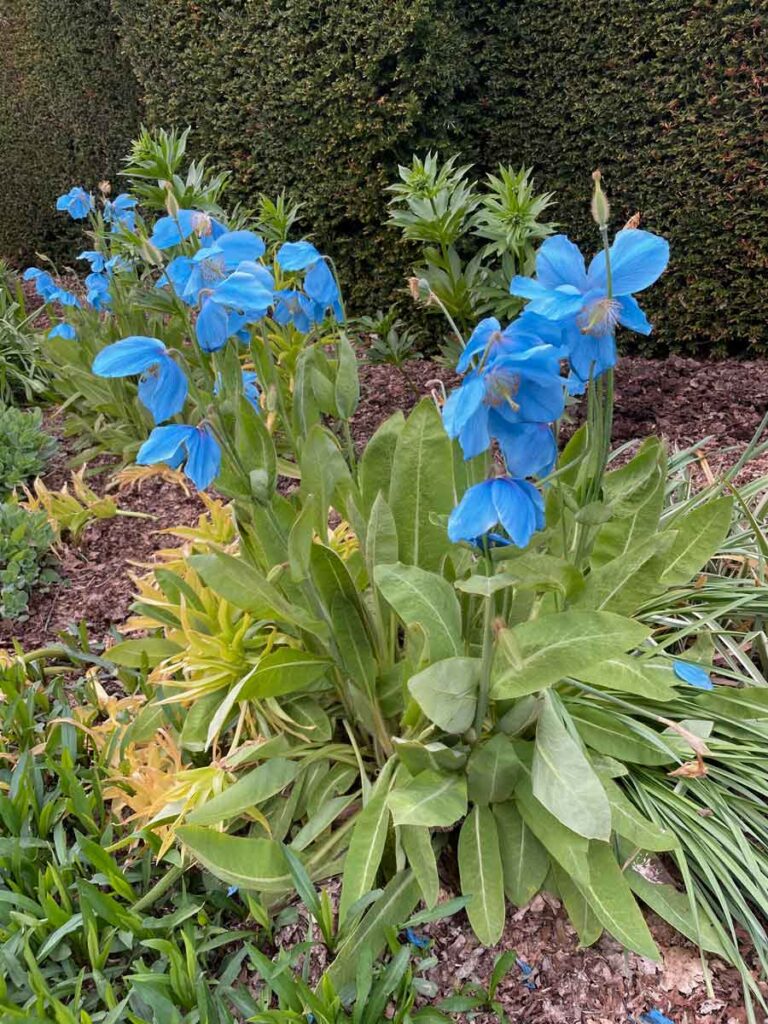
Having never seen a Himalayan Blue Poppy before, our timing was perfect.
Turrets, blue poppies and a house-shaped allée – definitely not in Kansas (or Vermont) anymore
A garden can claim innumerable artists — botanical wizards who have contributed their personal brushstrokes across years and trends. Unlike Whistler’s Mother who will still be seated stoically in her black dress and lace cap next year and next century, the garden you wander through today will be different from that of yesterday, tomorrow, or any other day – ever.
✦
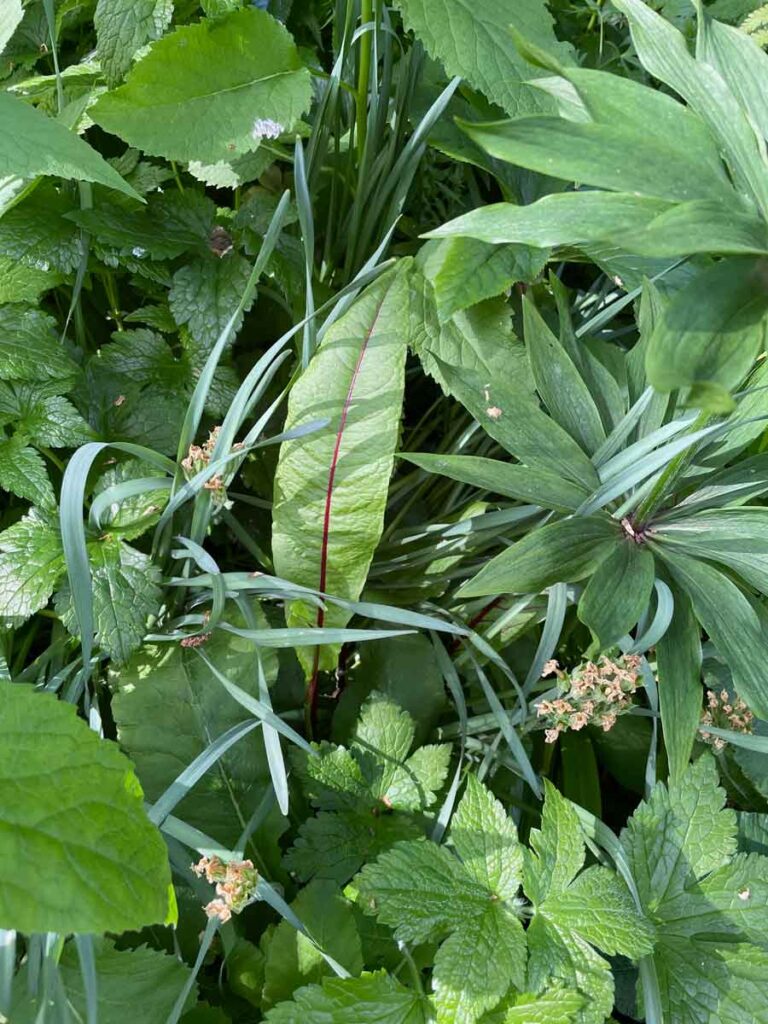
Branklyn Garden in Perthshire is a 2 acre hillside garden, created in 1922 using seeds collected by plant hunters. It is now overseen by the National Trust for Scotland.
I took lots of photos but this one, with that central red rib in the midst of all the different shades of green, is the one I find most inspiring.
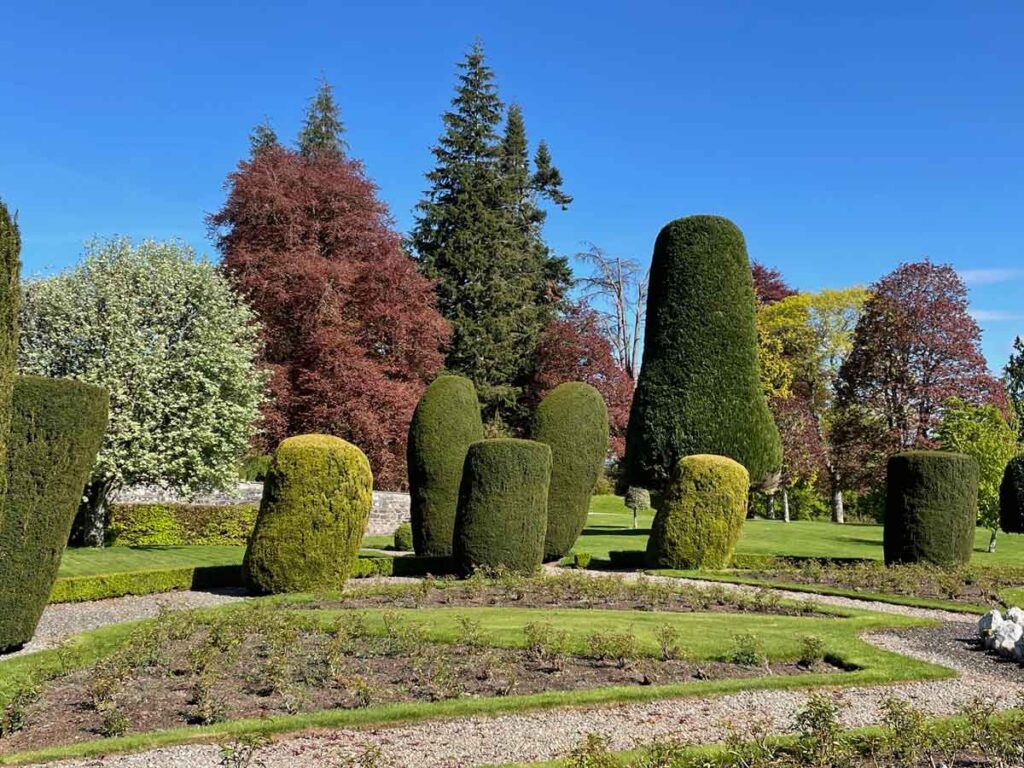
Other than hoping to avoid crowds and midges, we had no particular goals or expectations of Scottish gardens in early May. But luck was with us. Those we visited were much farther along than anticipated, offering bursts of color for winter-weary eyes.
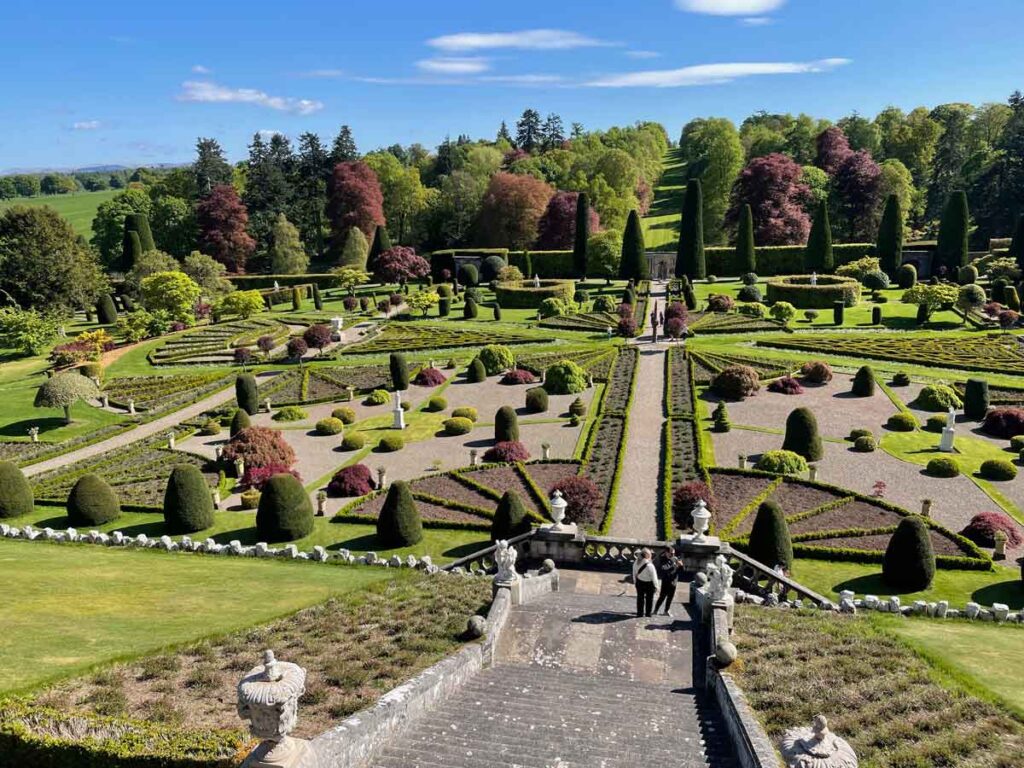
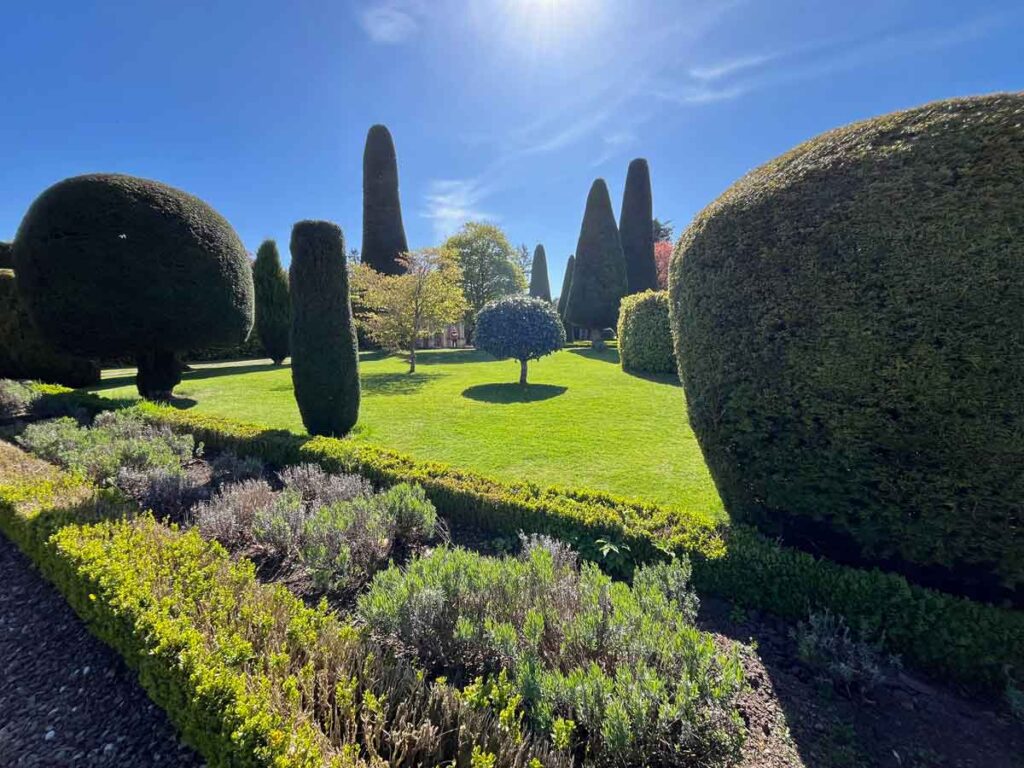
The sculpted trees and variety of foliage are spectacular – even at this early point in the season.
The shapes and shadows made me feel as though I’d been dropped into Alice in Wonderland
The variety of foliage colors hold their own – no blooms necessary
The lean of some of the trees made them seem on the verge of coming to life in a Disney-esque sort of way. So while on the one hand this was a very serious garden, it also comes across with a lovely sense of humor.
This short video shows the grandeur far better than I can.
✦
Jupiter Artland is a sprawling sculpture garden that also includes a couple of indoor exhibition spaces. It is magnificent, with trails that wind through woods, across fields and by beautiful water features.
Stone Coppice, Andy Goldsworthy
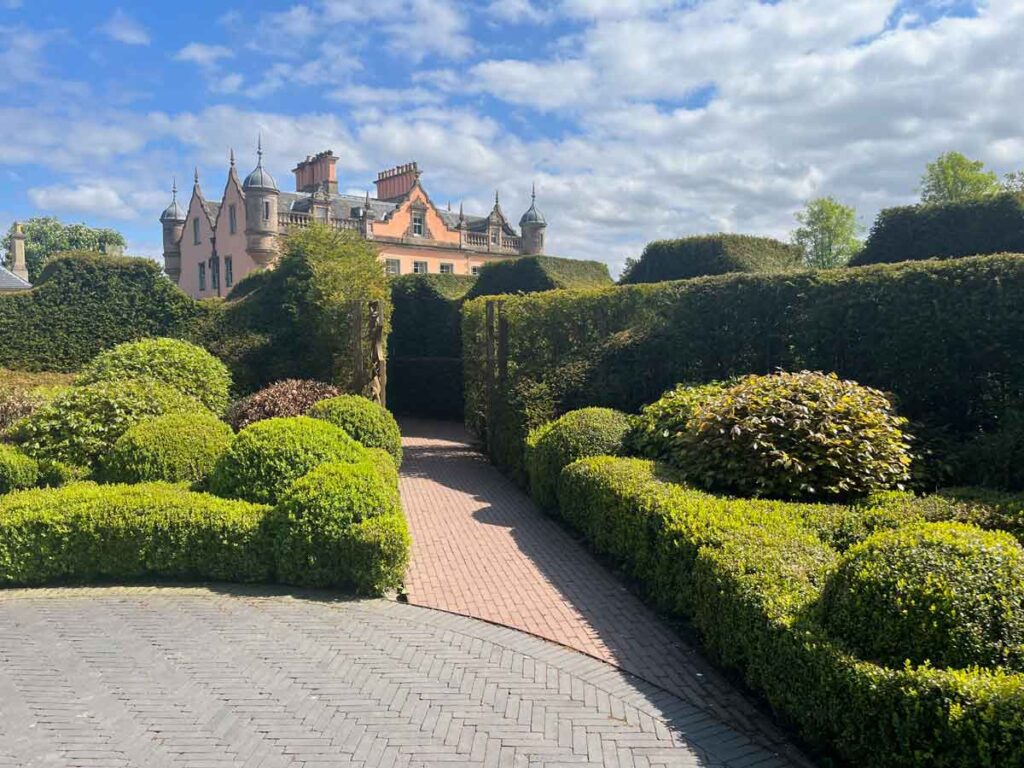
Bonnington House (in the distance) is a private home situated in the center of Jupiter Artland. Such hedges!
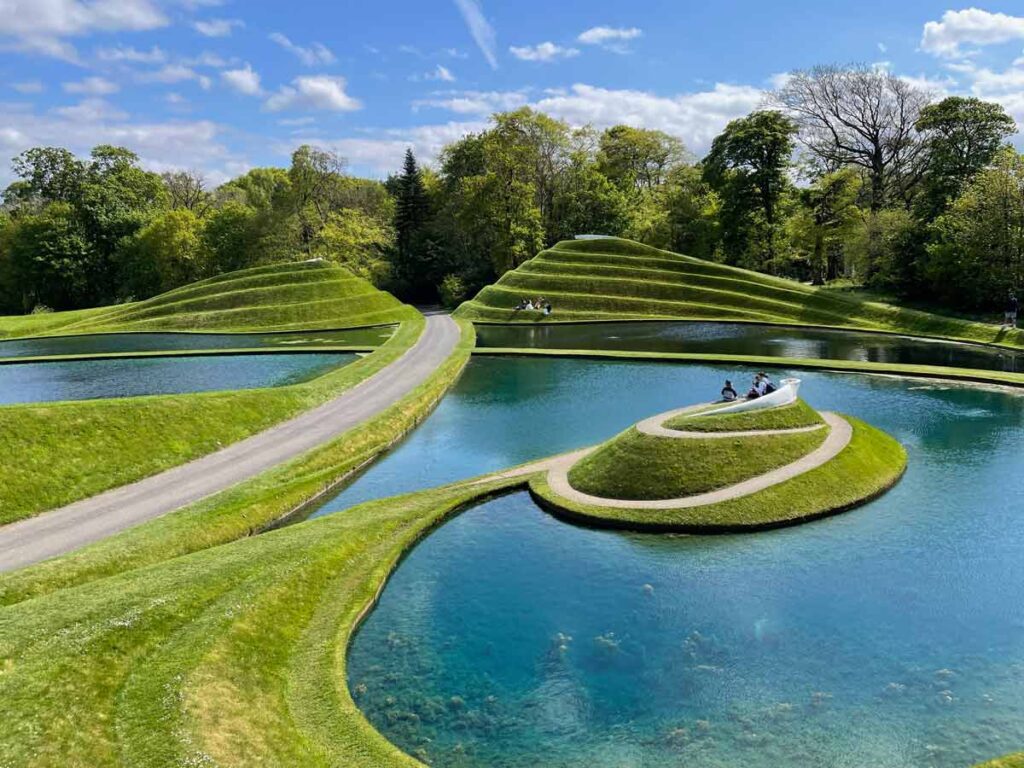
Cells of Life, Charles Jenks. Magical terraced earthworks embedded with paths allowing one to climb to the top for an expansive view.
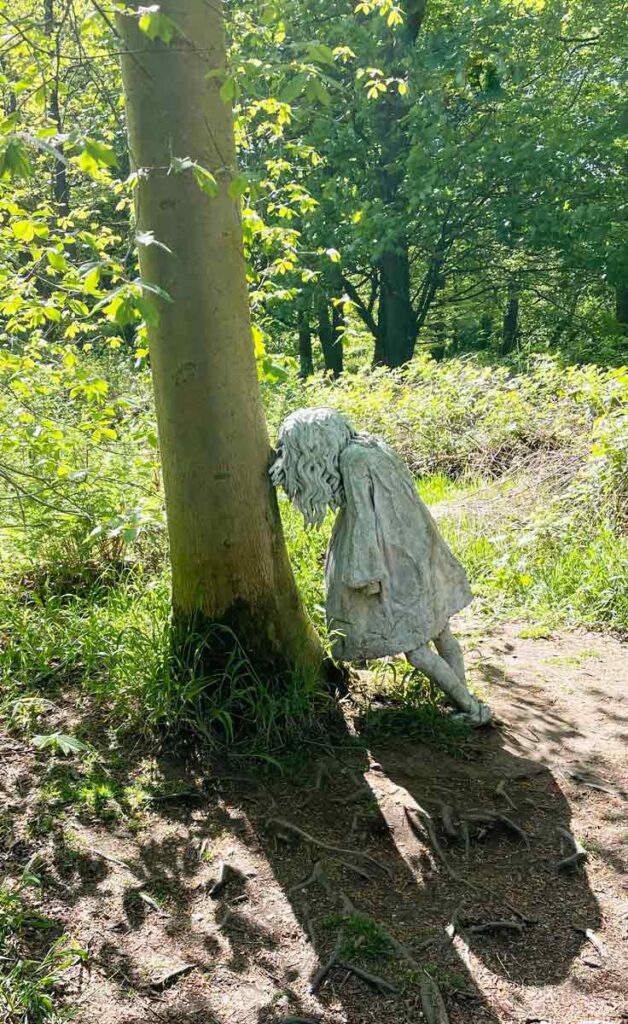
Weeping Girls, Laura Ford. Figures hand carved from waxes. Cast in found objects. Patinated and painted bronze. This was one figure among a series of girls, all of whom projected a mysterious and melancholic aura to the grove of trees where they were strategically placed. Don’t we all have days like this?
✦
And then a couple of miscellaneous gardens…
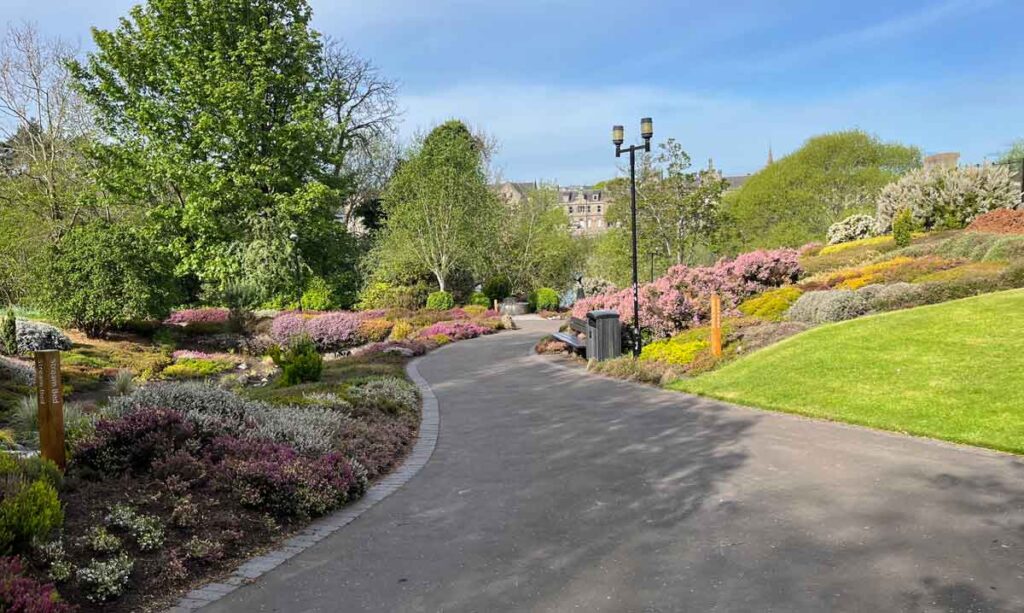
National Heather Collection at the Rodney Gardens Park in Perth
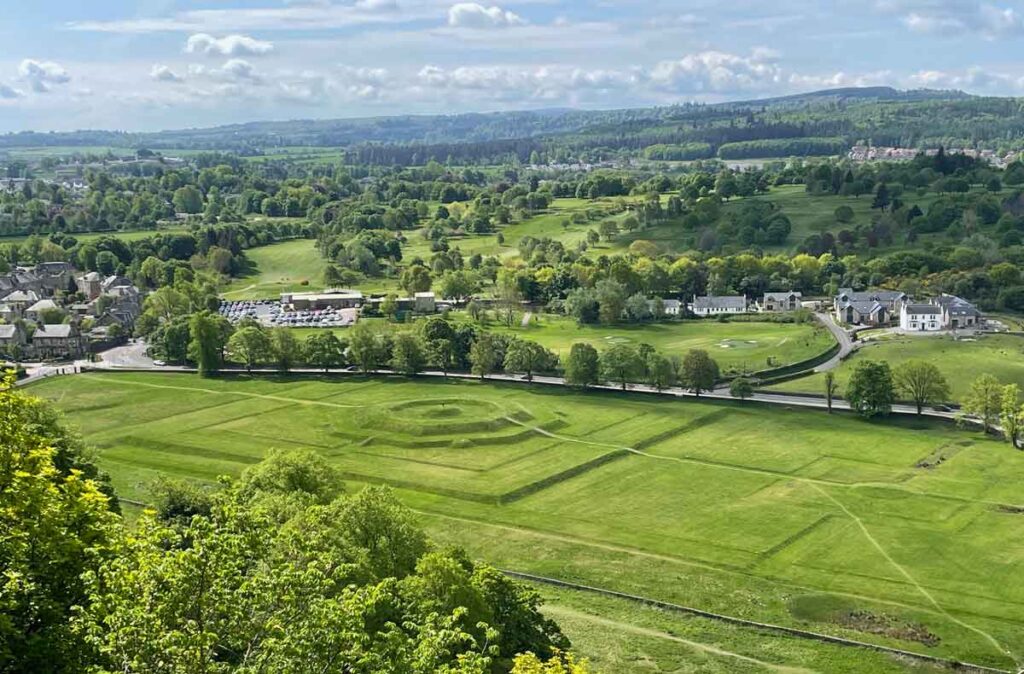
The King’s Knot at Stirling Castle was constructed for Charles I between 1627-9. It is covered in grass now, but it was originally designed as an ornamental garden.
✦
And finally, I leave you with the “Oh My!” These are a few of the things that don’t fit neatly into any category, but are pure visual enjoyment – seeds, even, for possible future work.
Before we left I had read about these two gravestones, unique in their elaborate depiction of Adam and Eve. It became something of a scavenger hunt to find them, but it was definitely worth the search.
Loved the sign, loved even more the colors of stone in this building near Edinburgh Castle
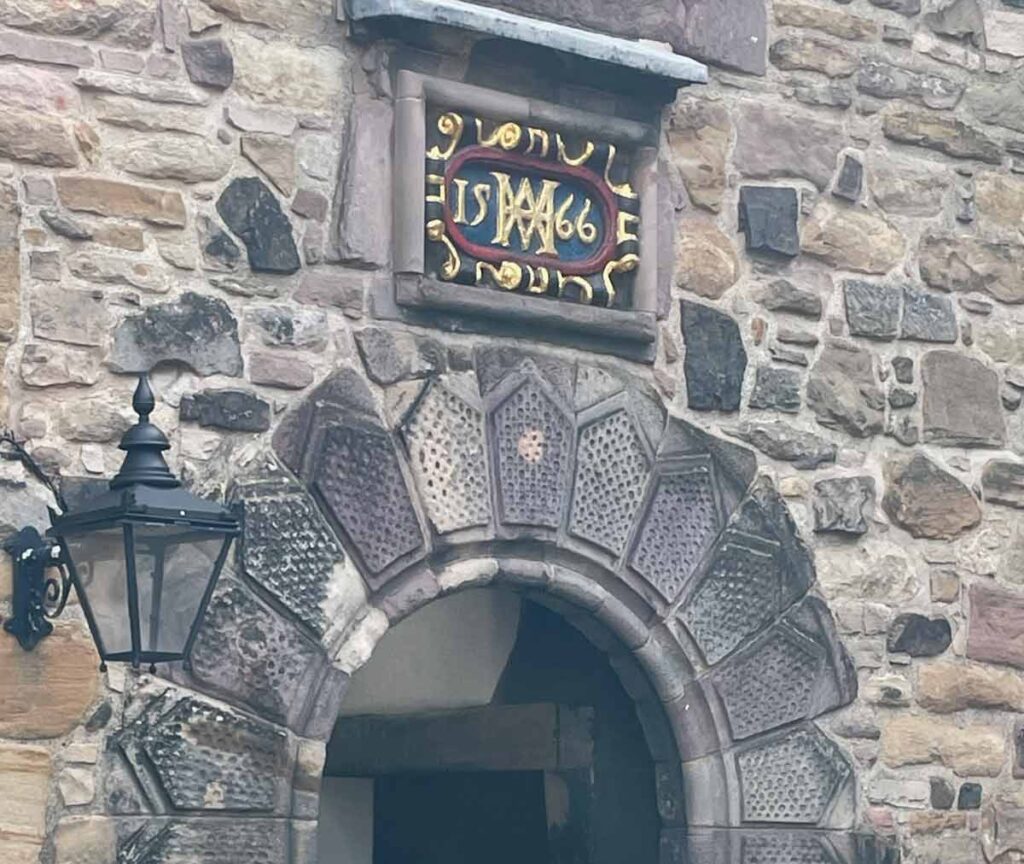
These textured house shapes surrounding a doorway in Edinburgh Castle caught my eye immediately.
The Kelpies, Designed by Andy Scott. These massive horse heads, built of steel, refer to the shape shifting water-horses of Scottish folklore.
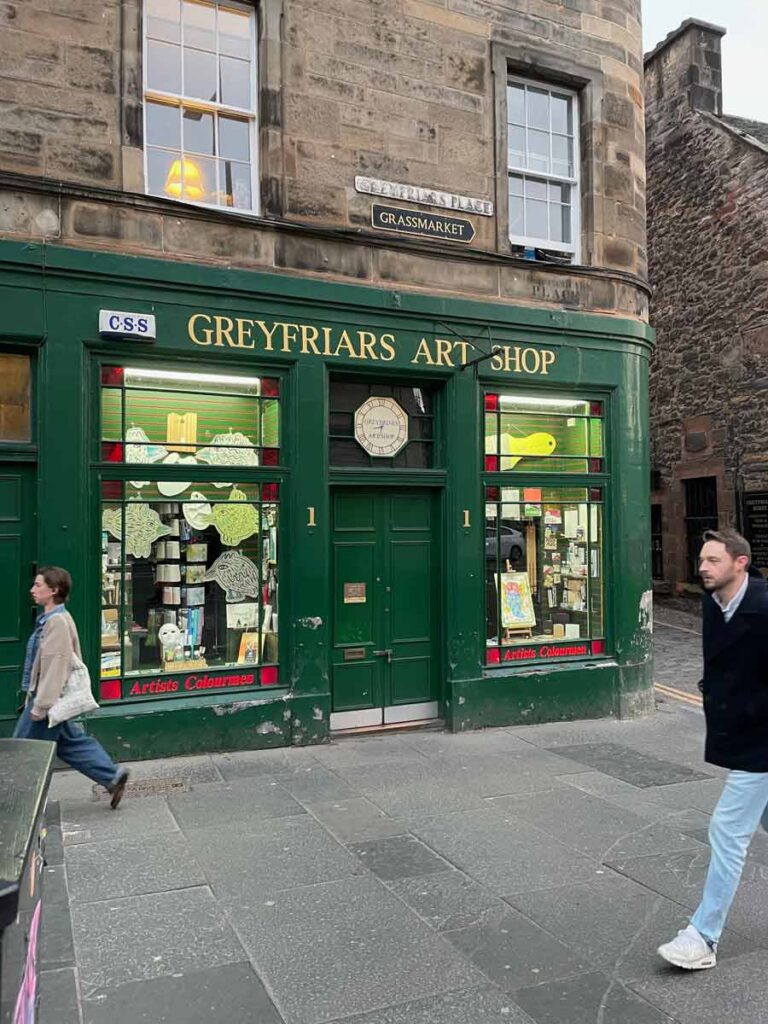
Finally, I always research art supply stores before any trip. It’s hard to beat the charming exterior of this one, where I found some khadi paper that easily fit in my carry-on and is now waiting in the wings for future paint and stitch.
✦
Now, it’s back to Vermont.
I’m very much looking forward to the opening of Full Bloom on Saturday!
If you’re around, please join me at The Satellite Gallery, 71 Depot Street, Lyndonville, VT for the opening from 5-7pm. The show will be up thorough the 4th of July weekend.
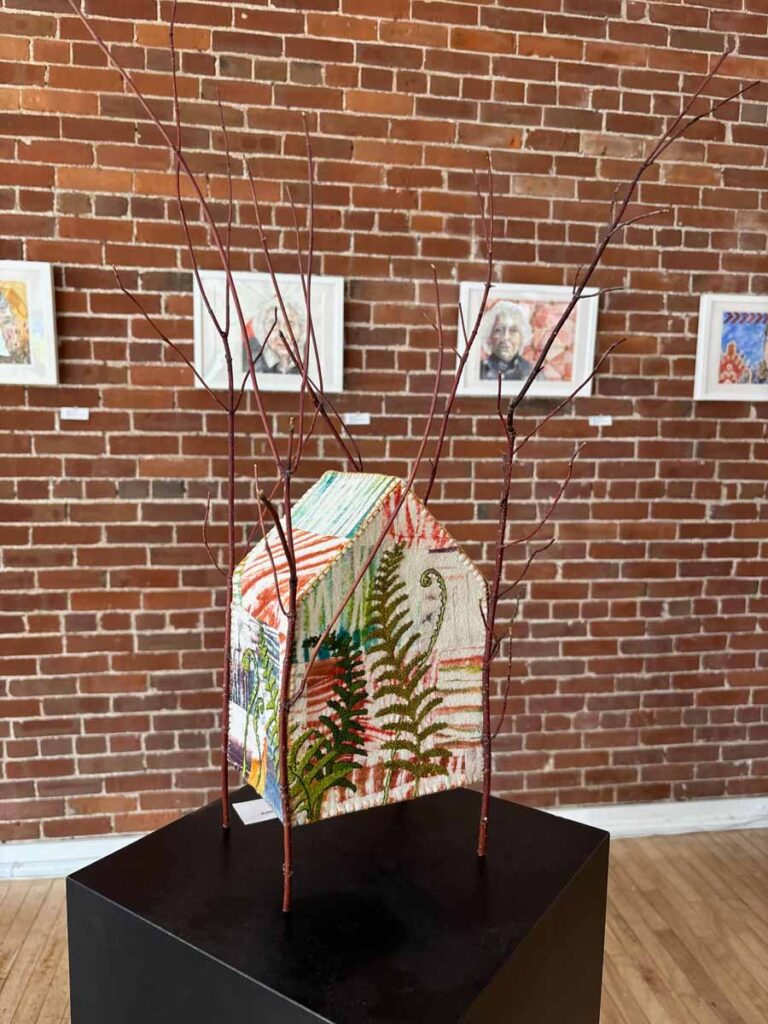
The gallery director sent me this photo after she’d hung the show. I’m thrilled that she decided to include several of my “Sheltering in Place” houses as well.
Contains information related to marketing campaigns of the user. These are shared with Google AdWords / Google Ads when the Google Ads and Google Analytics accounts are linked together.
90 days
__utma
ID used to identify users and sessions
2 years after last activity
__utmt
Used to monitor number of Google Analytics server requests
10 minutes
__utmb
Used to distinguish new sessions and visits. This cookie is set when the GA.js javascript library is loaded and there is no existing __utmb cookie. The cookie is updated every time data is sent to the Google Analytics server.
30 minutes after last activity
__utmc
Used only with old Urchin versions of Google Analytics and not with GA.js. Was used to distinguish between new sessions and visits at the end of a session.
End of session (browser)
__utmz
Contains information about the traffic source or campaign that directed user to the website. The cookie is set when the GA.js javascript is loaded and updated when data is sent to the Google Anaytics server
6 months after last activity
__utmv
Contains custom information set by the web developer via the _setCustomVar method in Google Analytics. This cookie is updated every time new data is sent to the Google Analytics server.
2 years after last activity
__utmx
Used to determine whether a user is included in an A / B or Multivariate test.
18 months
_ga
ID used to identify users
2 years
_gali
Used by Google Analytics to determine which links on a page are being clicked
30 seconds
_ga_
ID used to identify users
2 years
_gid
ID used to identify users for 24 hours after last activity
24 hours
_gat
Used to monitor number of Google Analytics server requests when using Google Tag Manager