Dancing on the Edge
“Good composition is like a suspension bridge; each line adds strength and takes none away… Making lines run into each other is not composition. There must be motive for the connection. Get the art of controlling the observer – that is composition.”
— Robert Henri
I have been pulling back to basics this fall by concentrating on composition in my sketches. The more I experiment, the more I learn, and I’ve become intrigued by the idea of composing an image where the subject hugs the perimeter of the frame. In doing this, I am discovering that a tension occurs between the concentration of elements at the edges and any expanse of relatively unoccupied space (or large area that relies on an overall pattern). A heightened sense of abstraction seems to occur as a result, adding another layer to consider — which is a by-product I quite like.
I spent some time hunting for examples of this in the work of several of my favorite artists. Here are a few pieces that caught my attention.
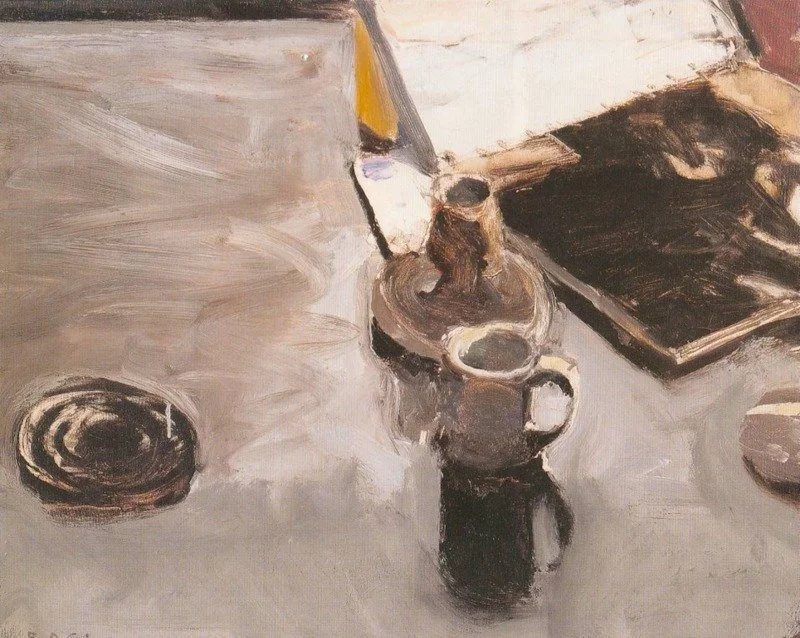
Richard Diebenkorn, Still Life with Letter, 1961, Oil on Canvas
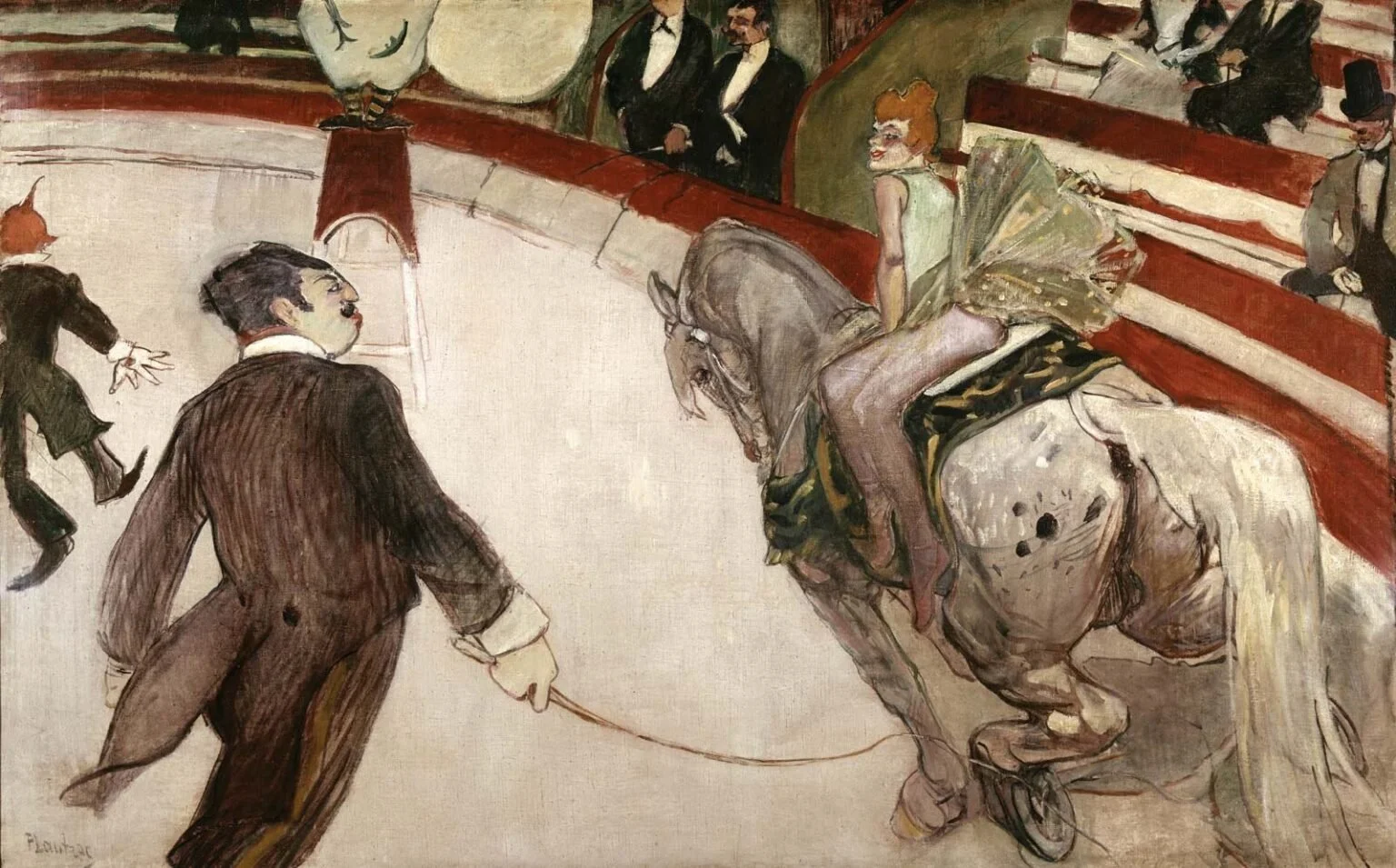
Henri de Toulouse-Lautrec, Equestrienne (At the Cirque Fernando), 1887-88, Oil on canvas ・I spent a fair amount of time studying this piece at the Art Institute of Chicago last week. If they had offered, I would have gladly brought it home.
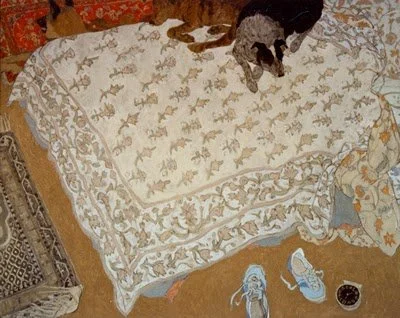
Susan Hertel (1930-1993) was a New Mexico artist whose art “embodies what is marvelous in the mundane experiences of life”, a sentiment that resonates strongly with me. She had a menagerie of animals who were frequently the subject of her paintings.
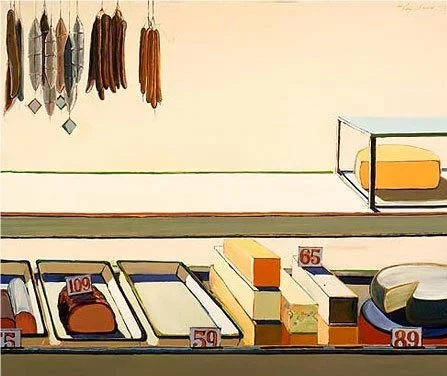
Wayne Thiebaud, Delicatessen Counter, 1963
I’m sure the reason I’ve found this way of organizing a picture so exciting is due to several things: my natural inclination toward asymmetry, an affinity for Japanese art — where this strategy is common, and the fact that I subscribe to the theory that a piece of art should be acknowledged as a 2-D interpretation, not an attempt to reproduce reality.
I’m including below a couple of examples of my own exploration of this idea.
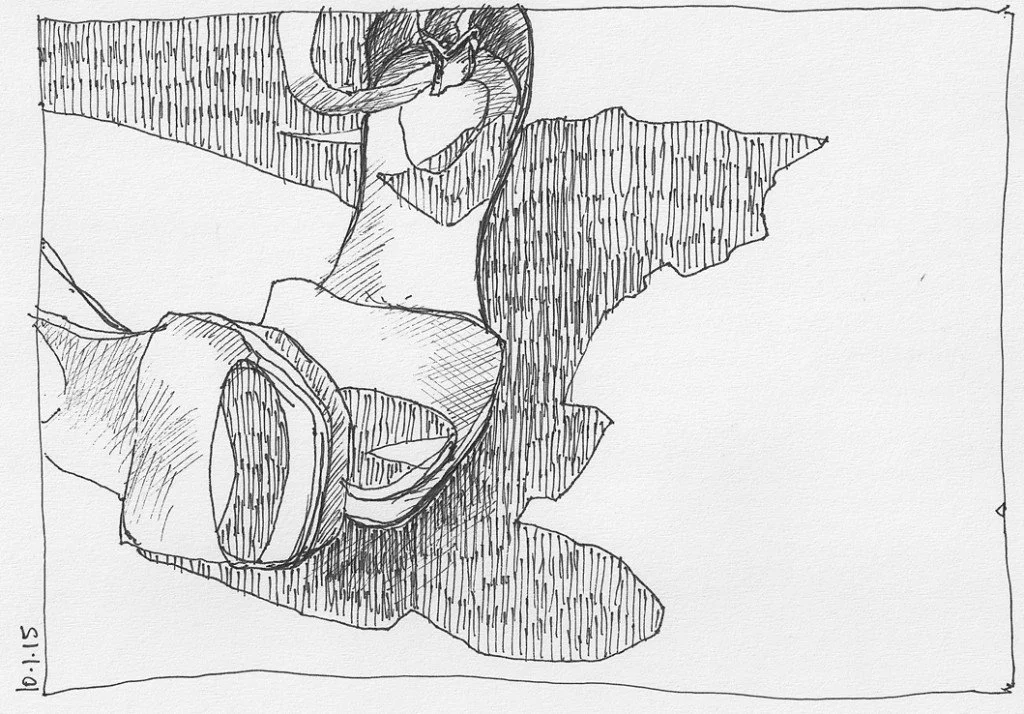
Sandals, ©2015 Elizabeth Fram, Ink on paper
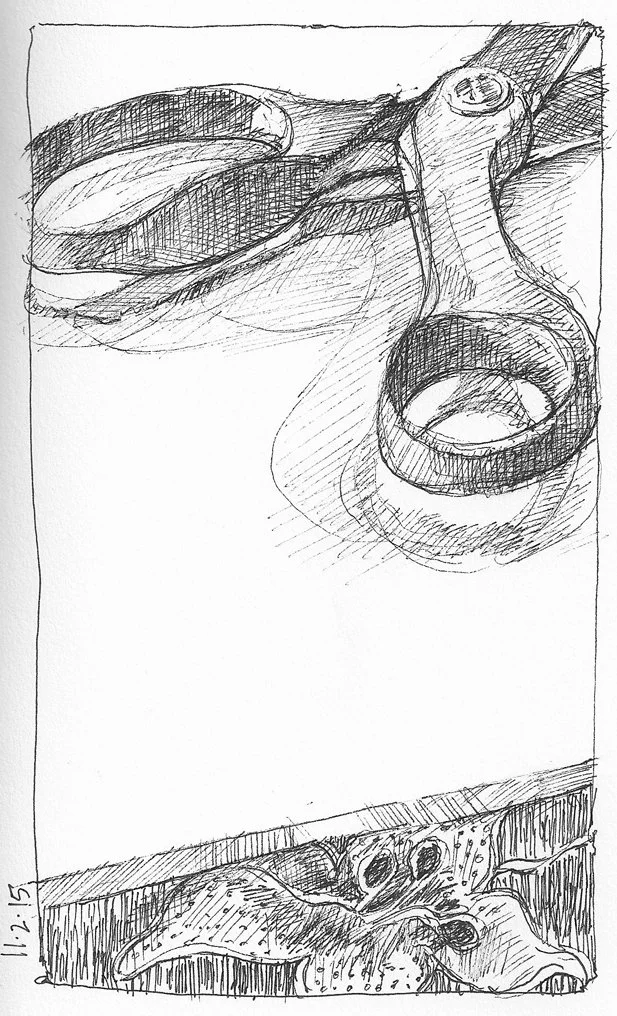
Scissors, ©2015 Elizabeth Fram, Ink on paper
An additional reward is that by incorporating the edges, subject matter that goes beyond the picture plane leaves the viewer with an opportunity to imagine “more”, rather than being presented with a neat package that has nothing further to say. I love the idea of building in another level of significance to a drawing by editing-out rather than adding-on.
How important is composition in the art that grabs your attention? Because I am so interested in design, it has significant power for me. Do you find that to be true as well — or is it the subject of a piece that first sways you?
This post was originally published on November 5, 2015
