Walking in the Dark
I keep returning to the idea that often the best way toward clarity is via a dark and unsure path — or at least that seems to be the case for me. Through, not around, has proven to be my surest route toward uncovering what I may or may not know I’m seeking in the moment; I just have to keep moving forward in order to eventually see it.
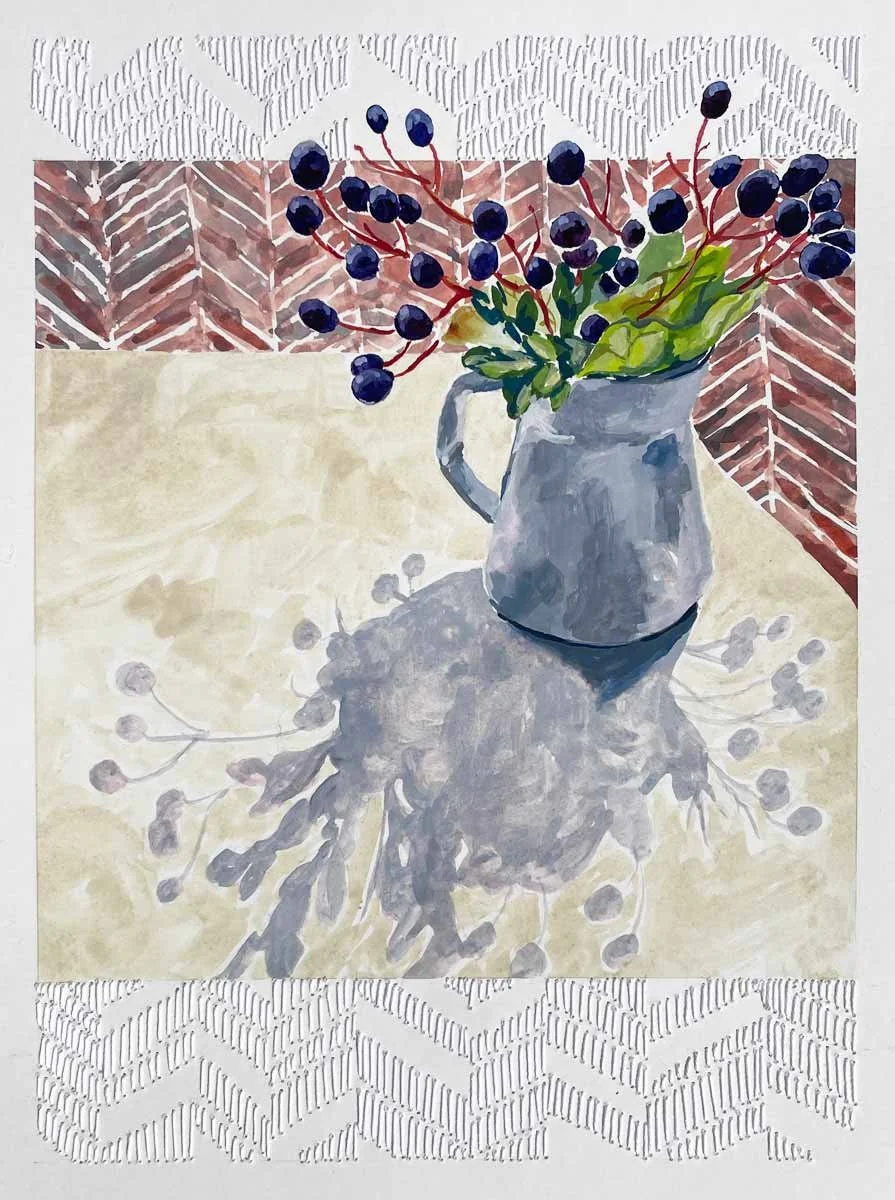
Zigging Zag ©2026 Elizabeth Fram, Gouache and stitch on paper, 9.5 × 7 inches
My latest conundrum relates to pattern — the way it operates within an image and how it affects a finished piece. I’ve been looking at the art of Kehinde Wiley, Yayoi Kusama, Chuck Close, and of course Matisse as a sort of portal into this realm.
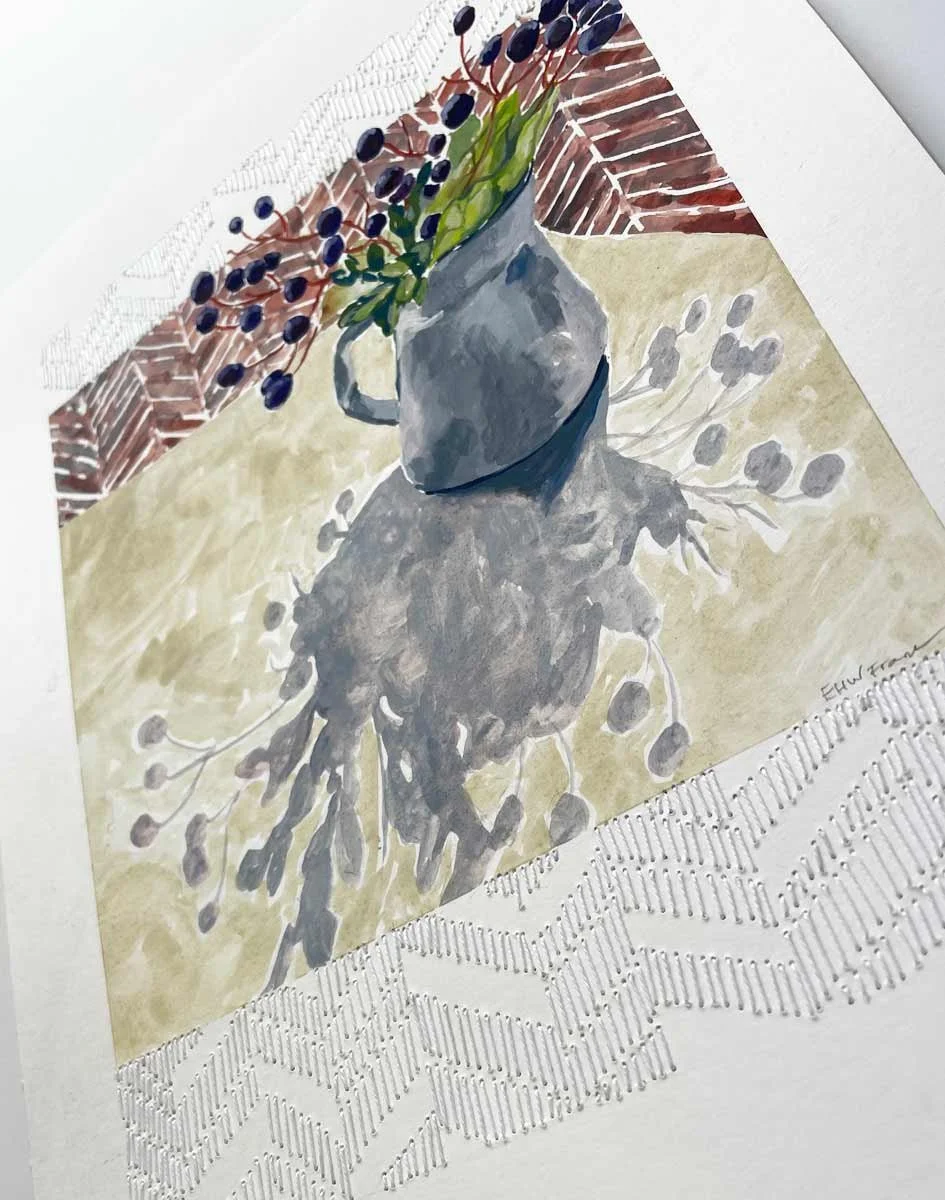
Zigging Zag textures
Even though I feel I am still very much in a ‘groping in the dark’ stage in terms of identifying my ultimate objective, I am relaxing into the fact that there is something inherently satisfying about adding stitched patterns to my gouache paintings, both in the way they activate the surface and in the contextual way they interact with the imagery.
To some degree the reward lies as much in the doing as in the finished effect. Perhaps my sense of gratification is the result of balancing the dichotomy between stillness and movement, both of which are intrinsic to repetition. On the one hand, the natural rhythm of creating a stitched pattern is soothing, both in the making (needle up, needle down — over and over) and in the final visual effects which often settle into a comfortable sense of predictability. Think of a heartbeat or breathing.
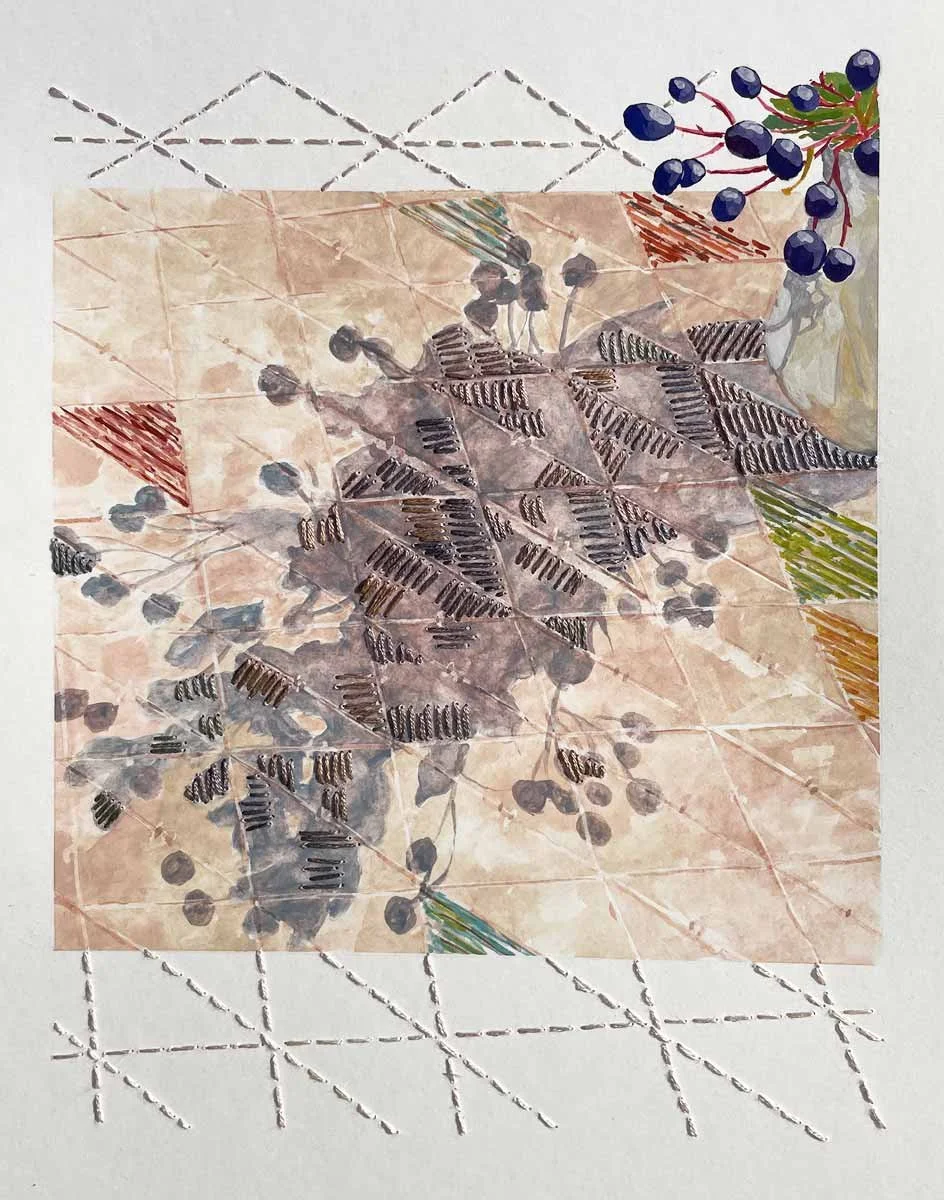
Shadow Quilt © 2026 Elizabeth Fram, Gouache and stitch on paper, 9.75 × 7 inches
Yet at the same time, patterns lend dynamism to a surface. Any irregularity, however small, activates a sense of tension because our eyes are hard-wired to be on the alert for change. From that perspective, patterns create an underlying agitation or visual excitement, but they do so within the safe parameters of order.
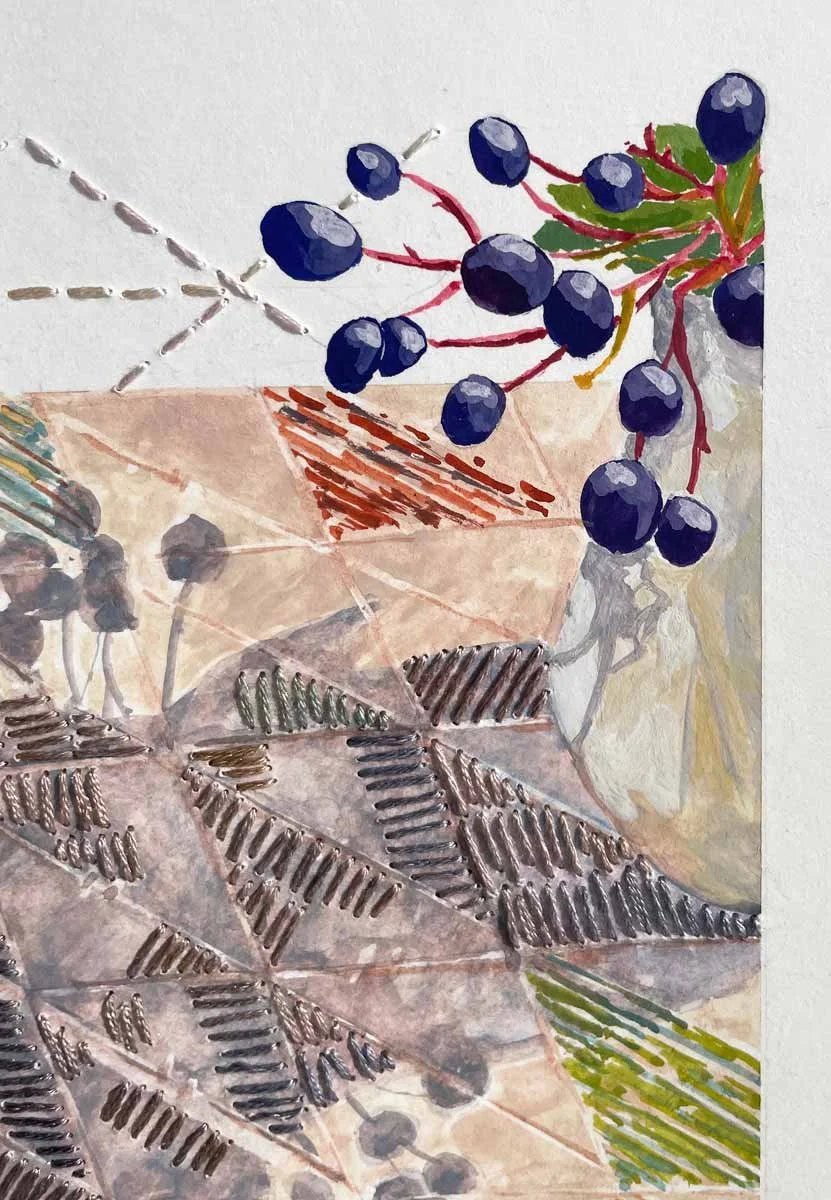
Shadow Quilt detail
There’s a lot to consider, much of it likely science-related. But for now I’m just going to muddle my way through from the artistic side of things and we’ll see where I land. Either way, it’s an intriguing problem that’s worth a good walk in the dark
✶
As I was digging around, searching for info about pattern in general, I came across a fascinating journal post by the pattern designer Archana Bhurke that discusses the creation of her Birdsong Collection designs. This collection is based upon the question “how might sound become visible?”. Movement and changing light throughout the day interact with her patterns on sheer fabric to bring sound into form. Her ideas struck me as brilliant; check them out for yourself.
