This I have learned: You can plan all you like, but be ready to appreciate the gifts which grow from the cracks that appear when your original plans fall apart.
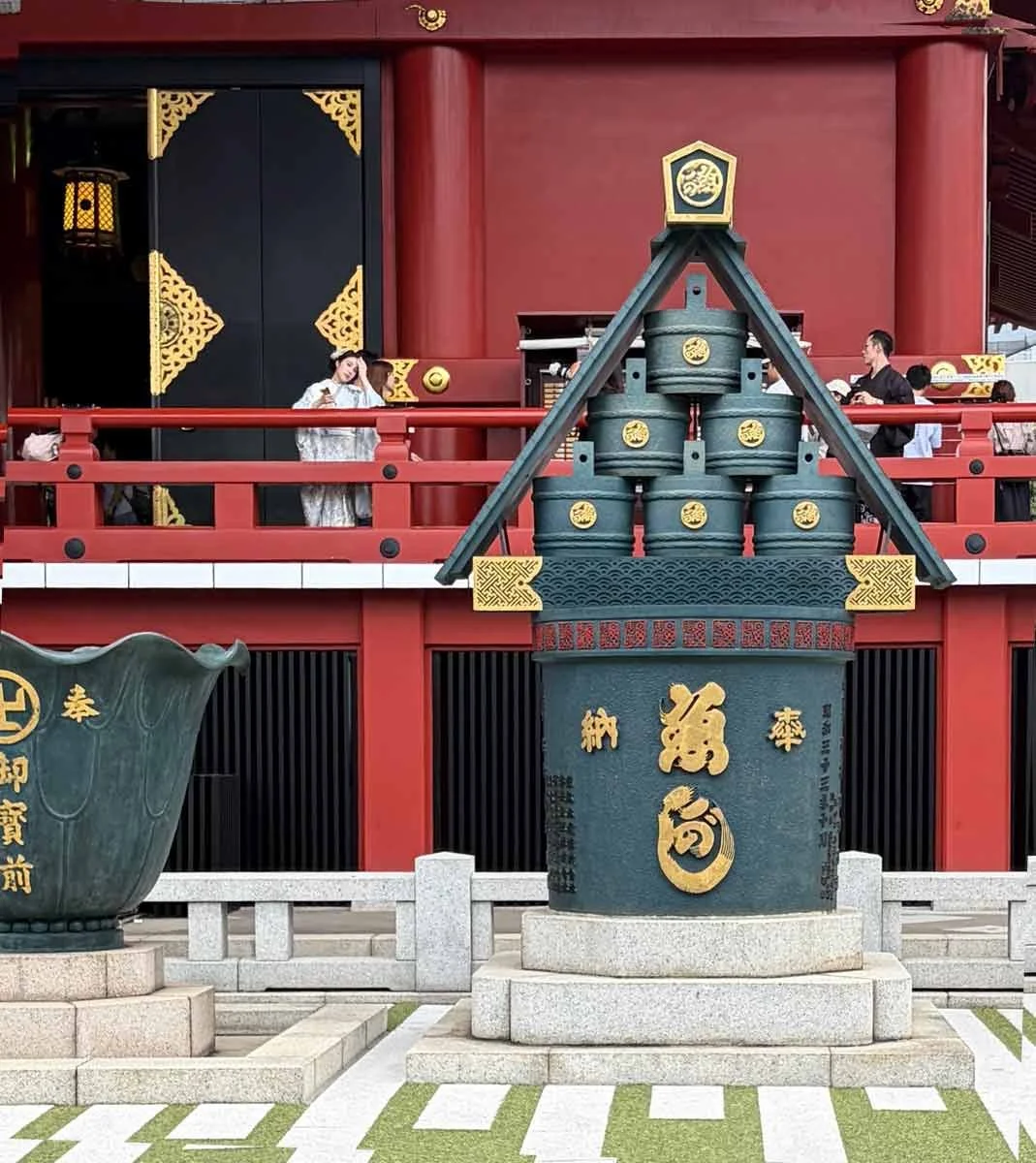
Historic fire buckets outside Sensō-ji Temple in Tokyo are a symbolic reminder of the long-standing danger of fire throughout Japan
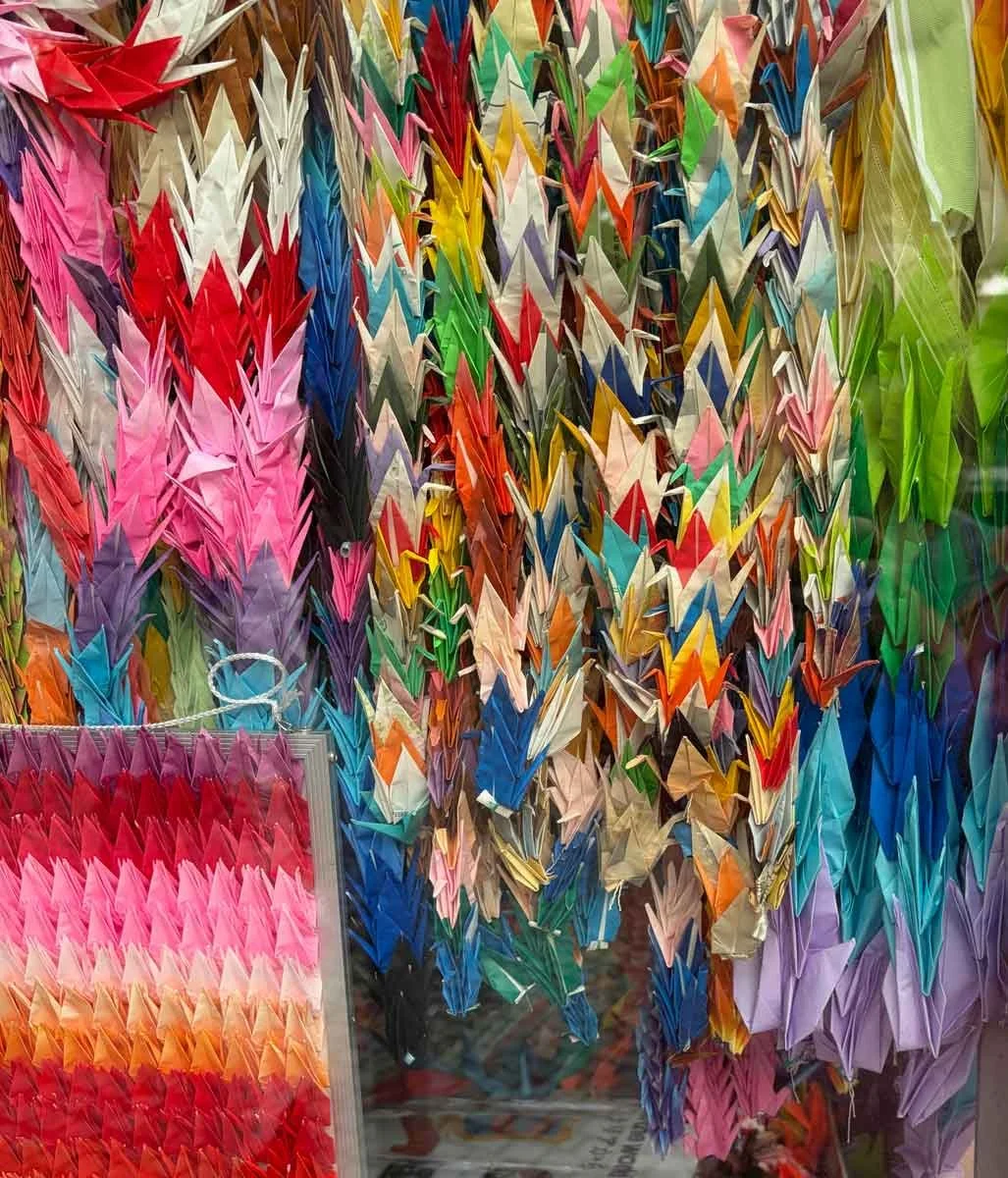
Thousands of paper cranes at Hiroshima’s Children’s Peace Monument honor Sadako Sasaki, a young girl who developed leukemia from atomic bomb radiation
For the past months I’ve been diligently preparing for a two week trip to Japan. I spent a lot of time fine-tuning and condensing the sketching supplies I would bring along, imagining how enjoyable it would be to capture what I saw along the way.
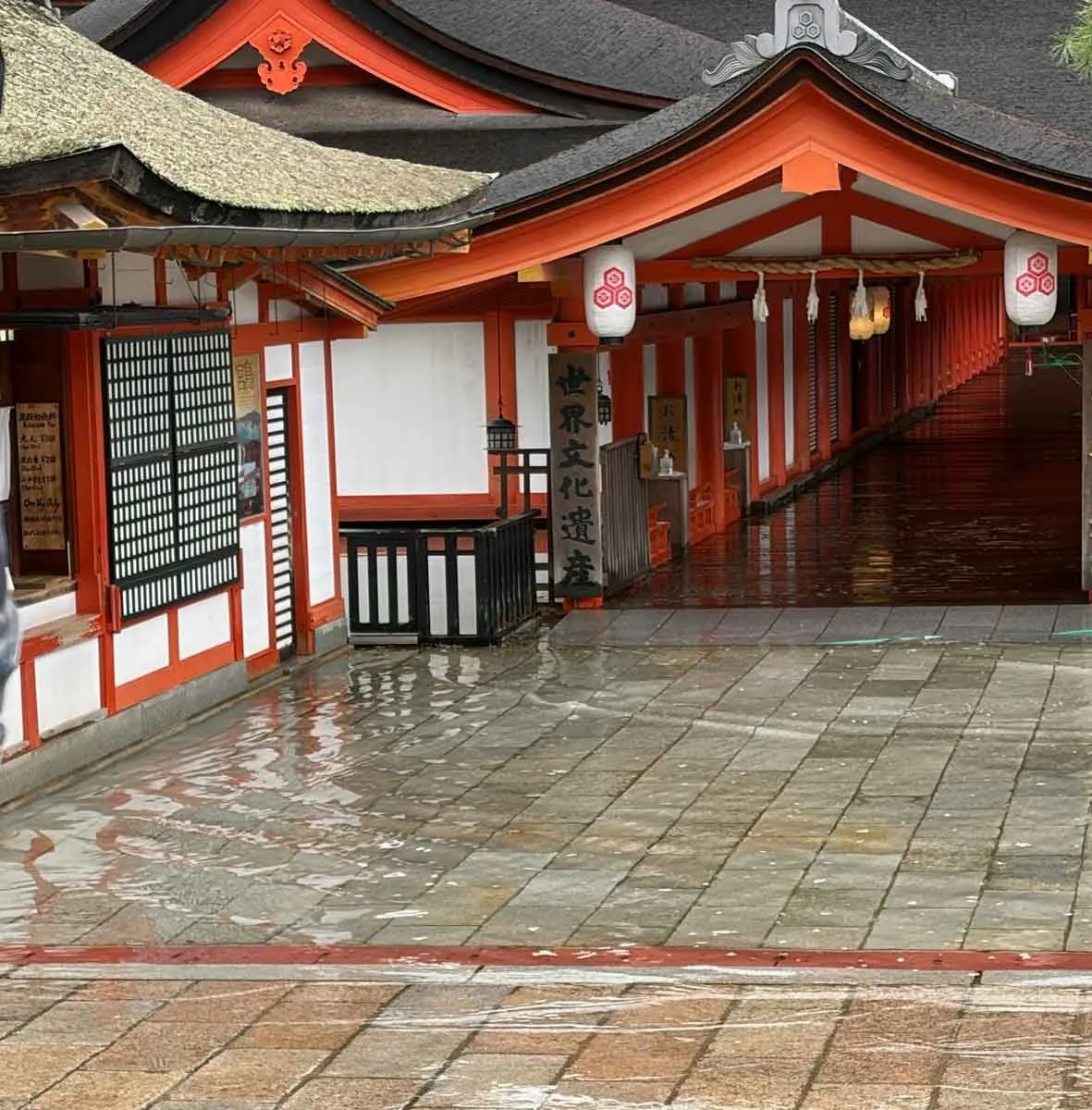
Itsukushima Shrine on Miwajima Island is built on stilts and accommodates the incoming tide every day.
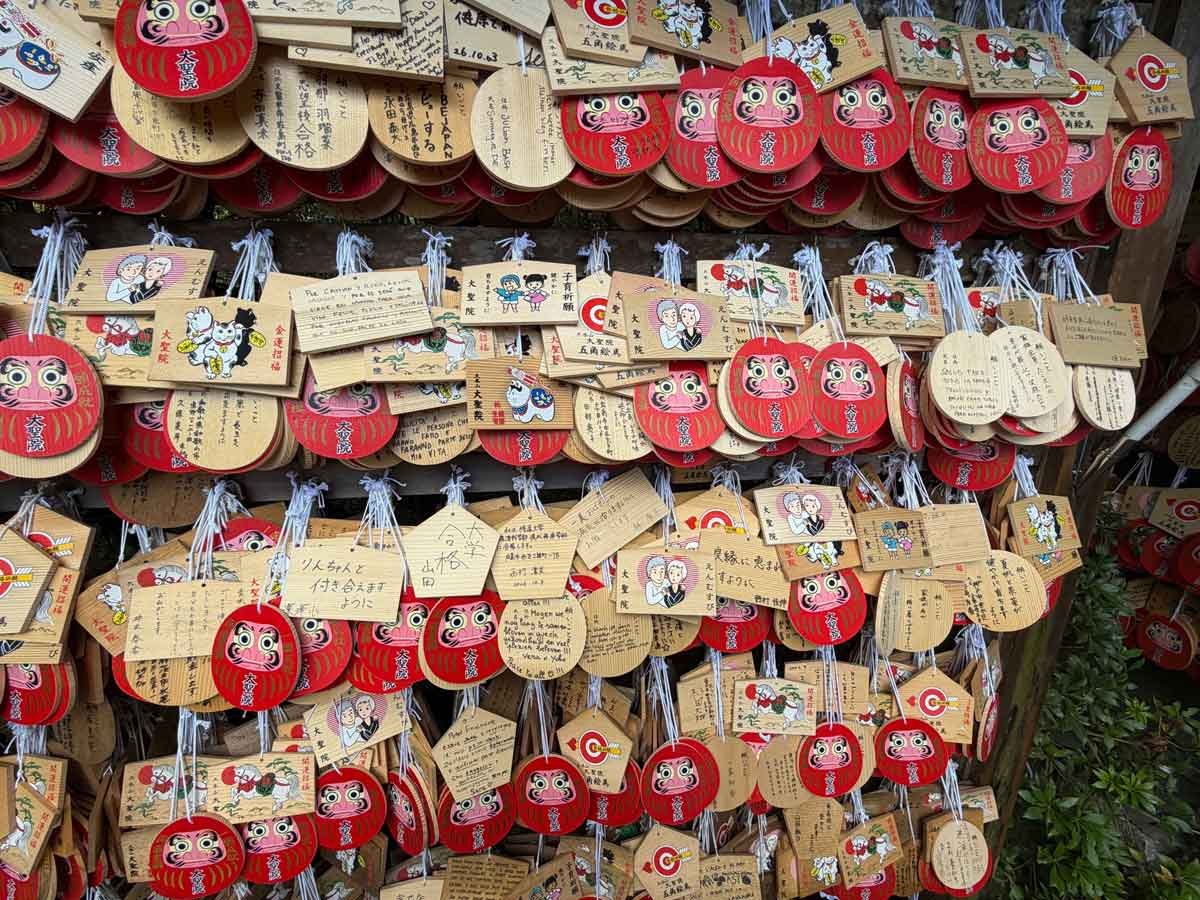
A collection of “ema” (prayer tiles) written with the prayers and wishes of visitors hang at temples and shrines until they are ritually burned at special events
What I didn’t bank on was the fact that our days would be so entirely full that I would have zero time or space for drawing. We were literally on the run from dawn to dusk and, most nights, after returning to our hotel from dinner bags needed to be re-packed for the following day’s adventures before collapsing, too physically and mentally spent to even consider bringing out my materials. Add to that the unwelcome surprise of picking up a respiratory virus along the way, and it was all I could do to just keep up with the itinerary.
Sad and not a little frustrating: all that prep work and not a single drawing.
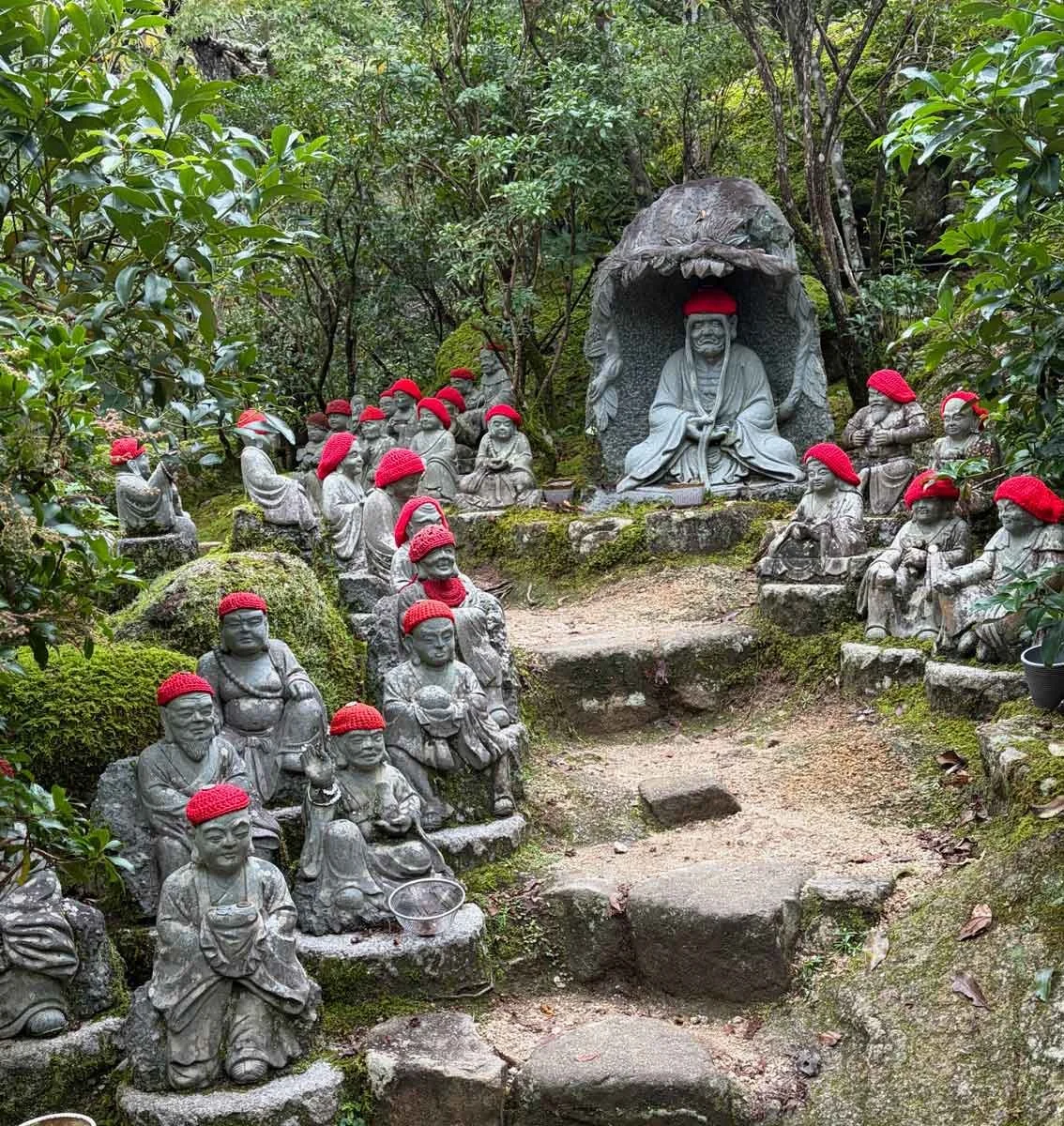
The beautiful grounds of Daisho-in Temple, built on a hillside, are covered with thousands of these small statues of monks. The red hats are an offering to Jizō Bosatsu, protector of children and travelers. Many hats are placed by grieving parents mourning their lost children, symbolizing their love and prayers. Each monk statue has a distinct expression which represents the individuality of the souls they honor.
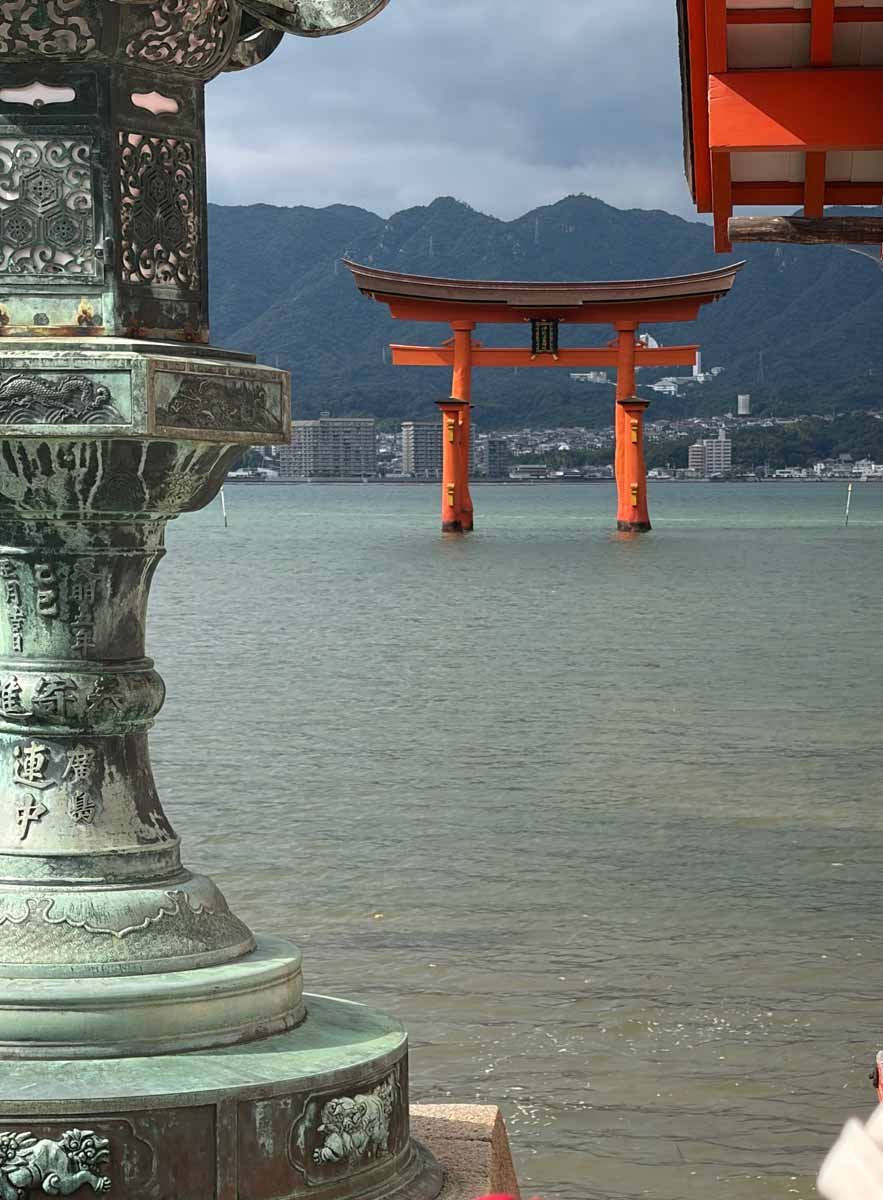
O-torii Gate seen from Itsukushima Shrine, juxtaposed with the intricate details and craftsmanship of this bronze lantern. Turquoise and vermillion, a classic combination.
But one has to look on the bright side — we were in Japan after all!
Visual inspiration was everywhere and, as you might guess, my camera roll is overflowing. Now that I’m back home and mostly recovered, I’ve had time to mull over the many sparks that caught my eye and to think about what I saw and experienced. It wasn’t the sweeping vistas, architecture or gorgeous gardens that made the biggest impression (although, believe me, they were spectacular). Rather, I realize now that I was much more drawn to the many details of what I saw, appreciating the Japanese ability to weave together nature with man-made objects in such a way that one can’t help but feel their reverence for both.
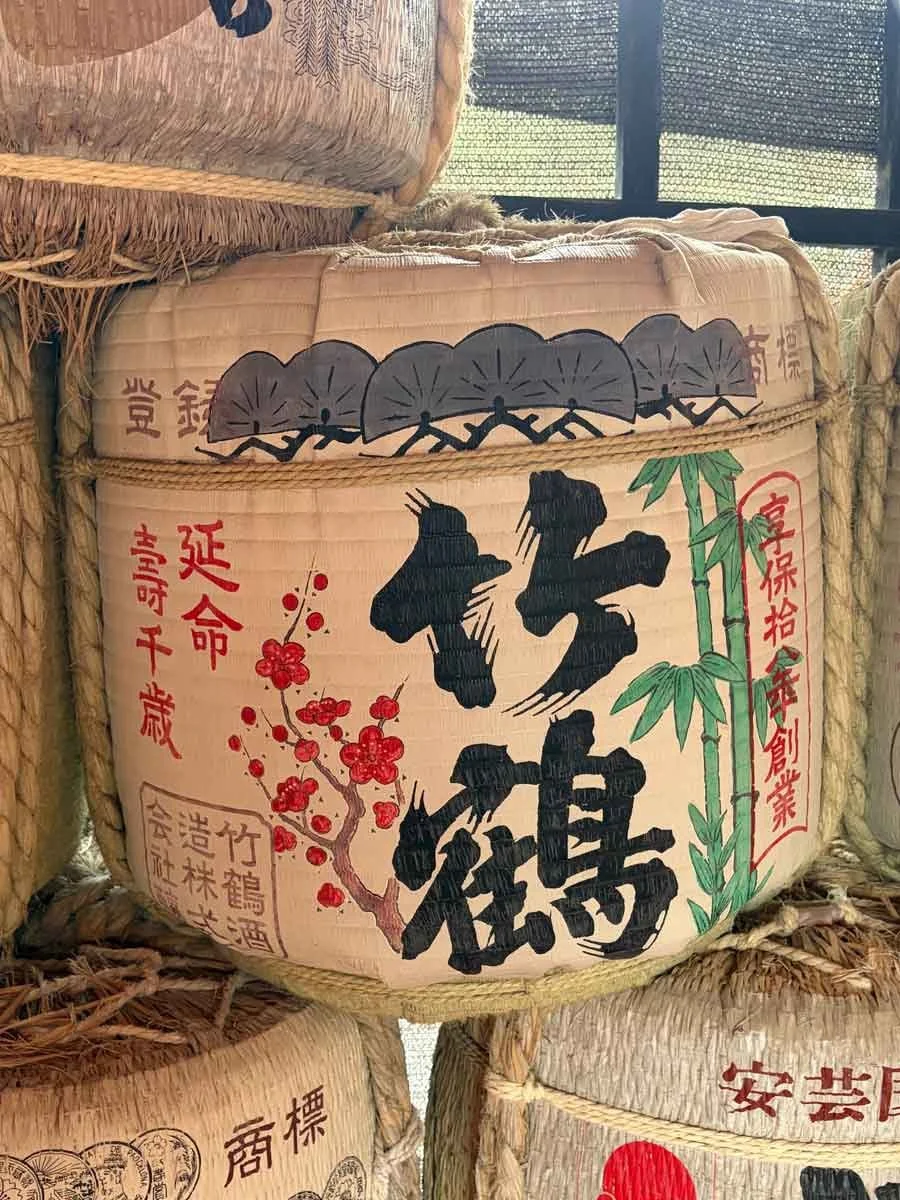
Just one of many beautifully painted straw-covered sake barrels. In Shinto, sake was considered a way to connect people with the Kami (spirits, gods and sacred presences of Shinto). Barrels are offered annually to shrines by the breweries to show deep respect. In return the shrines pray for the success and prosperity of the breweries.
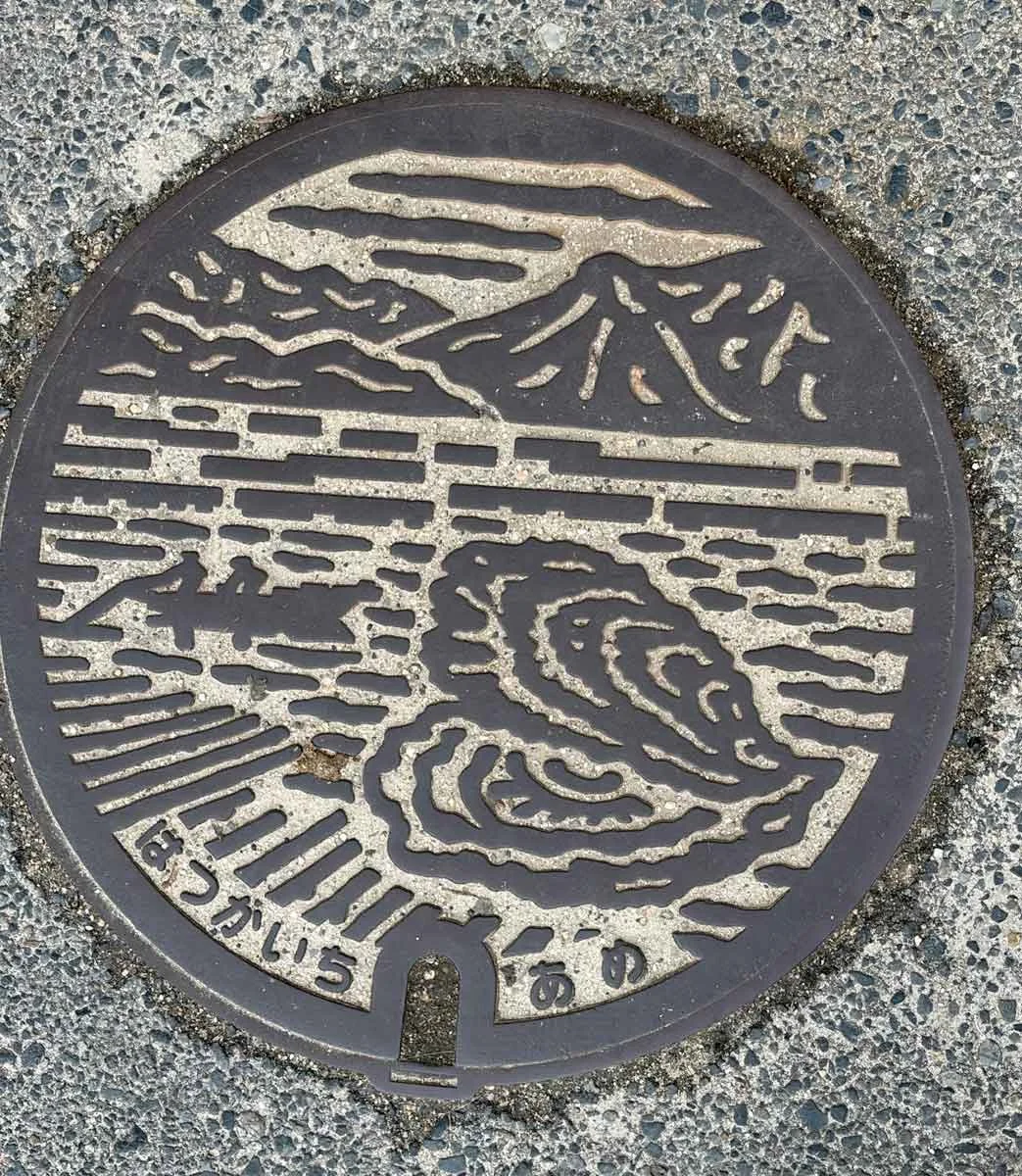
Manhole covers in Japan are works of art in themselves, often reflecting unique characteristics of their location. This cover on Miwajima Island shows the local importance of oysters.
The impeccable craftsmanship and high level of attention paid to every little nuance encouraged careful looking. I found myself searching for understated beauty everywhere. Unexpected juxtapositions, paired with feats of technical skill, took my breath away. It was this aspect of everyday Japan which has made the most lasting impression upon me.
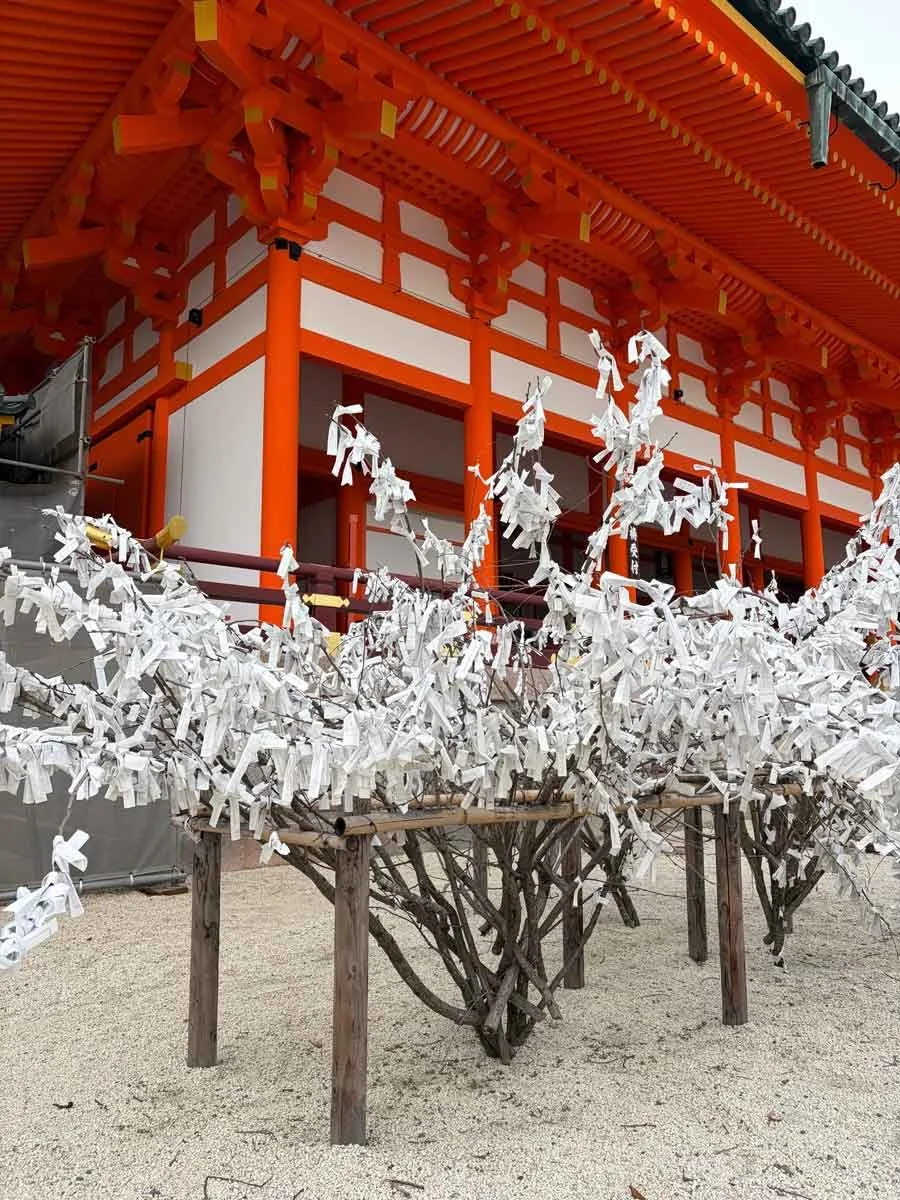
Bad or unwanted fortunes are attached to branches to ward off bad luck, leaving it behind. They make for a striking visual statement at Heian Jingu Shrine in Kyoto.
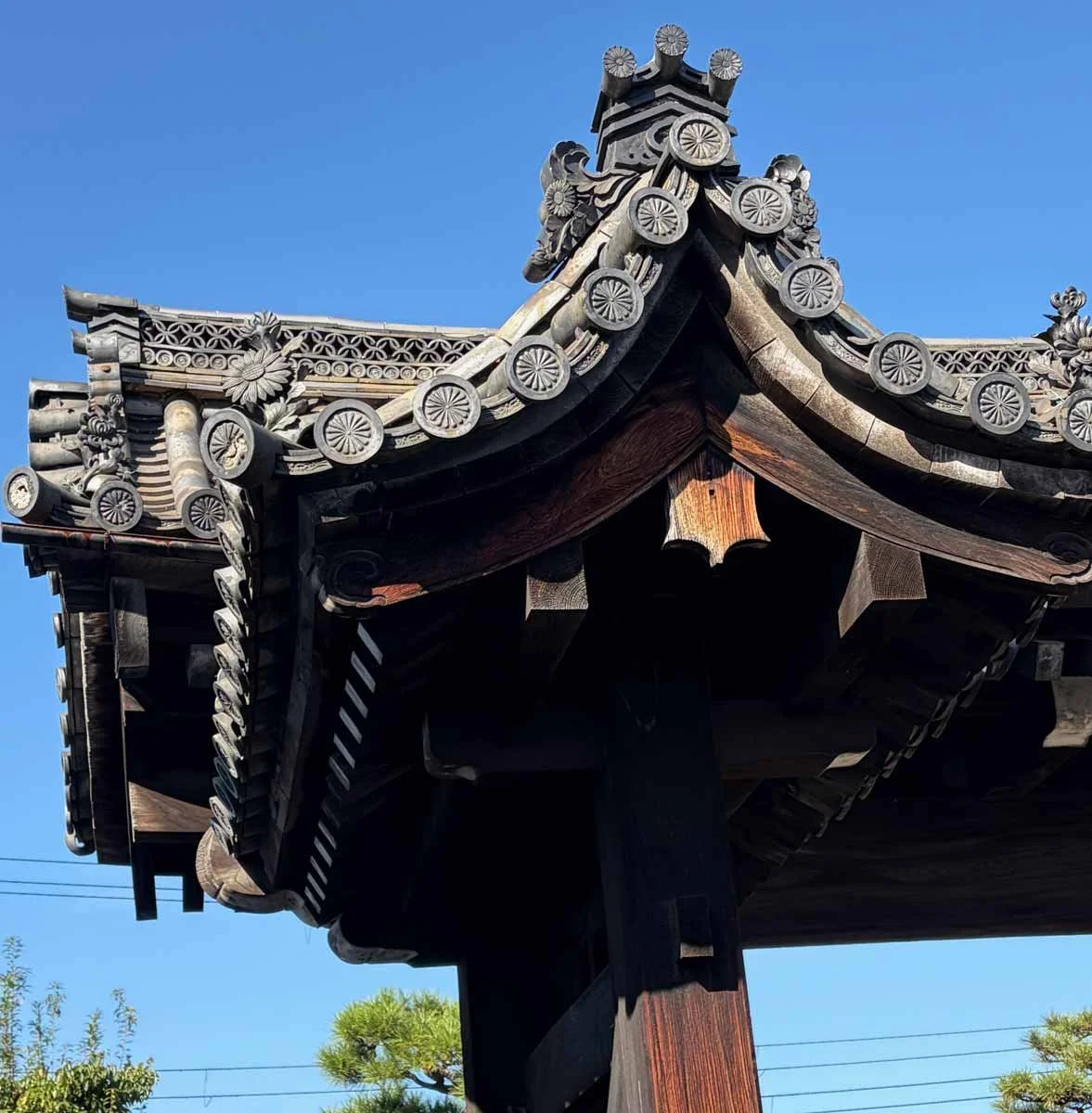
Chrysanthemums on roof tiles are both decorative and protective
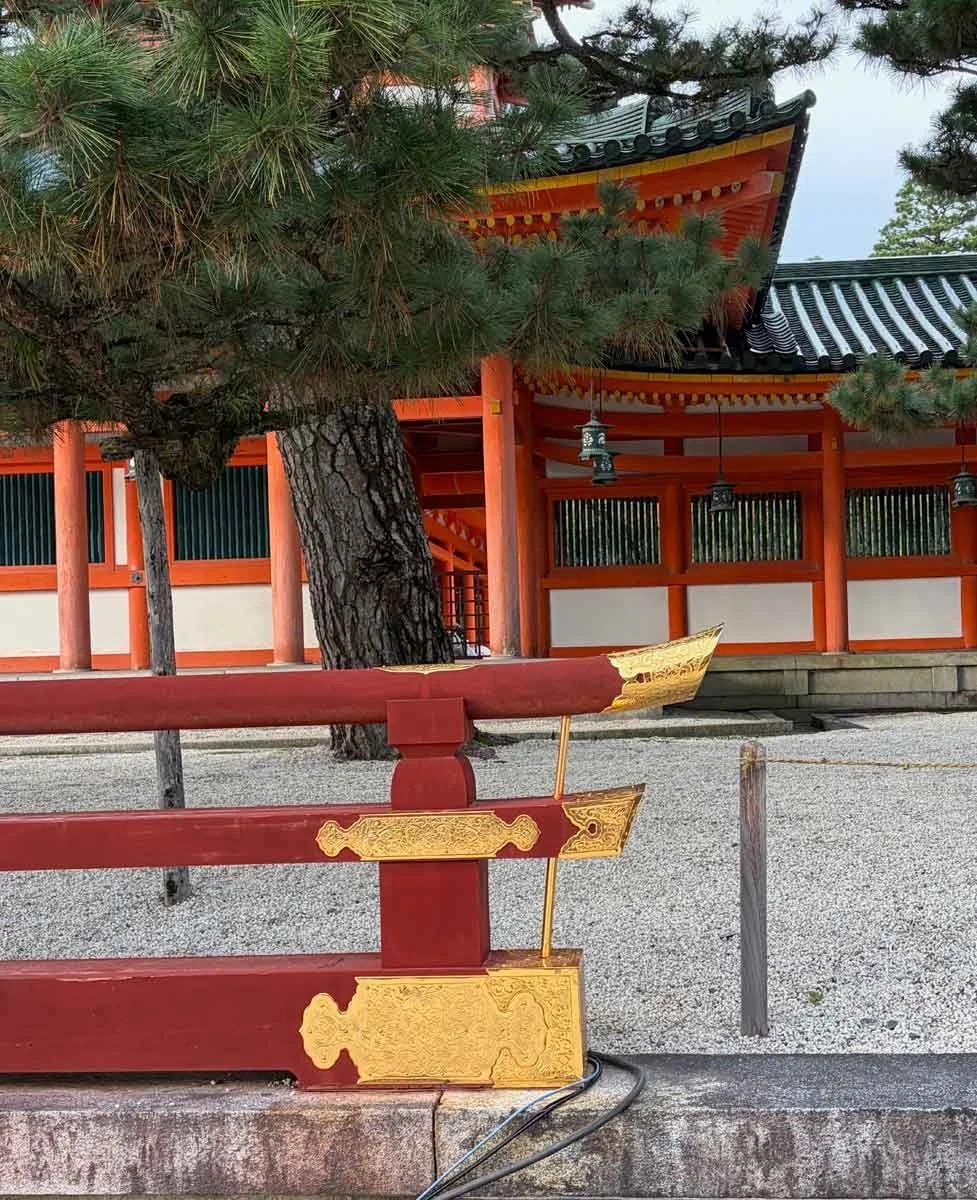
This photo encapsulates many of the visuals I now associate with Japan: the color Vermillion, black pines, intricate metalwork often made of shining gold/brass, the iconic roof style and tiles, hanging lanterns, swaths of gravel and the vertical lines of screened-off areas. There’s a lot going on here, but as a whole I find it very restful.
And now that we’re back in Vermont, with the time and space to put the sketch kit I brought with me to use, I have a second chance to solidify my memories. It’s also an opportunity to gauge how well I did with what I brought — the colors and supplies I would have needed, but not too much. All in all, I think I planned pretty well.
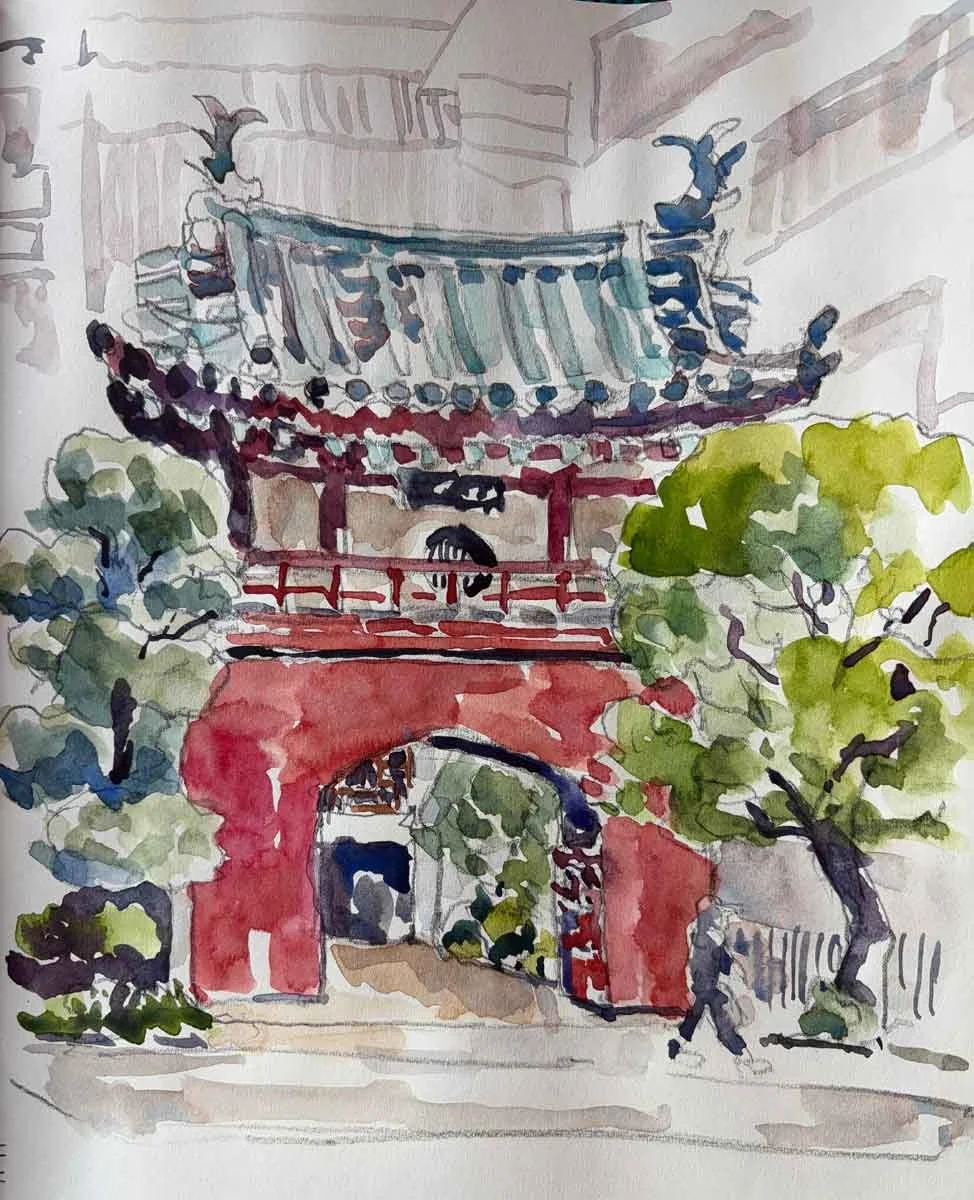
Reminder © 2026 Elizabeth Fram, Watercolor on paper, 9 × 8 inches.
This traditional gate, nestled among contemporary buildings and skyscrapers, was a welcome surprise in the center of Tokyo
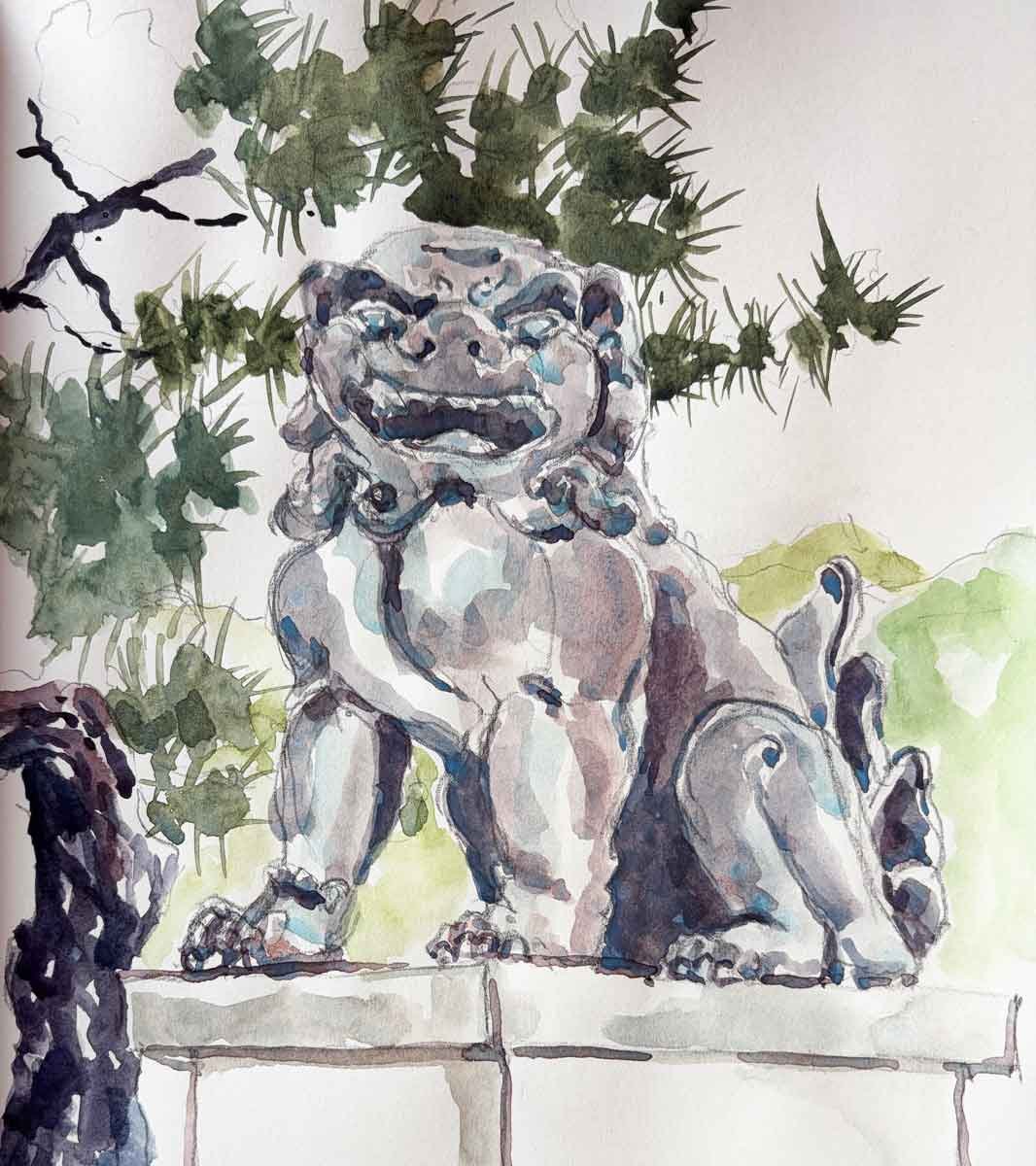
Guardian ©2026 Elizabeth Fram, Watercolor on paper, 9 × 8 inches.
Komainu are lion-dog protectors placed near the entrance to Shinto shrines to ward off evil spirits
